






What is Agrivoltaics?
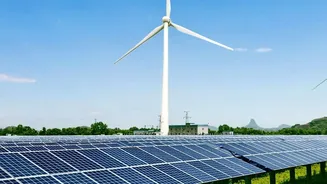
Imagine a farm where, instead of just neat rows of crops, you see solar panels mounted high above the ground, creating a patchwork of sun and shade. This is the essence of agrivoltaics—the simultaneous use of land for both agriculture and solar power
generation. The concept is a direct response to a growing dilemma in densely populated countries like India: land is a finite resource. By allowing farmers to produce food and electricity from the same plot, agrivoltaics promises a solution to the conflict between expanding renewable energy infrastructure and preserving precious agricultural land. Studies have shown this dual-use approach can be surprisingly synergistic; the shade from panels can protect crops from excessive heat and reduce water evaporation, while the crops can create a cooler microclimate that improves the solar panels' efficiency.
India's Push for Solar Farming
The Government of India is aggressively promoting agrivoltaics as part of its ambitious renewable energy goals and its mission to support farmer welfare. A key driver is the Pradhan Mantri Kisan Urja Suraksha evam Utthaan Mahabhiyan (PM-KUSUM) scheme. Launched in 2019, PM-KUSUM aims to de-dieselize the farm sector, provide water security, and increase farmer income by supporting the installation of solar pumps and decentralized solar power plants on farmland. The scheme explicitly encourages agrivoltaic setups, allowing farmers to not only power their irrigation pumps but also sell surplus electricity to the grid, creating a stable, additional revenue stream. With subsidies covering a significant portion of the upfront cost, the policy is designed to make solar technology accessible to millions of farmers across the country.
Beyond Kilowatts and Megawatts
Currently, the success of a solar project is typically measured in terms of its power generation capacity—kilowatts, megawatts, and the total units of electricity supplied to the grid. This metric is essential for tracking progress towards national renewable energy targets. However, when applied to agrivoltaics, an energy-only assessment tells only half the story. Agrivoltaics is not just an energy project; it is a socio-economic intervention aimed at transforming rural livelihoods. Focusing solely on energy output overlooks the primary stakeholder in this equation: the farmer. It fails to answer critical questions about whether the technology is genuinely improving their economic stability and resilience.
Why Farm Income is the Better Metric
Shifting the primary success metric to net farm income provides a far more holistic and meaningful assessment. This approach evaluates the project's total impact on a farmer's finances. It considers not just the revenue from selling electricity, but also any changes in crop yield, savings on irrigation costs from solar pumps, reduced fertilizer use, and income from leasing land. A farm-income-centric model acknowledges that solar power is effectively a new, drought-proof 'cash crop' that provides predictable earnings, shielding farmers from market volatility and crop failures. This metric directly measures the scheme's core objective: to double farmer income and create sustainable rural prosperity. If a farmer's overall financial health improves, the agrivoltaics project is a success, regardless of minor fluctuations in energy output.
Challenges and the Path Forward
Despite its promise, the large-scale adoption of agrivoltaics faces hurdles. These include high upfront investment costs, a lack of standardized designs suitable for different crops and climates, and ambiguous land-use regulations. The impact of shading on different crop types needs more region-specific research to optimize layouts and minimize any negative effects on yield. To move from successful pilots to a national movement, India needs a clear policy framework that defines agrivoltaics and simplifies implementation. By prioritizing farm income in project assessments, policymakers can ensure that developers, technology providers, and farmers are all aligned toward the same goal: making agriculture more profitable, sustainable, and resilient for generations to come.