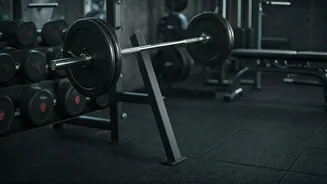







What Exactly is a Push/Pull/Legs Split?
The Push/Pull/Legs split is a straightforward and highly effective training method where you divide your workouts into three distinct categories based on movement patterns. Instead of focusing on one body part per day (like a traditional 'bro split'),
you group muscles that work together. The structure is simple: * **Push Day:** You train the upper body muscles used in pushing movements. This primarily includes the chest, shoulders, and triceps. Think of exercises like the bench press, overhead press, and dips. * **Pull Day:** This session focuses on the upper body muscles used in pulling motions. You'll be working your entire back (including lats and traps) and your biceps. Exercises like pull-ups, rows, and bicep curls are staples here. * **Leg Day:** As the name implies, this day is dedicated to training your entire lower body. This includes your quadriceps, hamstrings, glutes, and calves. Squats, deadlifts, and lunges are foundational movements for this workout.
The 'Smarter' Advantage: Why It Works So Well
The PPL split is considered a 'smarter' way to train for several key reasons, primarily revolving around efficiency and recovery. One of the biggest advantages is that it gives each muscle group ample time to rest. For example, after a strenuous Push Day, your chest, shoulders, and triceps get to recover during your Pull and Leg days. This built-in recovery minimizes the risk of overtraining and facilitates better muscle repair and growth. Furthermore, the PPL method is incredibly efficient because it groups related muscles that are often engaged in the same compound exercises. When you perform a bench press for your chest, your shoulders and triceps are also heavily involved as secondary movers. By training them all on the same day, you maximize this natural synergy, creating a more effective workout. This also means there's minimal overlap between sessions, allowing for better performance day-to-day.
How to Structure Your PPL Week
The flexibility of the PPL split is another major draw, as it can be adapted for beginners and advanced lifters alike. The two most common structures are the 3-day and 6-day splits. * **3-Day Split:** This is ideal for beginners or those with limited time. A typical schedule would be Push on Monday, Pull on Wednesday, and Legs on Friday, with rest days in between. This approach ensures each muscle group is trained once per week, which is great for building a solid foundation and focusing on proper form. * **6-Day Split:** This more advanced routine is for those looking to maximize training frequency and volume. The schedule involves running through the PPL cycle twice: Push, Pull, Legs, followed by another round of Push, Pull, Legs, and then one rest day. This means you train each muscle group twice a week, which research suggests can be superior for muscle hypertrophy (growth).
A Sample PPL Workout Routine
To put it all into practice, here is a sample routine. Focus on compound exercises at the beginning of your workout when you're fresh, and finish with isolation movements. Remember to prioritize good form over heavy weight. **Push Day:** * Barbell Bench Press: 3 sets of 6-8 reps * Overhead Dumbbell Press: 3 sets of 8-10 reps * Incline Dumbbell Press: 3 sets of 10-12 reps * Lateral Raises: 3 sets of 12-15 reps * Triceps Pushdowns: 3 sets of 10-12 reps **Pull Day:** * Deadlifts: 3 sets of 5-8 reps * Pull-Ups (or Lat Pulldowns): 3 sets to failure (or 8-10 reps) * Bent-Over Rows: 3 sets of 8-12 reps * Face Pulls: 3 sets of 12-15 reps * Barbell Curls: 3 sets of 8-10 reps **Leg Day:** * Barbell Squats: 4 sets of 6-8 reps * Romanian Deadlifts: 3 sets of 8-10 reps * Leg Press: 3 sets of 10-12 reps * Lying Leg Curls: 3 sets of 12-15 reps * Standing Calf Raises: 3 sets of 8-12 reps