





Beyond the Thermometer Reading
For decades, the daily temperature was the primary way we understood heat. But as cities across India experience more intense and frequent heatwaves, researchers are realising that temperature alone tells only half the story. The real danger lies in the combination
of extreme heat and high humidity. This pairing severely hampers the human body's natural cooling mechanism: sweating. When the air is already saturated with moisture, sweat cannot evaporate effectively, making it difficult for the body to cool down. This can lead to a rapid increase in core body temperature, raising the risk of heat exhaustion and deadly heatstroke.
The Wet-Bulb Awakening
In response, urban climate research is increasingly focused on a more comprehensive metric: the wet-bulb temperature. This measurement accounts for both heat and humidity to indicate how much heat stress the body is under. Think of it as the lowest temperature the air can reach through evaporation. The scientific consensus is that a wet-bulb temperature of 35°C is near the absolute limit of human survivability for more than a few hours, even for a healthy person resting in the shade with unlimited water. Worryingly, parts of India are already experiencing conditions that approach this critical threshold, often without specific public warnings that account for the combined humid heat.
India's Urban Heat Islands
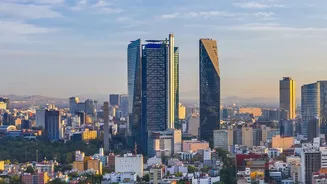
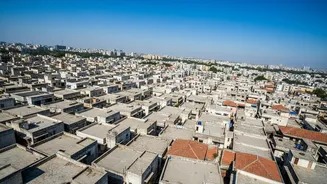
This problem is particularly acute in India’s rapidly growing cities, which act as 'urban heat islands'. Materials like concrete and asphalt absorb and retain far more heat than natural landscapes. This effect, combined with reduced green cover and less air circulation between tightly packed buildings, means cities are often significantly warmer than their rural surroundings. In coastal cities like Mumbai and Chennai, or inland hubs like Delhi during monsoon season, this trapped heat mixes with high humidity to create a lethal cocktail. Research shows that this urban warming is accelerating, with some studies finding that Indian cities are warming much faster than previously predicted, intensifying health risks for millions.
A New Toolkit for Researchers
To understand this complex threat, scientists are deploying a new generation of tools. The single weather station at an airport no longer suffices. Research now involves high-resolution satellite data to map surface temperatures, networks of hyperlocal sensors placed throughout neighbourhoods, and advanced computer models. These technologies allow scientists to see how heat and humidity vary from one street to the next, identifying specific hotspots within a city. This granular data is crucial, as studies have found that humidity’s role in urban heat stress has been historically underestimated and is becoming more dominant with climate change.
From Data to Livable Designs
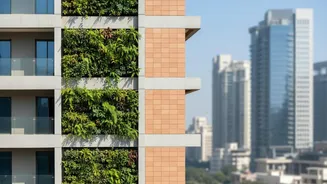
The ultimate goal of this reshaped research is to create more resilient and livable cities. The detailed data being collected is directly informing a new wave of urban planning and adaptation strategies. These include promoting 'cool roofs' with reflective paint, strategically planting trees to provide shade and evaporative cooling, and designing buildings and public spaces that encourage natural ventilation. Some research notes a complex relationship where green spaces can increase local humidity during the day, but still provide a net cooling effect, especially at night. This nuanced understanding helps planners make smarter decisions. More accurate, humidity-aware forecasting is also leading to better early warning systems for heatwaves, giving vulnerable populations crucial time to prepare and helping manage stresses on infrastructure like the power grid.