




The Gentle Push of Sunlight
It sounds like science fiction, but the force is real. Light is made of particles called photons. While they have no mass, they do possess momentum. When a photon hits a surface and bounces off, it transfers a tiny amount of that momentum, creating a minuscule
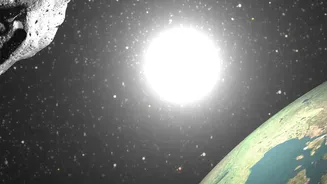
push known as radiation pressure. On Earth, this force is utterly negligible, lost in the noise of wind and gravity. But in the vacuum of space, where there is no friction, these tiny pushes can add up. Over time, the continuous stream of photons from the Sun can accelerate a spacecraft to tremendous speeds, without using a single drop of fuel.
Sailing on Beams of Light
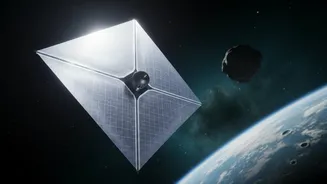
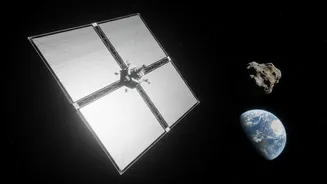
This is the principle behind the solar sail. A solar sail probe unfurls a huge, ultra-thin, mirror-like sheet to catch as many photons as possible. These sails are designed to be both massive in area and incredibly lightweight. Unlike chemical rockets that provide powerful thrust for a short time, solar sails deliver a constant, gentle push. This continuous acceleration allows them to achieve very high velocities over long periods. Missions like Japan's IKAROS and NASA's recent Advanced Composite Solar Sail System (ACS3) have already successfully demonstrated this technology in space. By tilting the sail, operators can even steer the spacecraft, spiraling toward or away from the Sun.
The Problem with Unpredictable Asteroids
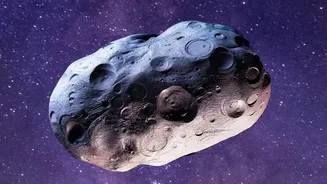
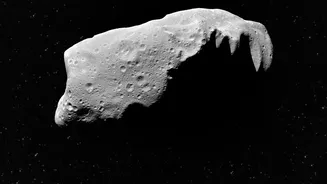
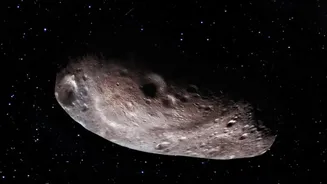
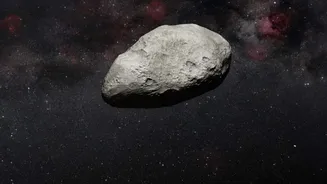
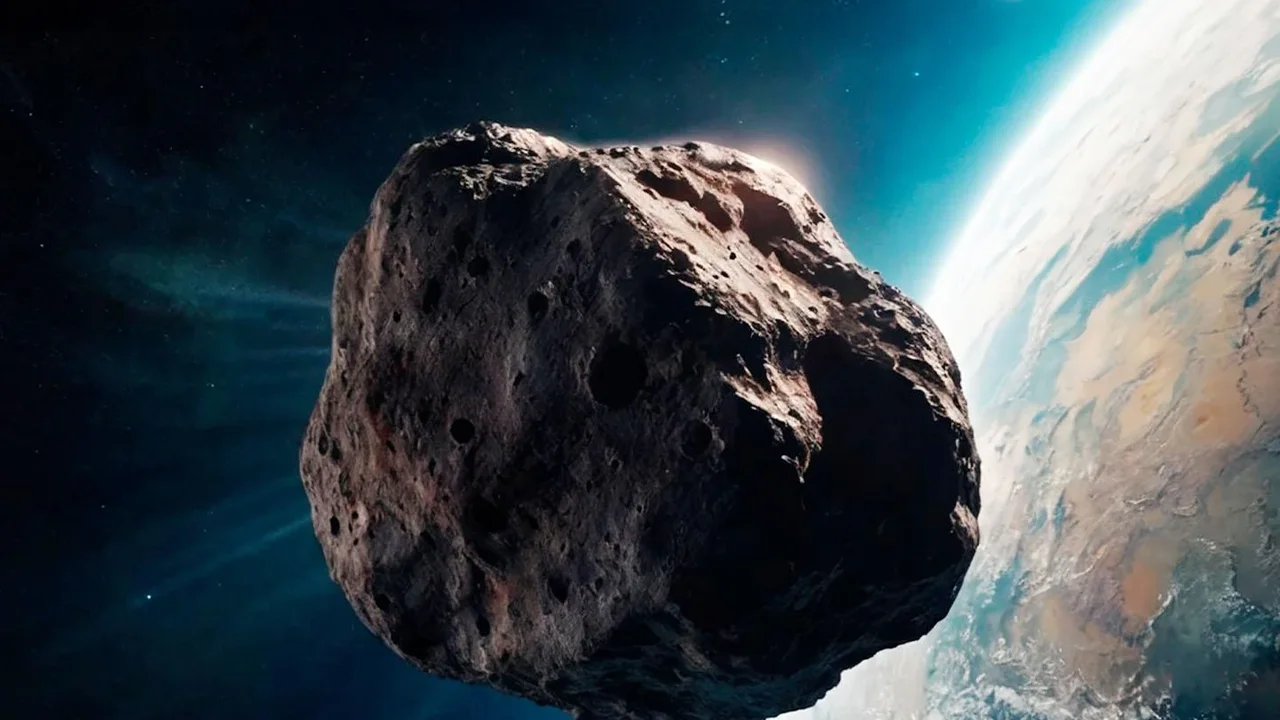
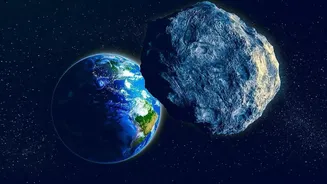
Thousands of asteroids roam our solar system, many on paths that are not perfectly stable. These are asteroids with dynamic trajectories, their orbits subtly altered by the gravitational pull of planets or even by the gentle push of sunlight itself. Studying these objects is crucial for both understanding the formation of our solar system and for planetary defense. However, their erratic nature makes them difficult targets for conventional spacecraft. A probe launched with rockets has a fixed amount of fuel, locking it into a largely predetermined path. If the target asteroid’s orbit changes, the probe often can't adjust, making a rendezvous or sustained observation impossible.
The Breakthrough: A New Level of Control
The breakthrough lies in combining the fuel-free nature of solar sails with advanced materials and navigation systems. Recent developments focus on new composite materials for the sail booms and more sophisticated control algorithms. NASA's ACS3 mission, for example, is testing new lightweight composite booms that can support sails up to the size of a basketball court, with future versions planned to be even larger. This increased size and improved control mean that solar sail probes are no longer just for straight-line travel. They can now perform complex, propellant-less maneuvers. This enhanced maneuverability is the key to unlocking the study of dynamic targets.
Charting the Chaos: What Probes Can Now Do
A solar sail probe, propelled by endless sunlight, can constantly adjust its trajectory. If a target asteroid shifts its path, the probe can shift with it. This allows for long-term rendezvous missions that were previously impossible with fuel-limited craft. A probe can arrive at an asteroid, enter orbit around it, and study it for months or years, all while making continuous adjustments. This sustained presence is vital for mapping an asteroid's surface, analyzing its composition, and, most importantly, precisely tracking its orbit over time to refine future predictions. This capability is a game-changer, especially for potentially hazardous asteroids where understanding their exact path is paramount for planetary defense. Missions are already being planned to test these capabilities on near-Earth objects.