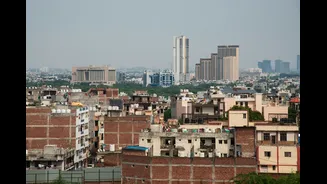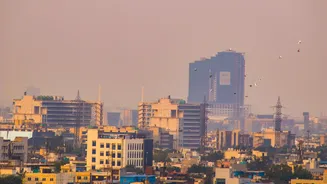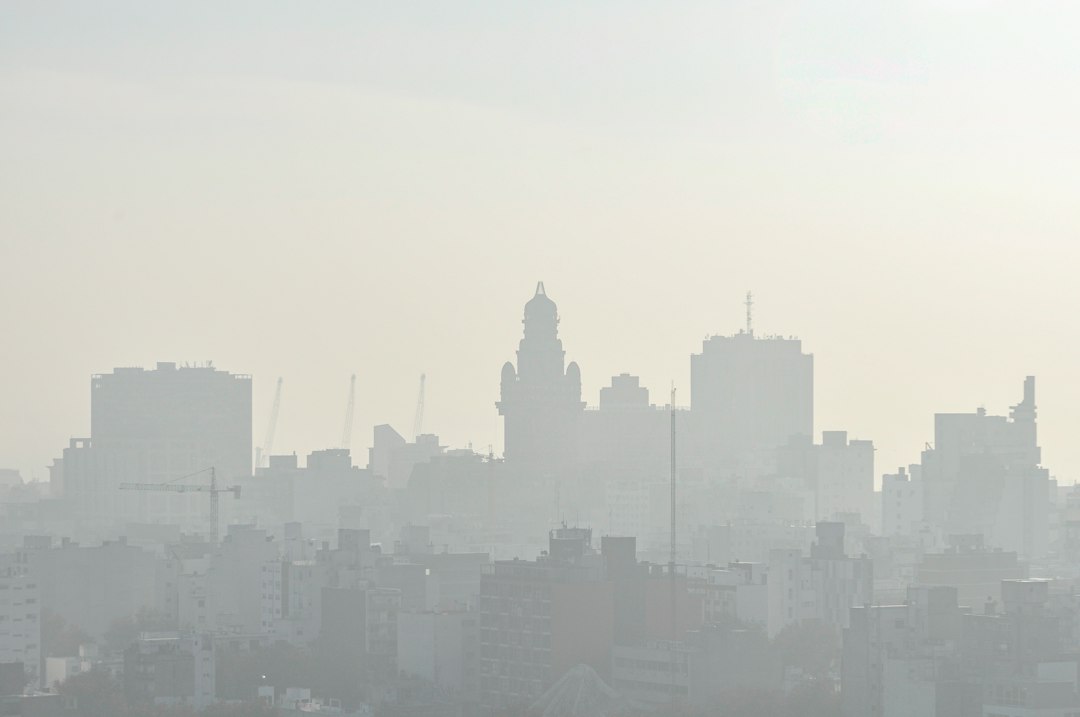





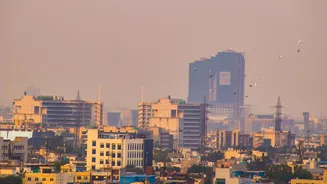

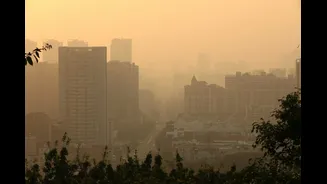
As parts of North India grapple with extreme air pollution, some cities are recording Air Quality Index (AQI) values that go beyond the official scale. What does it mean when the air is literally 'off the charts'?
Decoding India's Air Quality Index
India's Air Quality Index, or AQI, is
a tool used by the Central Pollution Control Board (CPCB) to communicate how polluted the air is. Launched in 2014, it simplifies complex data about eight major pollutants—including PM2.5 and PM10 particles, nitrogen dioxide, and ozone—into a single number. This number falls into one of six colour-coded categories, helping the public quickly understand the level of health risk. The categories are: Good (0-50), Satisfactory (51-100), Moderate (101-200), Poor (201-300), Very Poor (301-400), and Severe (401-500). Each step up the ladder signifies a greater threat to public health.
The Meaning of a 500 AQI Cap
The official AQI scale in India stops at 500. This doesn't mean the pollution concentration can't get worse, but that the index itself treats 500 as the maximum level of emergency. Any reading from 401 to 500 falls into the 'Severe' category, which indicates a public health emergency where the air is considered hazardous even for healthy individuals. Experts involved in developing the index explain that from a health perspective, the damaging effects of pollution begin to plateau at this extreme level. In other words, once the air is bad enough to trigger the most severe health warnings and require the strictest emergency measures, a higher number was not deemed necessary for public communication. Whether the AQI is 500 or 900, the advice remains the same: it's hazardous, and outdoor exposure should be avoided entirely.
Bikaner and Bathinda Go 'Beyond Index'
In early November 2026, several cities in North India reported pollution levels that, if measured on an uncapped scale, would far exceed the 500 mark. On November 4, Rajasthan's Bikaner was reported to have an AQI of 1,357 in the morning, making it the most polluted city in the country at that time. Punjab's Bathinda was not far behind, ranking second with a staggering AQI of 883. A day earlier, on November 3, some reports showed Bathinda's AQI crossing 700 and even reaching as high as 1,100, highlighting the extreme severity of the pollution event. These 'beyond-index' readings, often published by independent air quality monitors, illustrate a crisis that is pushing the official measurement system past its defined limits.
The Severe Health Risks Involved
When AQI levels are in the 'Hazardous' or 'Severe Plus' category (anything above 301), the health risks are immediate and serious for everyone, not just sensitive groups like children, the elderly, or those with existing respiratory conditions. Breathing such polluted air can cause immediate irritation to the eyes, nose, throat, and lungs. Healthy individuals may experience difficulty breathing, coughing, and chest tightness with prolonged exposure. For people with asthma or heart disease, these conditions can be life-threatening. The primary culprit in these severe pollution episodes is often PM2.5—fine particulate matter that can penetrate deep into the lungs and enter the bloodstream, leading to serious and longterm health issues.
Why Is This Happening Now?
The extreme pollution levels in North India are a result of a perfect storm of contributing factors. Stubble burning in the agricultural states of Punjab and Haryana is a significant source of smoke that drifts across the region. This is compounded by local sources of pollution, including emissions from vehicles and industries, as well as dust from construction. Meteorological conditions play a crucial role; lower temperatures and slower wind speeds in early winter trap these pollutants close to the ground, preventing them from dispersing and leading to a rapid accumulation of smog. This combination of factors creates the hazardous air quality episodes that are now becoming an annual crisis for millions.