

A Pre-Dawn Gathering of Planets
In mid-August 2026, the pre-dawn sky offers a stunning planetary alignment. Around August 12th and 13th, look towards the eastern horizon about an hour before sunrise to witness a parade of up to six planets: Mercury, Mars, Jupiter, Saturn, Uranus, and Neptune.
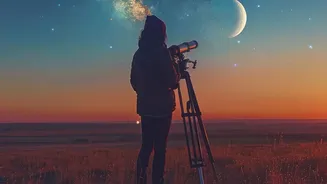
While Jupiter and Mercury will be low on the horizon and may be challenging to spot in the morning glow, Mars and Saturn should be readily visible to the naked eye. Mars will be identifiable by its distinct reddish hue, while Saturn will shine with a steady, golden light. For those with binoculars or a small telescope, this is an excellent opportunity to hunt for the fainter Uranus and Neptune, completing the planetary lineup. This rare gathering provides a beautiful perspective on our solar system in motion.
The Shimmering Core of the Milky Way
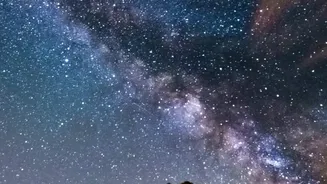
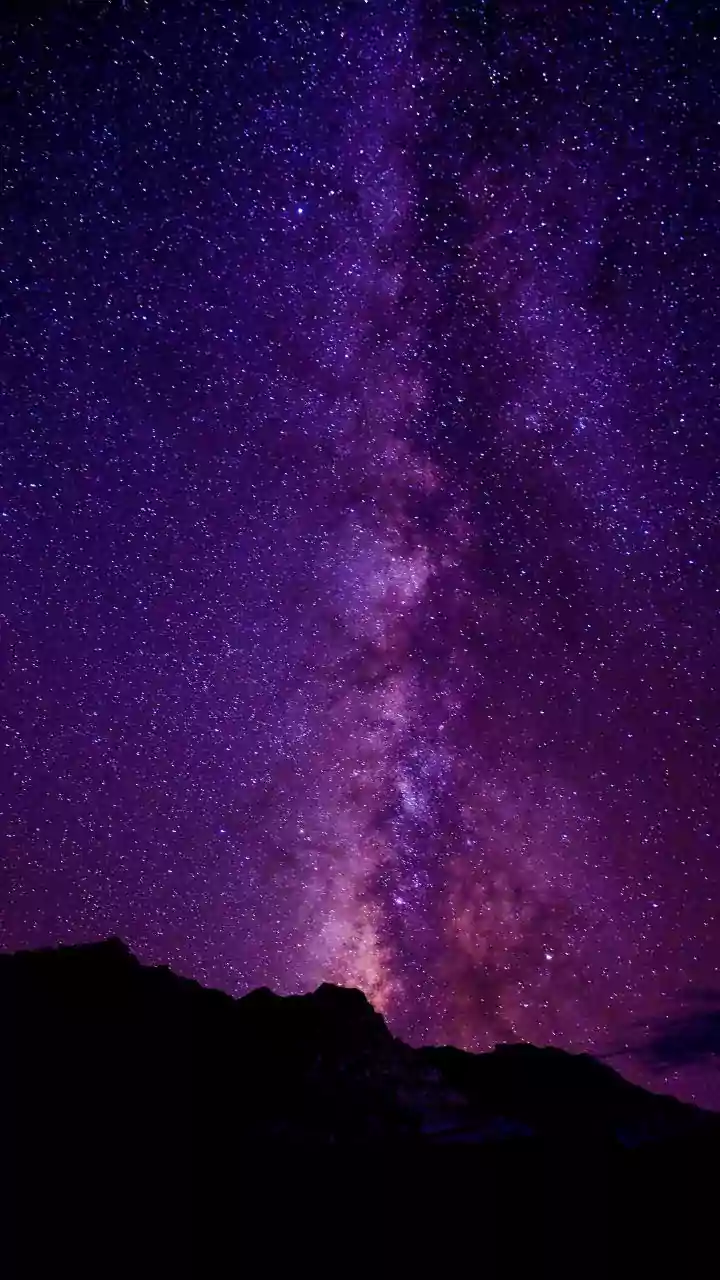
While visible for much of the year, August is one of the best months to view the magnificent heart of the Milky Way galaxy. This is the last prime month to see the galactic centre, located in the direction of the constellations Sagittarius and Scorpius, optimally placed in the evening sky. To see it, you will need to escape the light pollution of the cities. Head to a dark-sky location, such as the designated reserve in Hanle, Ladakh, or other high-altitude spots in Spiti, Uttarakhand, or even the Rann of Kutch. Once your eyes adjust to the darkness, look south to see a dense, glowing band of stars arcing across the sky. This is the combined light of billions of stars, dust, and gas clouds that form the central bulge of our galaxy—a truly breathtaking sight.
The Summer Triangle: Your Celestial Guide
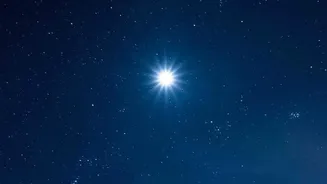
Navigating the night sky can be daunting, but a simple shape makes it easy in August: the Summer Triangle. This prominent asterism (a pattern of stars, not a formal constellation) is high overhead during August evenings. It consists of three bright stars from three different constellations: Vega in Lyra (the Harp), Deneb in Cygnus (the Swan), and Altair in Aquila (the Eagle). Vega is the brightest of the three and one of the brightest stars in the entire night sky. Once you locate this giant triangle, you can use it as a reference point to hop to other nearby constellations like Sagitta and Scutum, making it an indispensable tool for amateur astronomers.
Close Encounters of the Lunar Kind
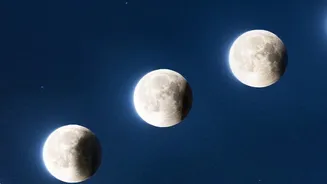
August also features some beautiful close approaches, or conjunctions, involving the Moon. On August 7th, the crescent Moon will appear near the famous Pleiades star cluster, also known as the Seven Sisters, creating a picturesque scene in the pre-dawn sky. Just two days later, on August 9th, the waning crescent Moon will cosy up to Mars. These events are perfect for beginners, as the Moon acts as a bright signpost, making it easy to identify its planetary and stellar companions without any special equipment. On August 3rd, early risers could spot the Moon near Saturn before sunrise. These moments offer fantastic photo opportunities and a simple way to track the movement of celestial bodies.
A Note on the Perseids
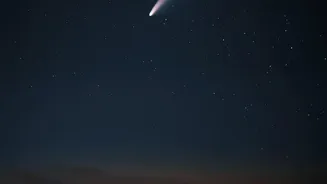
Of course, no guide to the August sky would be complete without mentioning the Perseid meteor shower. While this article focuses on what lies beyond, the 2026 shower promises to be exceptional. The peak occurs on the nights of August 12th and 13th, coinciding perfectly with a new moon. This means the sky will be exceptionally dark, allowing even faint meteors to be seen. From a dark location, you might see up to 100 meteors per hour. The main challenge for many in India will be the monsoon clouds. If you find clear skies, however, look for bright, fast meteors streaking across the sky, many leaving persistent trails.