






The Two-Stage Process on Paper
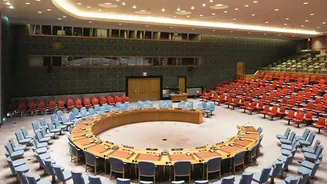
Officially, the selection of the Secretary-General is a two-step procedure outlined in Article 97 of the UN Charter. First, the 15-member Security Council considers various candidates and recommends a single name to the General Assembly. Then, the 193
members of the General Assembly hold a vote to formally appoint that candidate. In theory, this gives every member state a voice in the final appointment. Since its inception, the General Assembly has never rejected the candidate put forward by the Security Council, making the Council's recommendation the decisive moment in the entire process. This reality has shifted the focus from the public appointment to the private negotiations within the Council.
The Real Power: The P5 and the Veto
The true center of gravity in the selection process lies with the Security Council's five permanent members, known as the P5: China, France, Russia, the United Kingdom, and the United States. Each of these nations holds the power of veto. For a candidate to be recommended, they must secure at least nine 'yes' votes in the Security Council and, crucially, receive no vetoes from any of the P5. This means a single negative vote from a permanent member can instantly eliminate a candidate, regardless of how much support they have from the other 14 Council members or the broader UN membership. This veto power ensures that the chosen Secretary-General is someone who is, at a minimum, not objectionable to the world's most powerful nations.
Behind Closed Doors: Straw Polls
To narrow down the field and test the political waters, the Security Council conducts a series of informal, secret ballots known as straw polls. In these polls, members vote to 'encourage', 'discourage', or express 'no opinion' on each candidate. For much of the process, these votes are identical. However, in later rounds, the P5 members use different coloured ballot papers. This allows everyone to see if a candidate has a potential veto against them without a permanent member having to cast a formal, public veto. A 'discourage' vote on a coloured ballot is a clear signal that the candidate will not pass, often prompting them to withdraw from the race. This mechanism keeps the most sensitive negotiations out of the public eye while still allowing the P5 to exercise their ultimate authority.
A History of Influence and Deadlock
Throughout the UN's history, the P5's veto power has shaped the outcome of nearly every selection. During the Cold War, stalemates between the United States and the Soviet Union were common, often leading to the selection of compromise candidates from neutral countries. More recent examples also highlight this power. In 1996, the United States used its veto to block a second term for Boutros Boutros-Ghali of Egypt, paving the way for Kofi Annan's appointment. In 1981, China cast 16 vetoes against Kurt Waldheim's bid for a third term, insisting that it was time for a Secretary-General from a developing nation. These instances demonstrate that the selection is as much about geopolitics and national interest as it is about finding the most qualified individual.
A Push for Transparency
In recent years, there has been a significant push from the wider UN membership for a more open and inclusive selection process. This led to landmark reforms ahead of the 2016 selection, which resulted in the appointment of the current Secretary-General, António Guterres. For the first time, candidates were asked to submit vision statements and participate in public dialogues with the General Assembly, allowing all member states and even civil society to engage with them directly. While these changes have been widely praised for improving transparency, they have not altered the fundamental power structure. The Security Council's private deliberations and the P5's veto remain the final arbiters, as evidenced by the deadlocks in the current selection process to find a successor for Guterres.