






The Two Faces of Fibre
When we talk about fibre, we're actually talking about two different types, both essential for our health. Soluble fibre dissolves in water to form a gel-like substance in the digestive system. This process can help lower cholesterol and stabilize blood
sugar levels. It's found in vegetables like carrots, peas, and beans. Insoluble fibre, on the other hand, does not dissolve in water. It adds bulk to stool, promoting regularity and helping to prevent constipation. This type of fibre is abundant in vegetables such as cauliflower, green beans, and leafy greens. By eating a wide variety of vegetables, you ensure you're getting a healthy mix of both types of fibre, which supports a healthy gut microbiome and overall digestive wellness.
Eating the Rainbow for Peak Nutrition
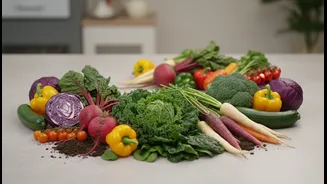
The vibrant colours of vegetables are not just for show; they signify the presence of different phytonutrients, which are natural compounds that protect plants from threats and offer health benefits to us when we eat them. Each colour provides a unique set of nutrients. Red vegetables like tomatoes and red bell peppers are rich in lycopene, an antioxidant that supports heart health. Orange and yellow vegetables such as carrots and sweet potatoes provide beta-carotene, which is crucial for vision and immune function. Green vegetables, from spinach to broccoli, offer cancer-blocking compounds and are essential for eye health. Blue and purple vegetables like eggplant and purple cabbage contain anthocyanins, which are believed to support brain health. To get the full spectrum of these benefits, it's vital to eat a variety of colours every day.
A Symphony of Satisfying Textures
Beyond nutrition, variety is the key to making meals enjoyable. The texture of our food plays a huge role in how satisfying a meal is. Relying on the same few vegetables can lead to monotonous, uninspiring dishes. Combining different textures creates a more complex and pleasurable eating experience. Imagine a simple dal. By itself, it's soft and comforting. Now, add some crunchy onions, tender spinach, and firm chunks of lauki (bottle gourd). The meal is instantly more dynamic. Similarly, a stir-fry benefits from the crispness of bell peppers, the snap of green beans, and the softness of mushrooms. Combining raw, shredded vegetables like carrots and cabbage with cooked ones adds a delightful contrast. This textural play keeps your palate engaged and can prevent the boredom that often derails healthy eating habits.
Simple Ways to Diversify Your Plate
Incorporating more vegetable variety doesn't require a complete diet overhaul. Start with small, manageable changes. Try adding one new vegetable to your grocery list each week. If you usually make sabzi with just potatoes and peas, try adding cauliflower or carrots. Shred zucchini or carrots into your roti or paratha dough for a hidden nutritional boost. Add a handful of spinach or other leafy greens to your morning eggs or smoothies. Soups and stews are excellent vehicles for a mix of vegetables; you can use potatoes to thicken the base while adding mushrooms, bell peppers, and beans for flavour and texture. Even something as simple as adding extra vegetables like tomatoes, cucumbers, and onions to your sandwiches can make a difference. Don't forget frozen vegetables—they are just as nutritious as fresh and are convenient to have on hand for busy days.