




Olympic Peninsula, Washington
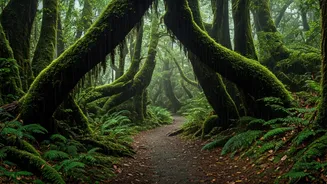
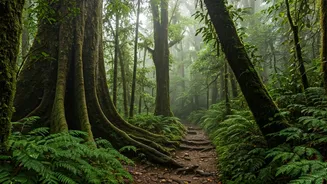
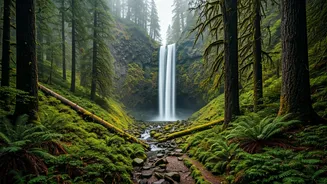
If any landscape was designed for a moody drizzle, it’s the Pacific Northwest’s crown jewel. The Olympic Peninsula is home to the Hoh and Quinault Rainforests, some of the only temperate rainforests in North America. When it rains here—which it does,
a lot—the entire ecosystem exhales. The moss covering ancient Sitka spruce and western hemlocks becomes a shocking, almost fluorescent green. Mist hangs low in the forest canopy, creating ethereal light beams that feel straight out of a fantasy epic. Instead of huddling indoors, this is where you pull on a rain jacket and walk the Hall of Mosses trail, listening to nothing but water dripping from giant ferns. The peninsula’s wild coastline, like Rialto Beach, is even more dramatic under stormy skies, with massive driftwood logs scattered like bones and waves crashing against towering sea stacks.
The Scottish Highlands, Scotland
Scotland without a bit of “dreich” weather is like a party without music. The Highlands’ rugged beauty is magnified by overcast skies and persistent mist. Rain turns the glens into a watercolor painting of deep greens and hazy purples. Driving through Glencoe as clouds descend upon the peaks of the Three Sisters is an atmospheric experience that blistering sunshine just can’t replicate. A rainy day is the perfect excuse to explore a brooding castle like Eilean Donan, its stone walls slick with moisture, looking exactly as imposing as it has for centuries. Afterward, the goal isn’t to dry off, but to find the nearest pub. There is no greater travel pleasure than settling into a cozy nook by a peat fire with a glass of whisky, the sound of rain against the window providing the perfect soundtrack.
Bergen, Norway
Locals in Bergen, a city that sees over 200 days of rain a year, have a saying: “There’s no such thing as bad weather, only bad clothing.” They’ve embraced their damp climate, and you should too. Rain gives this charming port city a glossy sheen. The colorful wooden houses of the UNESCO-listed Bryggen wharf reflect beautifully in the wet cobblestones, their vibrant facades popping against the gray sky. A trip up the Fløibanen funicular on a misty day is magical; as you ascend, the city below disappears into the clouds, leaving you in a quiet, fog-enveloped forest at the top. The rain also makes the city’s excellent museums and a bustling indoor fish market feel that much more welcoming and cozy.
Kyoto, Japan
Japan’s early summer rainy season, or “tsuyu,” might deter some travelers, but it’s when Kyoto’s famous gardens are at their most breathtaking. From late May to early July, the rain washes away the dust and deepens the colors of the landscape. The moss gardens at temples like Kokedera and Ginkaku-ji become impossibly lush, velvety green carpets. Hydrangeas are in full bloom, their heavy blue and purple heads bowing with raindrops. Strolling through the Arashiyama Bamboo Grove is even more enchanting when the patter of rain on the leaves overhead is the only sound. The moisture in the air creates a soft, diffused light, perfect for photography, and the season often means fewer crowds at popular shrines and temples, allowing for a more contemplative, peaceful visit.
New Orleans, Louisiana
A sweltering, sunny day in New Orleans can be draining. But a sudden summer downpour? That’s pure atmosphere. The humidity that hangs in the air breaks, washing the streets of the French Quarter clean and amplifying the scent of sweet olive and jasmine. There’s nothing quite like finding refuge on a covered balcony, a Sazerac in hand, watching the storm roll through. The sound of rain hitting the tin roofs and coursing through the gutters mixes with the distant sound of a jazz trio playing in a nearby bar. It’s a sensory experience that feels uniquely New Orleans—a moment of sultry, slow-motion magic that encourages you to stop rushing and simply soak in the city’s languid charm.