






The Japan Aerospace Exploration Agency (JAXA) has embarked on one of the most ambitious space missions ever attempted: a five-year round trip to the Martian system. The Martian Moons eXploration, or MMX, probe is on its way to solve a planetary mystery.
What is the MMX Mission?
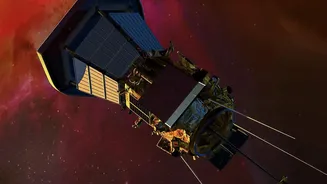
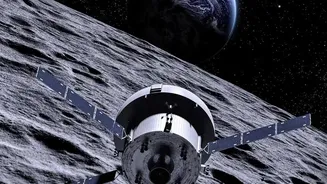
The MMX mission is a robotic probe designed to travel to Mars, study its two small moons, Phobos and Deimos, and achieve a historic first: landing on Phobos to collect surface samples and return them to Earth. Led by JAXA with significant international collaboration from NASA and European space agencies, the mission recently launched from Japan's Tanegashima Space Center. The spacecraft is now on a long cruise, expected to arrive in Mars's orbit around August 2027. This endeavour builds on Japan's expertise from previous successful sample-return missions like Hayabusa2, applying that knowledge to the much more distant and complex Martian environment.
The Destination: A Martian Mystery
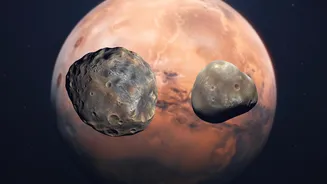
The mission's primary target, Phobos, is at the heart of a major scientific debate. Scientists are divided on the origins of Mars's moons. One theory suggests they are former asteroids that were captured by Mars's gravity billions of years ago. The opposing theory posits that they were formed from debris blasted into orbit after a giant object collided with a young Mars, much like how Earth's Moon is thought to have been created. By analysing samples from Phobos, scientists hope to finally solve this puzzle. If Phobos is a captured asteroid, its material could offer clues about the early solar system. If it's a piece of Mars, it provides a time capsule of the Red Planet's ancient crust.
A Five-Year Journey in Detail
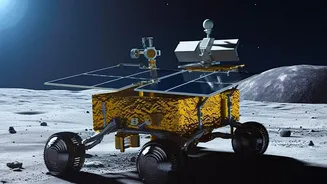
The five-year timeline is packed with critical phases. After its year-long journey to Mars, MMX will spend roughly three years in the Martian system. First, it will enter what is called a 'quasi-satellite orbit' to stay close to Phobos, mapping its surface in detail to find a safe and scientifically valuable landing spot. In 2029, it plans to deploy a small, 25kg rover named Idefix, a joint French-German contribution, to explore the surface. Following the rover's reconnaissance, the main MMX spacecraft will descend and land on Phobos at least once to collect a minimum of 10 grams of rock and dust. The probe has two sampling mechanisms: a corer to drill beneath the surface and a pneumatic system that uses gas to blow material into a collection chamber.
The Return Trip and What Comes Next
After completing its sample collection in 2030, MMX won't head straight home. It will first conduct a series of close flybys of Mars's other, smaller moon, Deimos, to gather comparative data. The spacecraft is scheduled to depart the Martian system in November 2030 for its yearlong return cruise. In July 2031, as it nears Earth, a samplereturn capsule will detach from the main spacecraft, reenter the atmosphere, and parachute down to a designated landing site in the Woomera Prohibited Area in Australia. Once recovered, these precious samples will be studied by scientists for decades, potentially rewriting our understanding of how planets and their moons form, and how water and other ingredients for life were distributed in the early solar system.