




More Than Smoke and Ash
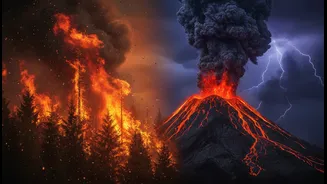
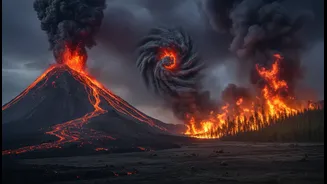
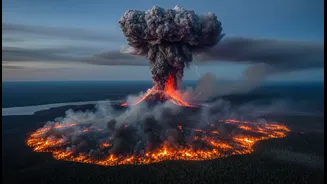
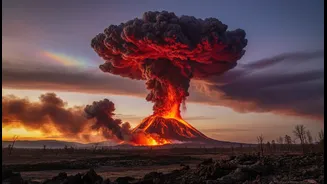
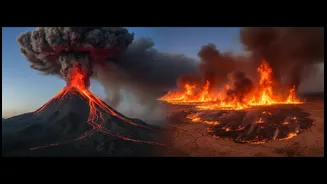
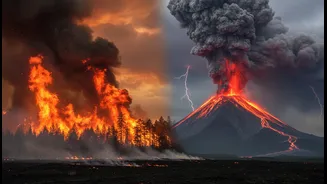
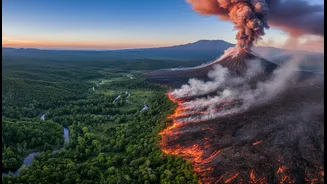
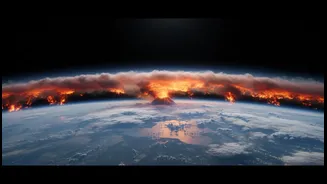
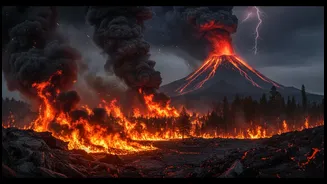
When we see images of wildfires or volcanoes, we're witnessing powerful geological and biological events. Beyond the immediate destruction, both phenomena inject enormous quantities of gases and particles high into the atmosphere. These plumes, which
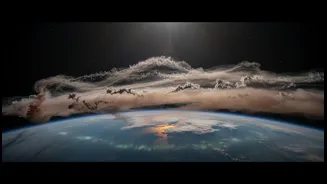
can travel thousands of kilometres, don't just disappear. They interact with sunlight, affect cloud formation, and alter atmospheric chemistry in a complex dance that scientists are still working to fully understand. While the source and composition are different—one burning organic matter, the other spewing molten rock and gas—their combined impact provides a crucial, if unsettling, forecast for our planet's climate system.
Wildfires: A Warming Feedback Loop
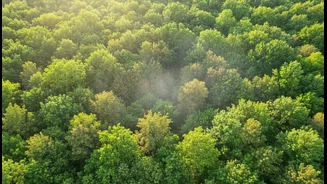
Wildfires release a complex cocktail of pollutants, but their primary climate impact comes from carbon dioxide (CO2) and black carbon, or soot. A warming planet, with hotter temperatures and prolonged droughts, creates conditions ripe for more frequent and intense fires. These fires then release vast stores of carbon from forests and soil into the atmosphere, accelerating the very warming that helped fuel them. This creates a dangerous feedback loop. While healthy forests can reabsorb CO2 over time, the increasing scale of modern 'megafires' means this carbon isn't always fully sequestered, leading to a net increase in atmospheric greenhouse gases. Furthermore, the dark soot particles absorb sunlight, contributing to atmospheric heating and altering weather patterns.
Volcanoes: Earth's Temporary Coolant
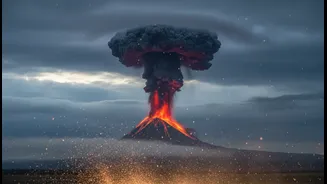
Unlike wildfires, large volcanic eruptions often have a temporary cooling effect on the planet. This isn't due to the ash, which falls out of the sky relatively quickly, but rather the massive amounts of sulfur dioxide (SO2) they blast into the stratosphere. This SO2 gas converts into sulfate aerosol particles that act like a planetary sunshade, reflecting solar radiation back into space and cooling the lower atmosphere for one to three years. The 1991 eruption of Mount Pinatubo, for example, caused a noticeable, though temporary, drop in global temperatures. However, volcanoes also release CO2. While their annual CO2 output is less than 1% of human emissions, they still contribute to the long-term warming trend once the cooling effect of the aerosols wears off.
A Tug-of-War in the Skies
The opposing short-term effects of these events—wildfire warming versus volcanic cooling—create a complex 'tug-of-war' in the atmosphere that complicates climate modelling. Both inject aerosols (tiny particles) into the air, but their properties and effects differ. Some studies suggest that in recent years, the cooling from volcanic and wildfire aerosols has temporarily offset a significant portion of warming caused by greenhouse gases. For India, this atmospheric loading is particularly relevant. Increased aerosol concentration, from both natural and man-made sources, can impact the Indian monsoon by suppressing rainfall and aggravating break conditions, which has significant implications for water security and agriculture.
Projecting an Unpredictable Future
Scientists use sophisticated models to project future climate, but these natural events introduce a wild card. Climate change is projected to increase wildfire frequency and intensity, expanding fire-prone regions and lengthening fire seasons globally. This means more carbon and smoke in the atmosphere. Volcanic eruptions, on the other hand, are largely unpredictable. Their timing and size are random, making it difficult to factor them into long-term projections. Scientists are now working to better incorporate these thousands of possible volcanic futures into models. Understanding these twin forces—the steady increase in fire activity and the sporadic but powerful influence of volcanoes—is essential for accurately interpreting climate change and preparing for the atmospheric shifts to come.