

A New Window to the Cosmos
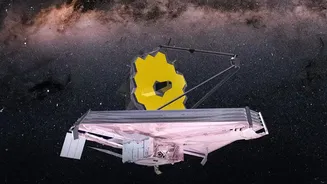
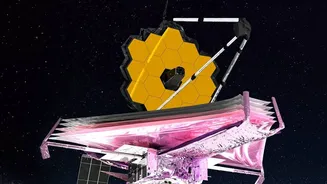
Launched as the successor to the Hubble Space Telescope, the JWST is an engineering marvel designed to see the universe in infrared light. This allows it to peer through cosmic dust and capture the faint heat signatures of distant objects, a capability
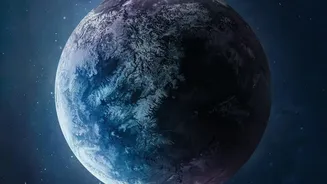
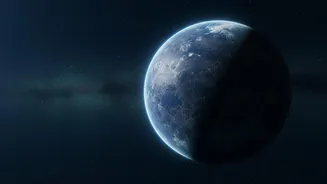
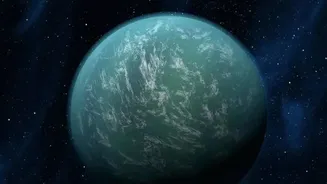
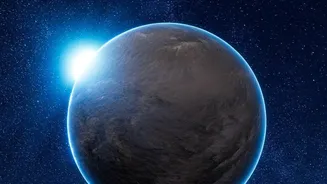
that is crucial for studying exoplanets—planets that orbit stars other than our sun. While Webb can't take a direct photo of an exoplanet's surface, it has a more powerful trick up its sleeve for hunting for the ingredients for life: a technique called transmission spectroscopy.
How to Read a Planet's Air
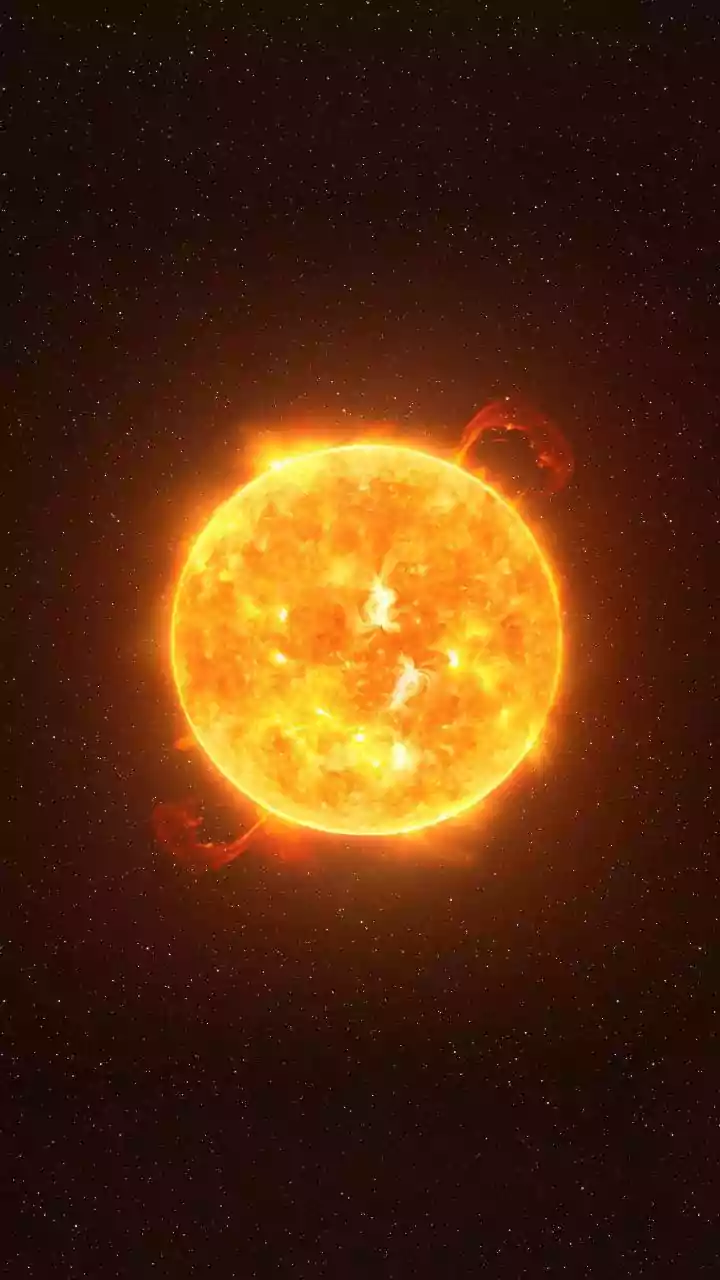
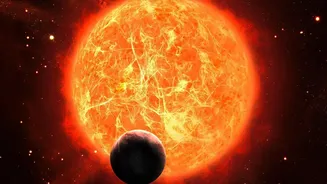
Transmission spectroscopy sounds complex, but the concept is beautifully simple. When an exoplanet passes, or transits, in front of its host star from our point of view, a tiny fraction of the starlight filters through the planet's atmosphere. Different gas molecules in that atmosphere absorb specific colours, or wavelengths, of light. Imagine a rainbow of starlight passing through the atmosphere; when it comes out the other side, specific colours will be missing, creating a unique barcode. By capturing this light with its powerful spectrographs, Webb can identify these missing colours and match them to the chemical 'fingerprints' of specific gases.
The Unmistakable Signature of Water
One of the most exciting molecules scientists are looking for is water (H2O). Recently, JWST has provided unambiguous evidence of water vapour in the atmospheres of several exoplanets, including the hot gas giant WASP-96 b and the rocky world GJ 486 b. For WASP-96 b, the data revealed the distinct signature of water, along with evidence of clouds and haze that previous observations hadn't detected. These detections are made by measuring the tiny decreases in the brightness of precise colours of light that correspond to water molecules. This confirms Webb's extraordinary ability to analyse atmospheres hundreds of light-years away and measure the abundance of key elements.
A Note of Scientific Caution
Detecting a water signal is a monumental step, but it's not always straightforward. Scientists must be careful to rule out other possibilities. For instance, in the case of GJ 486 b, researchers noted that the water signature could be coming from the planet's atmosphere or from water vapour concentrated in cool 'starspots' on the host star itself. This ambiguity means more observations are often needed to confirm the source of the water. It highlights the complexity of this research; a single detection is not a definitive answer but a tantalizing clue that guides the next phase of investigation.
Beyond Water: The Hunt for Biosignatures
Finding water is a critical first step, but it isn't proof of life. Scientists are ultimately searching for biosignatures—combinations of gases that are unlikely to exist together without a biological source. For example, on Earth, methane and oxygen coexist because life constantly replenishes them. Finding a similar chemical imbalance on a distant world would be a profound discovery. Webb's instruments are sensitive enough to detect other key molecules like methane and carbon dioxide, as it has on the exoplanet K2-18b. The goal is to build a complete chemical inventory of an exoplanet's atmosphere to determine if it is truly habitable.