





1. Critical Thinking and Complex Problem-Solving
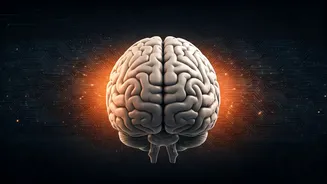
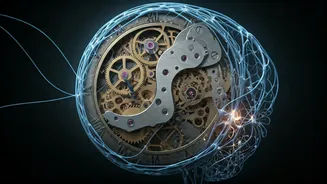
While AI can process vast amounts of data to identify patterns, it often struggles with context, ambiguity, and true comprehension. This is where human critical thinking becomes indispensable. The ability to analyze complex situations, ask the right questions,
and make nuanced judgments in ambiguous situations is a skill that machines cannot replicate. Future-proof professionals will be those who can look at the answer an AI provides and ask, "Is this truly the best solution? What are the ethical implications? What haven't we considered?" This involves not just solving the problem at hand but defining the problem in the first place—a strategic capability that remains firmly in the human domain.
2. Creativity and Originality
AI can generate text, images, and music based on existing data, but it cannot create something truly original from lived experience or genuine imagination. True creativity involves connecting disparate ideas, challenging assumptions, and expressing a unique point of view grounded in human context. As AI automates routine tasks, the demand for innovative ideas, strategic brand development, and original solutions will grow. Companies will still need people to decide which problems are worth solving and which experiments should be pursued. Your ability to generate novel ideas is a powerful differentiator in a world where information is abundant but genuine insight is scarce.
3. Emotional Intelligence and Empathy
Perhaps the most significant differentiator is emotional intelligence (EI). This is the ability to understand, manage, and respond to your own emotions and those of others. AI can simulate empathy, but it cannot form genuine heart-to-heart connections or build trust. In the workplace, this translates to effective collaboration, conflict resolution, and inspirational leadership. Studies from Yale show that emotionally intelligent supervisors foster more creative and innovative teams. As technology handles more logistical work, the human experience—feeling understood, motivated, and valued—becomes a critical component of business success. Careers in healthcare, human resources, and management, which are built on empathy, are especially resilient.
4. Leadership and Social Influence
AI can manage tasks, but it cannot lead people. True leadership is about inspiring a shared vision, motivating teams through uncertainty, and building a strong, adaptable culture—qualities that are deeply human. According to the World Economic Forum, leadership and social influence are among the most critical skills for the coming decade. As workplaces undergo rapid, AI-driven change, the need for effective human leadership to guide employees through the transition becomes even more acute. An employee who can influence colleagues, build consensus, and drive change without formal authority provides a type of value that algorithms cannot measure or replicate.
Cultivating Your Human Advantage
The key is not to view your career as a race against the machine, but as an opportunity to collaborate with it. The most successful professionals will be those who use AI to handle routine work, freeing up their time to focus on higher-level tasks that require human strengths. Start by taking inventory of your own uniquely human skills. Seek opportunities to solve complex problems, lead projects, and mediate discussions. Practice active listening to build empathy and ask for feedback to increase self-awareness. The mindset must shift from protecting your current role to finding ways to use technology to make your uniquely human contributions even more valuable.