
The Moon's Two Faces
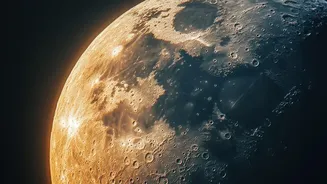
Anyone who has ever looked up at the night sky is familiar with the 'Man in the Moon'—the dark patches, or 'maria', that form the familiar face of our nearest celestial neighbour. These vast, smooth plains are ancient volcanic basins. But this is only
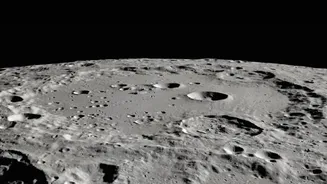
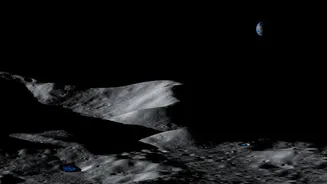
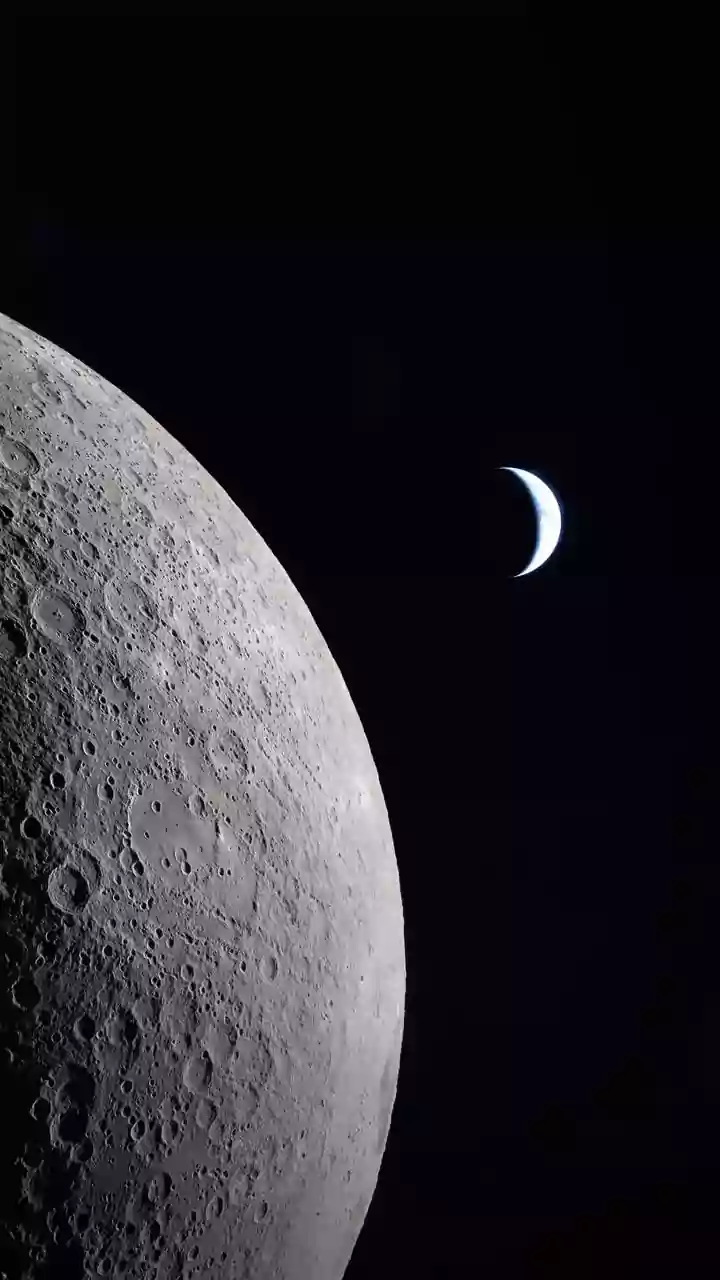
half the story. Thanks to tidal locking, the Moon rotates at the same rate it orbits our planet, meaning we only ever see one side. It wasn't until 1959, when the Soviet Luna 3 probe flew past, that humanity got its first glimpse of the farside. The view was startlingly different. Instead of wide, dark maria, the farside is almost entirely covered in a chaotic jumble of impact craters. Its crust is also significantly thicker and has a different chemical composition. For decades, scientists have debated why the two hemispheres are so dramatically different, a puzzle known as the lunar dichotomy.
A Breakthrough from the Farside
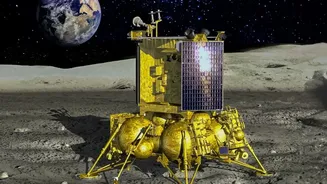
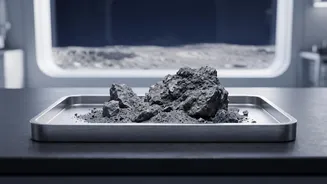
While orbital probes gave us maps, the real breakthrough required getting our hands dirty—or rather, getting rocks. That moment came in 2024 with China's historic Chang'e-6 mission. It became the first-ever mission to land on the farside and return samples to Earth, collecting nearly two kilograms of precious soil and rock from the vast South Pole-Aitken basin. For the first time, scientists could directly compare rocks from both sides of the Moon in a laboratory. A research team led by Professor Hejiu Hui of Nanjing University did just that, analysing the chemical makeup of the farside samples and comparing them to those brought back by the Apollo and previous Chang'e missions. Their findings, published recently, point to a powerful external force that shaped the Moon's evolution: the Earth itself.
The Earth's Gravitational Tug
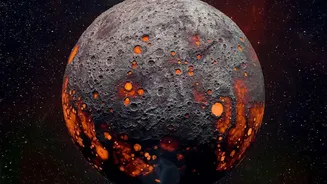
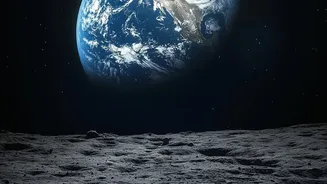
The new research suggests a compelling model for how the Moon's two faces came to be. Billions of years ago, shortly after its formation from a giant impact with Earth, the Moon was a molten ball and much closer to our planet than it is today. Once the Moon became tidally locked, the side facing Earth was subjected to more intense gravitational forces. According to the researchers' model, this created uneven tidal heating, making the nearside hotter than the farside. This temperature difference drove enormous, slow-moving currents within the Moon's global magma ocean. Hotter, molten material flowed from the nearside towards the cooler farside. This process carried early-forming, magnesium-rich crustal materials along with it, effectively piling them up on the farside and making its crust thicker. Meanwhile, the remaining radioactive, heat-producing elements like potassium and thorium became concentrated on the nearside, contributing to the prolonged volcanism that formed its dark maria.
Why This Discovery Matters
This research doesn't just solve a long-standing lunar mystery; it rewrites our understanding of the deep, physical connection between the Earth and Moon. It shows that our planet played an active role in sculpting its satellite's geology on a hemispheric scale. The analysis of the Chang'e-6 samples provides the first 'ground truth' physical evidence to support the tidal heating theory. The findings indicate that while the underlying mantle of the Moon may be relatively uniform, its surface features were dictated by this massive, gravity-driven redistribution of material early in its history. This has profound implications for understanding planetary formation and the evolution of tidally locked bodies throughout the universe. As nations like India continue their own lunar exploration with programs such as Chandrayaan, this new knowledge provides crucial context, refining our models of the Moon's history and helping to guide the search for resources and the selection of sites for future human outposts.