



The Robotic Vanguard: Billions for Breakthroughs
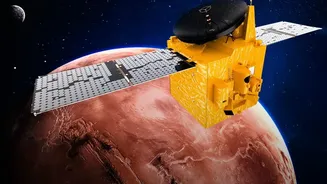
Robotic exploration is our established method for studying Mars. For decades, a fleet of orbiters, landers, and rovers have acted as our eyes, ears, and hands on the planet. These missions are complex technological marvels, but their costs are relatively
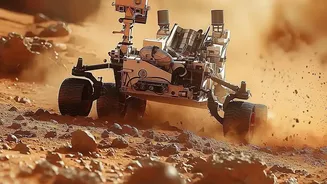
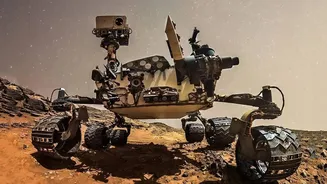
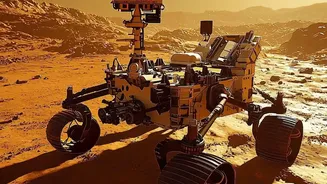
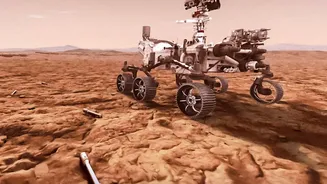
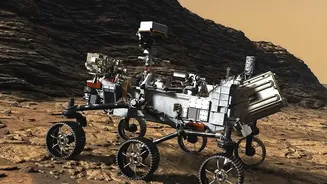
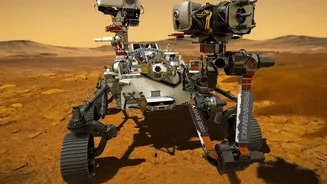
manageable in the world of space exploration. For instance, NASA's Perseverance rover, which landed in 2021, had a total mission cost of about $2.7 billion. This figure covers everything from development and the $243 million launch to its first two years of operation. While a significant investment, it's on par with other major robotic missions, like the Curiosity rover before it. These robots are our scientific trailblazers, mapping the surface, analyzing geology, and searching for signs of ancient life, paving the way for future human endeavors.
The Human Mission: A Trillion-Dollar Leap
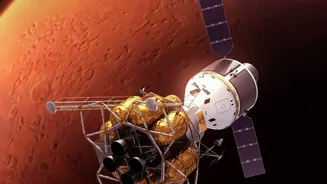
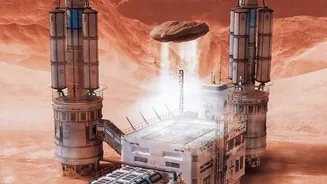
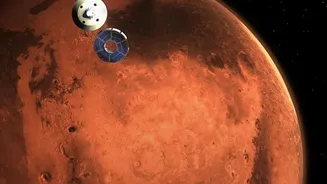
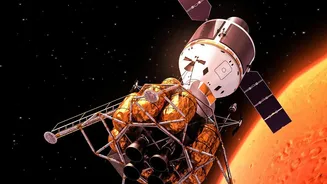
Sending humans to Mars is an entirely different financial proposition. Estimates for a single crewed mission range wildly, but frequently land in the hundreds of billions of dollars, with some credible projections reaching half a trillion dollars or more. One recent estimate suggested a potential cost of up to $600 billion. The immense difference comes down to one critical factor: keeping people alive. A human mission requires a spacecraft capable of supporting a crew for up to three years, complete with food, water, and breathable air. All this life-support equipment adds enormous mass, which in turn requires more powerful and expensive rockets to escape Earth's gravity. Furthermore, a return journey is non-negotiable for astronauts, meaning a separate, fuel-heavy vehicle capable of launching from the Martian surface must also be part of the payload.
Complexity: The Challenge of Autonomy vs. Biology
While cheaper, robotic missions are far from simple. A primary challenge is the communication delay between Earth and Mars, which can be up to 24 minutes one-way. This means rovers cannot be remote-controlled in real-time. They must have a high degree of autonomy to navigate terrain and make decisions, guided by commands sent hours in advance. This limits their speed and ability to react to unexpected discoveries or dangers. NASA's Curiosity rover, for example, moves at a top speed of just 0.14 kilometers per hour. Human missions face a different set of complexities, centered on biology and psychology. Astronauts must be shielded from deadly cosmic radiation in deep space, a problem for which no perfect solution currently exists. They must also contend with the physiological effects of long-term exposure to reduced gravity, such as muscle atrophy and bone density loss. The psychological strain of extreme isolation and confinement for years is another major, unresolved hurdle.
Scientific Return: Patience vs. Intuition
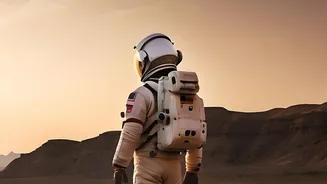
This is where the debate becomes most interesting. Robots are patient, durable, and can operate in hazardous environments for years without risking human life. They provide a steady stream of valuable data, transforming our understanding of the Martian environment. However, their capabilities are limited by their design and slow pace. Humans, in contrast, offer unparalleled adaptability and intuition. An astronaut can make discoveries and decisions on the fly, pivot to new tasks, and solve unexpected problems. Some experts argue that a human geologist could accomplish in a week what a rover does in a year. They can break open countless rocks to search for microbial fossils, a task that is difficult for a robot to perform with the same efficiency. For truly in-depth field science and the ability to react to the unknown, human explorers hold a distinct advantage.