


A New Atlas for a New World
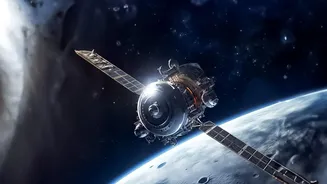
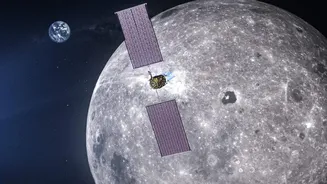
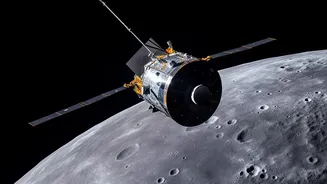
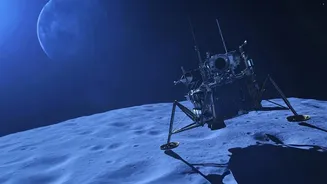
For decades, scientists suspected water was hiding on the Moon, but early evidence was indirect or low-resolution. Now, a new generation of orbiters and instruments, such as NASA's ShadowCam on the Korea Pathfinder Lunar Orbiter, are peering into the coldest,
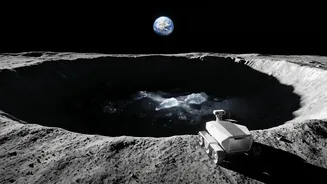
darkest places in the solar system: permanently shadowed craters near the lunar poles. These regions haven't seen sunlight in billions of years, making them perfect cold traps for water ice. Recent data has provided the most detailed maps yet, moving beyond simply knowing water is there to understanding its form and distribution. Instead of vast, uniform sheets, these new maps suggest the ice may exist in smaller, patchier deposits mixed with lunar soil, known as regolith. While this means it might not be as widespread as once hoped, knowing exactly where these deposits are is a game-changer.
The Ultimate Local Resource
Why is finding water so important? Because launching anything from Earth is incredibly expensive. Carrying all the water needed for drinking, sanitation, and other life support for long-term missions is a logistical nightmare. Access to local water ice completely changes the equation, allowing astronauts to “live off the land.” The water can be melted and purified for drinking and hygiene. But its most transformative potential lies in its chemical components: hydrogen and oxygen. Using electricity, a process called electrolysis can split water molecules (H2O) into their constituent parts. The oxygen can be used for breathable air in habitats, and both hydrogen and oxygen, when liquefied, are a potent rocket propellant.
A Lunar Gas Station
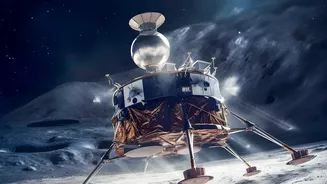
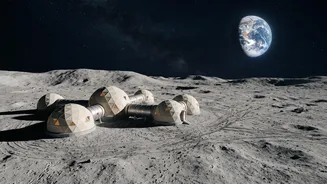
The ability to produce rocket fuel on the Moon is perhaps the single most significant implication of these findings. It could turn the Moon from a mere destination into a strategic outpost and refueling station for deeper space exploration. Missions to Mars, for example, become far more feasible if the spacecraft doesn't need to lift all its fuel for the entire round trip out of Earth's heavy gravity. A spacecraft could launch from Earth, refuel at a lunar depot, and then continue on to Mars or other destinations. This capability is a cornerstone of NASA's Artemis program, which aims to establish a sustainable human presence on the Moon. The program has specifically targeted the lunar south pole for future crewed landings precisely because of the evidence for water ice in its shadowed craters.
The Challenges Ahead
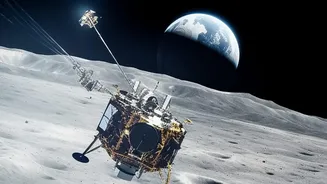
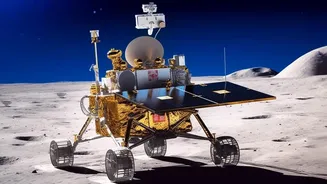
Despite the excitement, significant challenges remain. The technology to excavate ice from the super-cold, rock-hard regolith in a near-vacuum and then process it into water, oxygen, and fuel needs to be proven effective on the lunar surface. Rovers like NASA's Volatiles Investigating Polar Exploration Rover (VIPER) are designed to do just that—prospect for ice and test the feasibility of extraction. New methods, such as using seismic waves from drills to detect buried ice, are also being developed to help pinpoint the richest deposits without having to dig everywhere. Furthermore, international partners, including China, are also planning bases at the lunar south pole, creating a new space race for the Moon's most valuable real estate and resources. The success of these early prospecting and technology demonstrations will determine how quickly the vision of a bustling lunar outpost becomes a reality.