




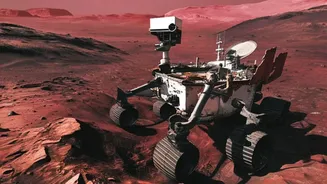
The Silent Rover Killer
On Mars, the greatest threat isn't a dramatic Hollywood-style wind that can tip a spacecraft over. Instead, it’s the fine, pervasive dust. When massive storms kick this dust high into the thin atmosphere, it can linger for weeks or months, blotting out
the sun. For a solar-powered rover, this is a death sentence. The 2018 global dust storm famously ended the mission of the long-lived Opportunity rover. After the sky darkened, its solar panels couldn't generate power, and the rover fell silent forever. Even a 99% reduction in direct sunlight has been observed during severe storms. This loss of energy means a rover can’t perform scientific work, move, or even run the internal heaters needed to survive the frigid Martian nights, making dust storms the ultimate challenge for mission longevity.
A New Eye in the Martian Sky
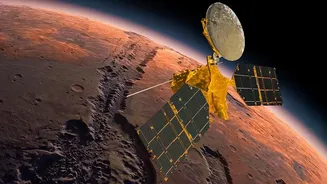
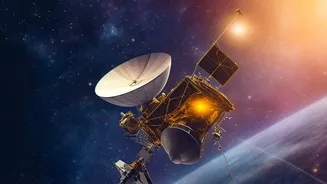
For years, our approach to Martian weather has been largely reactive. We could see large storms as they grew, but we couldn’t see them coming. That’s beginning to change. A fleet of orbiters, including NASA's Mars Reconnaissance Orbiter (MRO), Mars Odyssey, and MAVEN, act as a sophisticated weather satellite network. The MRO, in particular, is a key player. Its Mars Color Imager (MARCI) instrument creates a daily global weather map, allowing scientists to spot the earliest signs of storm formation. This isn’t just about seeing a big cloud; it's about identifying the precursor conditions and small-scale events that can escalate into a planet-encircling catastrophe. The first sign of the storm that doomed Opportunity, for instance, was spotted not by the rover itself, but from orbit by the MRO.
From Genesis to Global Threat
Understanding how a small pocket of dust becomes a global event is the core of the new strategy. Scientists still don't fully understand why some storms remain small while others grow to monstrous sizes every few years. However, long-term observation is revealing patterns. Using instruments like the MRO's Mars Climate Sounder, which measures atmospheric temperature profiles, researchers can see how dust heats the atmosphere, which in turn affects wind patterns and feeds the storm's growth. Recent research has even linked sharp rises in surface temperature to the subsequent formation of major storms. By combining data on temperature, pressure, and dust content, scientists are building complex models to better forecast storm development, moving from a historical almanac-style prediction to something closer to a true weather forecast.
Smarter Operations on the Ground
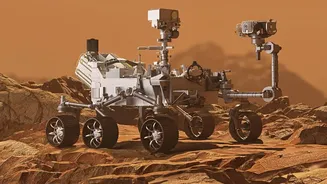
So how does a better forecast save a rover? It’s all about giving mission controllers time to react. With advanced warning of an approaching dust storm, the rover team on Earth can take preemptive action. They can command a solar-powered rover like InSight to enter a low-power “safe mode,” suspending all non-essential science operations to conserve energy. Engineers can also choose not to attempt power-intensive activities, like driving or using a robotic arm, until the threat has passed. This proactive approach ensures that the rover has enough battery power to survive weeks of darkened skies and keep its vital electronics warm. It’s the difference between being caught in a blizzard unprepared and safely hunkering down to wait it out. This capability is less critical for nuclear-powered rovers like Curiosity and Perseverance, but their operations are still affected by reduced visibility and airborne grit.
The Future of Martian Exploration
This ability to better predict and mitigate the risk of dust storms represents a major leap in our operational maturity on Mars. It directly increases the return on investment for these multi-billion dollar missions by extending their productive scientific lives. More importantly, it lays crucial groundwork for the future of Mars exploration. Any long-term human presence on Mars will almost certainly rely on solar power for habitats and rovers. Ensuring the safety of astronauts and the reliability of their power systems in the face of a global dust storm will be non-negotiable. The lessons learned from protecting our robotic explorers today are building the knowledge base needed to one day help humans survive and thrive on the Red Planet, turning it from a place we visit into a world we can sustainably explore.