






What Are Dark Stores?
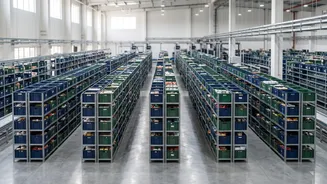
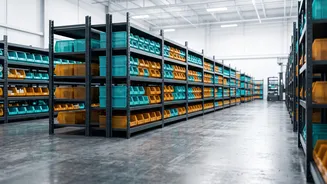
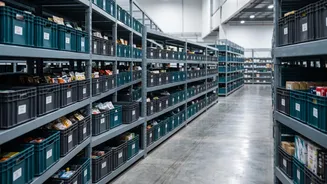
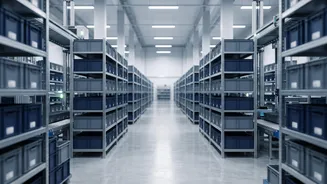
A dark store is a retail distribution hub or micro-warehouse that exists solely to fulfil online orders. Unlike a traditional supermarket, it is not open to the public. These spaces, typically 2,000 to 5,000 square feet, are packed with goods and optimised
for one thing: speed. Strategically located deep within residential neighbourhoods, they allow quick-commerce platforms to meet their promise of ultra-fast delivery, often within a 10 to 30-minute window. Their entire layout is designed for employees, or 'pickers', to assemble orders in minutes before handing them off to a waiting fleet of delivery riders. This model's success hinges on proximity to the customer, turning quiet residential streets into the final frontier of e-commerce logistics.
Bengaluru: The Epicentre of Quick Commerce
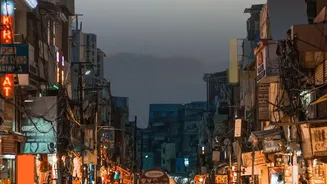
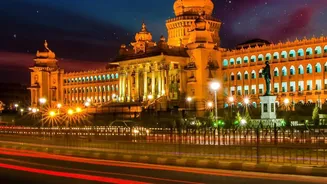
Bengaluru has more dark stores than any other city in India, with over 629 locations as of July 2026, representing more than 11% of the national total. This intense concentration is no accident. The city's notorious traffic, tech-savvy population, and high density of office parks and residential complexes make it the perfect market for quick commerce. For a populace accustomed to long commutes, the ability to get essentials delivered instantly is a powerful value proposition. This demand has fueled an aggressive expansion, with platforms like Blinkit, Zepto, and Swiggy Instamart competing for prime locations to gain a hyperlocal edge.
The Strain on Neighbourhoods
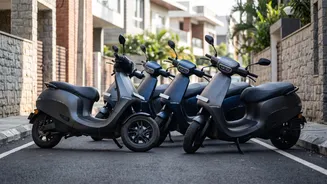
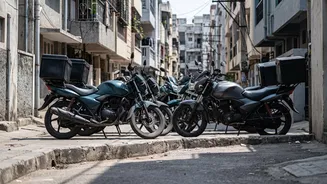
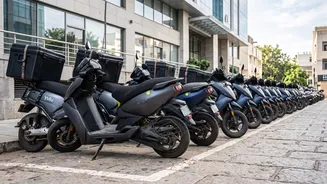
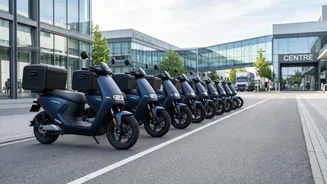
For residents living near these dark stores, the convenience of app-based delivery is overshadowed by daily disruption. The most common complaint is the constant, chaotic presence of delivery vehicles. Fleets of two-wheelers often clog narrow streets, park on footpaths, and block driveways, creating traffic bottlenecks and safety hazards. The noise from bikes revving at all hours and the commotion of loading and unloading goods, sometimes starting as early as 4 a.m., constitutes a significant public nuisance. Furthermore, with many of these facilities lacking basic amenities like restrooms, delivery partners are sometimes left with no choice but to use public spaces, leading to hygiene concerns. These issues transform residential areas into high-traffic commercial zones, degrading the quality of life for those who live there.
A Regulatory Grey Area
A major part of the problem is that many dark stores operate in a legal vacuum. Urban planning laws in Bengaluru, governed by the Bruhat Bengaluru Mahanagara Palike (BBMP) and the Revised Master Plan, create strict zoning regulations that separate residential, commercial, and industrial areas. Commercial activities are heavily restricted in residential zones, especially on roads narrower than 40 feet, a rule upheld by High Court orders. However, quick-commerce companies often classify these micro-warehouses as 'shops' to get around rules that prohibit 'warehousing' or 'godowns' in residential areas. This classification is legally questionable, as dark stores do not serve walk-in customers and function purely as logistical hubs. This often puts them in direct violation of zoning laws, but enforcement has been slow and inconsistent.
The Path to Coexistence
The conflict between quick-commerce innovation and urban livability has reached a critical point. Residents and resident welfare associations (RWAs) are increasingly filing complaints with municipal bodies and police, leading to some enforcement actions. Urban planners and legal experts argue that a new regulatory framework is needed to address dark stores specifically. Potential solutions include creating clear zoning guidelines for micro-fulfilment centres, enforcing stricter rules for commercial vehicle operation in residential lanes, and requiring companies to provide adequate parking and facilities for their delivery partners. As it stands, the convenience of a few taps on a screen is externalizing its operational costs onto the public infrastructure and peaceful enjoyment of city neighbourhoods.