






The Problem with Liquid Sugar
That glass of packaged orange juice, sweet lassi, or even a 'healthy' smoothie can flood your system with a high concentration of sugar. When fruit is juiced, most of its natural fibre is stripped away. Without fibre to act as a brake, this liquid sugar is absorbed
into your bloodstream almost instantly. This causes a rapid spike in blood glucose, giving you a short-lived burst of energy. However, what goes up must come down. Your body releases a surge of insulin to manage the sugar overload, often leading to a sharp crash that leaves you feeling tired, foggy, and hungry long before lunchtime. This cycle of spikes and crashes can disrupt your energy and focus for the rest of the day.
Whole Fruit's Natural Advantage: Fibre
When you eat a whole piece of fruit, like an apple or a guava, you consume its sugar in its natural packaging: the fruit's cellular structure, which includes fibre. This dietary fibre is a type of carbohydrate that your body can't easily digest. It forms a gel-like substance in your gut, which physically slows down the digestion and absorption of sugar. Instead of a rapid surge, you get a slower, more gradual release of glucose into your bloodstream. This prevents the dramatic spike-and-crash cycle, providing you with more stable, sustained energy. For example, a whole orange has a much lower glycemic index (a measure of how quickly a food raises blood sugar) than orange juice.
Beyond Fibre: The Full Package
The benefits of choosing whole fruit don't stop at fibre. The process of juicing can destroy or reduce some of the beneficial vitamins and antioxidant compounds found in the fruit's pulp and skin. Furthermore, eating a whole fruit is more satiating. The act of chewing and the bulk from the fibre send signals to your brain that you're full, which helps with appetite control. You would have to eat four or five oranges to get the same amount of sugar that is in a single glass of juice, but you'd feel far fuller from the whole fruit long before you could consume that much.
Quick Idea 1: Greek Yogurt with Berries and Nuts
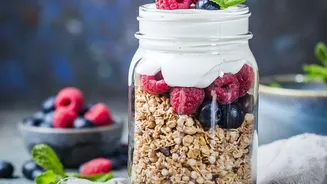
This breakfast takes just two minutes to assemble and offers a powerful combination for blood sugar stability. Full-fat Greek yogurt (or thick dahi) provides a strong base of protein with minimal sugar. Berries, such as strawberries or local jamun, are among the lowest-glycemic fruits you can find. A small handful of almonds, walnuts, or seeds adds healthy fats and even more fibre, further slowing down sugar absorption and keeping you full for hours. This no-cook option is perfect for busy mornings.
Quick Idea 2: Apple Slices with Nut Butter
Simple, portable, and effective. An apple provides slow-release carbohydrates and valuable fibre. Pairing it with a tablespoon or two of unsweetened peanut or almond butter adds protein and healthy fats. This combination is a classic for a reason: the fat and protein act as a buffer, ensuring the fruit's natural sugars are released gradually. It prevents the sharp glucose spike you might get from eating a fruit entirely on its own and provides lasting energy and satiety.
Quick Idea 3: Scrambled Eggs with a Side of Papaya
Eggs are a fantastic breakfast choice as they are high in protein and contain virtually no carbohydrates, which helps keep blood sugar levels very stable. You can scramble two eggs in a few minutes. Instead of pairing them with toast, which can add fast-digesting carbs, have a small bowl of papaya or a pear on the side. This gives you the sweetness and nutrients of fruit, balanced perfectly by the protein and fat from the eggs for a steady morning.
Quick Idea 4: Oats with Fruit and Cinnamon
Porridge made from rolled oats, not the instant sugary kind, is an excellent source of a soluble fibre called beta-glucan, which is well-researched for its ability to lower the glucose response after a meal. Cook the oats with water or milk and instead of sugar, top with half a sliced banana or a few berries. Add a sprinkle of cinnamon, which may help with insulin sensitivity, and a few walnuts for a boost of protein and healthy fats. This warm and filling breakfast can be prepared in under 10 minutes.