




The Hidden Engine of Melt
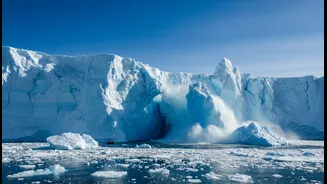
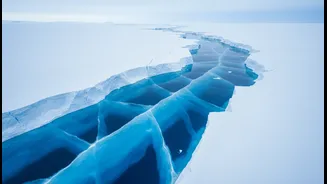
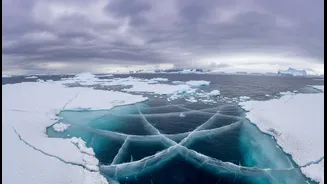
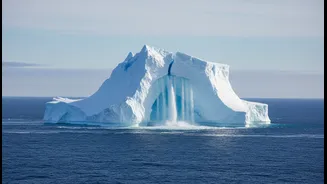
One of the most alarming new discoveries concerns what is happening far beneath the floating ice shelves that fringe the continent. Scientists have found that the undersides of these shelves are not smooth but are carved with long channels. A study from
May 2026 revealed these channels can trap warm ocean water, preventing it from circulating away. This creates pockets of intense heat that dramatically accelerate melting from below, a process that current climate models may not fully account for. Further research highlights a dangerous feedback loop. As ice melts, it releases fresh, cold water. This meltwater dilutes the dense, salty layer of bottom water that normally acts as a barrier, protecting the ice from warmer deep-ocean currents. As this barrier weakens, more warm water pushes through, causing even more melting, which in turn weakens the barrier further. This self-reinforcing cycle means that ice loss can speed up on its own, independent of just a warming atmosphere.
A Sudden, Violent Shift
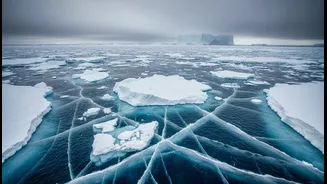
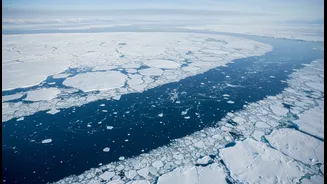
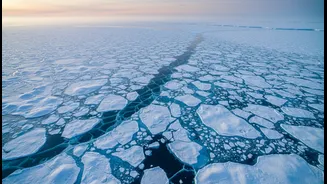
While melting from below explains how ice is being lost, another puzzle was why the decline started so abruptly. For decades, Antarctic sea ice was surprisingly stable, even expanding in some years. Then, around 2016, it began a sudden and dramatic decline, losing an area of ice larger than Greenland in the winter of 2023. Scientists now believe they know why. Studies published in mid-2026 point to a “violent release” of pent-up ocean heat. For years, a surface layer of less salty water had trapped warmer, deeper water below. However, intensifying winds linked to climate change eventually became strong enough to push the surface waters away from the continent. This allowed the warm, salty circumpolar deep water to well up from the depths and reach the ice, triggering rapid melting. This abrupt shift flipped the system from a state of stability to one of sustained decline, a change from which it has not recovered.
The Ancient Origins of the Ice
The story of Antarctica’s ice also has a much deeper history. One of the longest-standing puzzles in climate science is why Antarctica became engulfed in ice around 34 million years ago, a time when Earth was significantly warmer and the Arctic remained ice-free for millions more years. A landmark study published in the journal Science in July 2026 finally shed light on this mystery. The answer, it turns out, is geological. The research shows that the slow-motion breakup of the supercontinent Gondwana sent ripples through the Earth’s mantle. These “mantle waves” gradually lifted the land surface of East Antarctica over millions of years, creating a vast high plateau and the Gamburtsev Mountains, which now lie buried beneath kilometres of ice. This uplift created the high ground needed for snow to accumulate and survive summer melts, eventually seeding the continent’s enormous ice sheet. In essence, geological forces gave Antarctica a major head start on glaciation.
Why This Matters for India
What happens in Antarctica does not stay in Antarctica. The continent’s ice sheet holds enough frozen water to raise global sea levels by nearly 60 metres if it were to melt completely. The recent discoveries are particularly concerning because they suggest that many climate models—the same ones used to inform international policy—are underestimating the speed and scale of this melt. By missing key feedback loops and hidden melting processes, current projections for sea level rise could be too conservative. For India, with its 7,500-kilometre coastline and densely populated coastal cities like Mumbai, Chennai, and Kolkata, the implications are profound. Even a modest increase in sea-level rise beyond current estimates would significantly expand the threat of permanent flooding and more destructive storm surges, affecting millions of people.