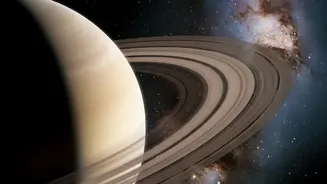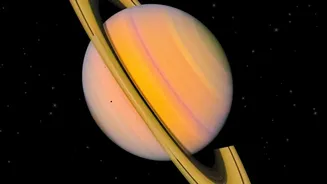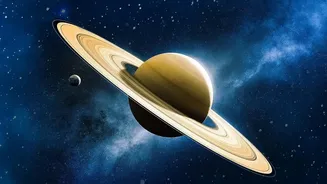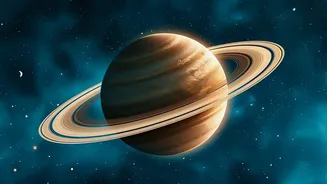



Why August is a Prime Month for Saturn
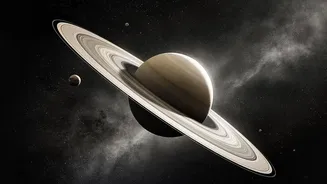
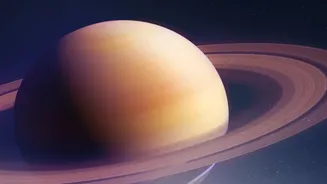
Throughout August 2026, Saturn will be a prominent and beautiful object in our night sky. The planet is currently moving toward its annual opposition, the point at which Earth passes directly between Saturn and the Sun. While the exact date of opposition falls
on October 4 this year, the weeks leading up to it are a fantastic time for observation. Each night in August, Saturn will appear slightly bigger and brighter as it climbs higher in the sky, offering increasingly rewarding views. The planet will rise in the east during the evening and remain visible for most of the night, making it an accessible target for stargazers.
When and Where to Look
Saturn will be visible all month long, rising a couple of hours after sunset in early August and progressively earlier as the month goes on. By the end of August, it will be rising just after evening twilight. For the best views, wait until it has climbed well above the horizon to escape the turbulence of Earth's lower atmosphere, which can make celestial objects appear blurry. Aim for late evening, around midnight, when the planet will be well-positioned. Look towards the eastern sky to find a bright, yellowish point of light that shines with a steady, untwinkling glow. Saturn will be located in the constellation Pisces, a relatively dim area of the sky which makes the bright planet stand out even more. On the mornings of August 12 and 13, Saturn will be part of a magnificent six-planet parade visible before dawn. Additionally, watch for a close approach with the Moon overnight on August 30-31.
What to Expect with a Small Telescope
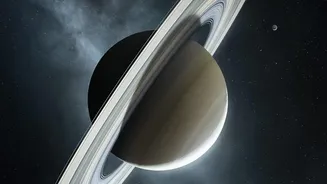
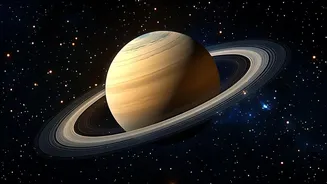
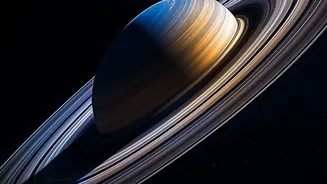
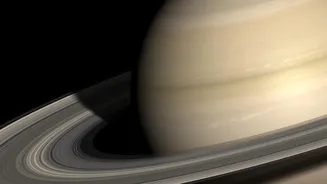
You don't need a professional observatory to enjoy the wonders of Saturn. Even a small backyard telescope with an aperture of at least 50mm and a modest magnification of 25x will clearly show the planet's most famous feature: its rings. You will be able to see the rings as a distinct structure, separate from the globe of the planet itself. While you won't see Hubble-like detail, the sight of the rings with your own eyes is an unforgettable experience. With a slightly larger amateur telescope (4-inch aperture or more), you may be able to spot the Cassini Division, a dark gap that separates the main rings. You can also look for Saturn's largest and brightest moon, Titan, which will appear as a tiny, star-like point of light close to the planet. Any stargazing app can help you identify its position on a given night.
Tips for the Best Viewing Experience
To make the most of your time with Saturn, a little preparation goes a long way. First, find a viewing spot away from direct streetlights or house lights; the darker your surroundings, the more detail you'll be able to see. Allow your eyes at least 15-20 minutes to fully adapt to the darkness. Before you set up, check the weather forecast for a clear night with calm air. Turbulent air, or what astronomers call 'bad seeing', can make planets look like they are shimmering in water. Finally, be patient at the eyepiece. Take long, steady looks, allowing moments of clear viewing to reveal finer details on the planet and in its magnificent ring system. Using a stargazing app on your phone can confirm you are pointing at the right object, but be sure to use its 'night mode' to preserve your night vision.