


Understanding the Enemy: Why Custard Gets Lumpy
Lumps in custard are essentially small bits of scrambled egg. It all comes down to proteins. Milk and eggs, the core of any true custard, are full of proteins. When heated, these proteins unfold and link together, which is what thickens the mixture. But
if you apply heat too quickly or unevenly, the proteins panic. They bind together too tightly and too fast, squeezing out water and forming grainy, solid clumps. This process, called coagulation, happens very quickly—the difference between a silky sauce and a lumpy disaster can be just a few degrees. The goal, therefore, is to gently persuade these proteins to thicken the custard slowly and evenly.
The Foundation: Start with the Right Ingredients
Before you even turn on the stove, setting yourself up for success begins with your ingredients. While many recipes work, understanding the role of each component helps. Egg yolks provide richness and are the primary thickening agent. Some recipes call for whole eggs, which create a lighter custard. Sugar does more than just sweeten; it actually gets in the way of the egg proteins, slowing down how quickly they can clump together and raising the temperature at which they cook, giving you more control. For an extra layer of security, many recipes include a starch like cornstarch or rice starch. Starch granules swell with water, physically preventing the egg proteins from grouping up too tightly and creating a more stable, thicker custard that is less likely to curdle.
The Golden Rule: Master the Art of Tempering
If there is one non-negotiable step for lump-free custard, it is tempering. Tempering is the process of slowly raising the temperature of your eggs before introducing them to the main body of hot liquid. Adding cold eggs directly into hot milk is a guaranteed recipe for scrambled eggs. To temper, first, heat your milk and sugar in a saucepan until it is steaming but not boiling. In a separate bowl, whisk your egg yolks (and starch, if using) until smooth. Then, while whisking the eggs constantly, slowly ladle or pour a small amount—about half a cup—of the hot milk into the eggs. Keep whisking as you add another ladleful. This gently warms the egg mixture without cooking it. Once you have added about a third of the hot milk to the eggs, you can then pour the warmed egg mixture back into the saucepan with the rest of the milk, whisking the whole time.
Low Heat and Constant Stirring
Once your tempered mixture is back in the pot, patience becomes your greatest tool. Cook the custard over low to medium-low heat. High heat is the enemy, as it will cause the bottom to scorch and the eggs to curdle before the rest of the mixture has a chance to thicken. Stir constantly and consistently with a whisk or a heatproof spatula, making sure to scrape the bottom and corners of the pot where heat is most intense. This not only prevents sticking but also ensures the entire batch cooks at an even rate for a uniform, smooth texture. You’ll know it’s ready when the custard thickens enough to coat the back of a spoon; if you draw a line with your finger, it should hold its shape. This typically happens around 77–82°C.
Adding the Fruit: Timing is Everything
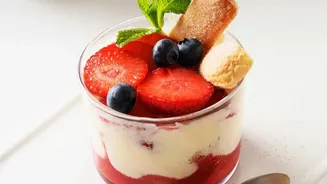
With a beautiful, smooth custard base, the final step is incorporating your fruit. Do not add fruit while the custard is hot or still cooking. The acidity and water content of many fruits can cause a warm custard to split or become watery. It's best to let your custard cool completely first. You can speed this up by placing the bowl in an ice bath. To prevent a skin from forming on the surface as it cools, press a piece of plastic wrap directly onto the custard. Once the custard is chilled, you can gently fold in your chopped fresh fruits. Sturdy fruits like apples, bananas, grapes, and berries work wonderfully. Avoid very watery fruits like watermelon, as they can thin out your final product.
Your Final Insurance Policy: The Strainer
Even the most experienced chefs use this final trick for guaranteed perfection. After the custard is cooked but before it cools, pour it through a fine-mesh sieve into a clean bowl. This simple step acts as an insurance policy, catching any tiny bits of cooked egg or undissolved starch that may have escaped your notice. It takes only a few seconds and is the ultimate secret weapon to ensure your final fruit custard is flawlessly smooth and silky, ready to impress at any gathering.