

A New Look at a Familiar Giant
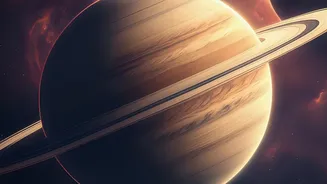
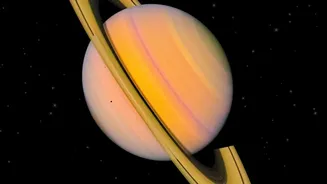
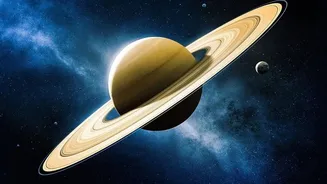
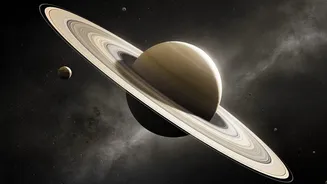
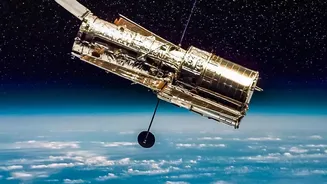
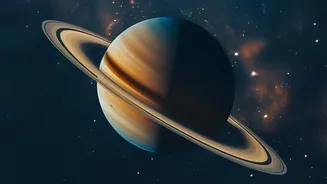
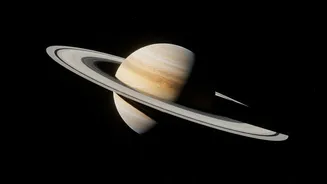
The latest observations from the Hubble Space Telescope are painting a turbulent and ever-changing portrait of Saturn. As part of the Outer Planet Atmospheres Legacy (OPAL) program, which annually monitors our solar system's outer giants, Hubble has been
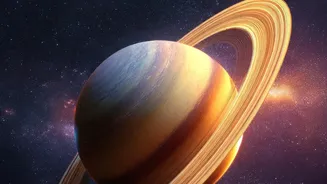
tracking the subtle and significant shifts in the planet's cloud bands and storm systems. These new infrared images show rapid changes, particularly in the northern hemisphere which is moving from its long summer towards autumn. Scientists have noted variations in the colour and brightness of the planet's distinctive bands from year to year, suggesting changes in cloud height or composition. These observations provide a continuous stream of data, allowing planetary scientists to watch weather patterns evolve across the vast gas giant in near real-time.
The Power of Infrared Vision
Observing Saturn in infrared light offers a unique advantage. While visible light shows us the tops of the clouds, infrared allows astronomers to peer deeper through the hazy upper atmosphere, revealing thermal structures and chemical compositions hidden below. This is like being able to 'slice' through the planet's atmospheric layers. Infrared can detect heat, so it highlights areas where temperatures are changing, storms are brewing, or different chemicals are reacting to sunlight. This multi-layered view is critical for understanding how the different levels of the atmosphere interact to create the weather we see on the surface. By using false-colour imaging, scientists can visualize where the atmosphere is clear and where it is hazy, or identify clouds that are reaching high into the atmosphere.
The Engine of Change: Saturn's Seasons
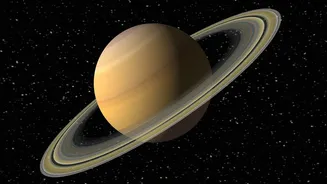
Much like Earth, Saturn has a tilted axis, which means it experiences distinct seasons. However, with an orbit around the Sun that takes nearly 30 Earth years, each of Saturn's seasons lasts for more than seven of our years. These long, drawn-out seasons are the primary driver of the atmospheric changes Hubble is now observing. The planet radiates more heat than it receives from the sun, which points to a powerful internal heat source that contributes to its dynamic weather. As one hemisphere tilts toward the Sun for its long summer, it receives continuous solar energy, warming the atmosphere and sparking giant storms. The Cassini mission previously observed how quickly the atmosphere responds when the planet's iconic rings cast long shadows, cooling the areas they cover and creating dramatic temperature differences that fuel atmospheric motion.
Storms, Winds, and the Famous Hexagon
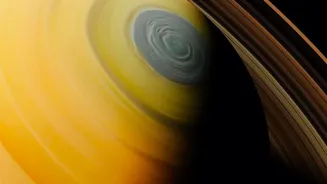
Saturn's atmosphere is a chaotic place, with winds that can reach incredible speeds and storms large enough to engulf planets. Hubble's consistent monitoring has shown that even equatorial wind speeds can fluctuate, sometimes increasing significantly before settling back to previous levels over a couple of years. The new images also keep a close watch on Saturn's most famous and mysterious weather pattern: the massive, six-sided jet stream at its north pole, known as the hexagon. While its edges were faintly visible in recent observations, the feature is of great interest because its persistence over decades highlights the stability of some large-scale atmospheric phenomena. As the northern pole tilts away from the sun and into a 15-year-long winter darkness, these may be the last detailed views of the hexagon until the 2040s.
Building a Planetary Weather Report
These annual check-ups from Hubble, sometimes in coordination with the James Webb Space Telescope, are crucial for building a long-term understanding of planetary climates. By comparing images from year to year, scientists can move beyond snapshots and begin to understand the full lifecycle of storms and seasonal shifts. The data helps refine models of gas giant atmospheres, not just for Saturn, but for planets discovered orbiting other stars. The combined power of telescopes like Hubble and Webb allows for a more comprehensive picture, with Hubble providing the long-term context in visible light and Webb adding powerful infrared details about deeper layers. Each new image adds another piece to the puzzle of how these immense and distant worlds work.