


An Imbalance Years in the Making
The root of India's current predicament is not a recent development but a structural shift that has been years in the making. Champion teams of the past often boasted a comfortable balance, with top-order batters like Sachin Tendulkar, Virender Sehwag,
and Yuvraj Singh who could reliably roll their arm over. This luxury afforded the captaincy incredible flexibility, allowing them to control the game's tempo and adapt to conditions without compromising on batting depth. However, the modern era has seen a rise in batting specialists, players who focus singularly on run-scoring. While this has produced some of the world's most formidable batters, it has left the team strategically brittle. Without those crucial 4-5 overs from a top-six batter, India is often forced into a corner: either pick a batting lineup that is an explosive but risky one specialist bowler short, or lengthen the tail by picking five bowlers, weakening the lower-order firepower.
The Hardik Pandya Conundrum
For a while, Hardik Pandya was the solution. A genuine seam-bowling all-rounder who could hit 140 kmph and clear any boundary with the bat, he provided the ideal balance. When fully fit, Pandya allows India to play both five specialist bowlers and maintain batting depth. But his fitness has been a constant source of concern. Pandya has been sidelined with injuries repeatedly throughout his career and has been out of competitive action since the 2026 IPL season. Reports suggest his recovery is being carefully managed, with a potential return to competitive cricket slated for later in September, followed by India A games to prove his readiness. This fragility means that building a team structure around him is a high-stakes gamble. The team management is perpetually caught between hoping for his return and searching for a non-existent like-for-like replacement. This dependency was starkly highlighted in the recent T20I series against Afghanistan, where his absence was keenly felt.
A Parade of Part-Time Experiments
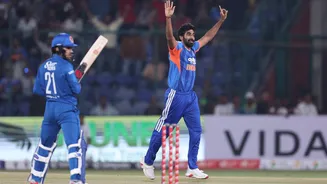
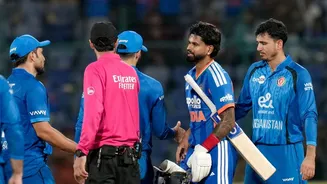
In Pandya's absence, India has trialed a host of all-rounders with mixed and often costly results. The first T20I against Afghanistan on September 13 served as a perfect case study of the problem. The four specialist bowlers did their job, but the remaining four overs were a lottery. The responsibility was split between Shivam Dube, Nitish Kumar Reddy, and Abhishek Sharma. Reddy and Dube proved to be extremely expensive; Reddy conceded 30 runs in his two overs, while Dube was taken for 21 in the final over of the innings. While Abhishek Sharma has shown promise, and even took a record-breaking 3-wicket haul in Zimbabwe earlier in the year, he was only trusted with a single over. These experiments often result in one or two very expensive overs that undo the hard work of the frontline attack, releasing pressure and allowing the opposition back into the game. Pundits like Wasim Jaffer and Mohit Sharma have publicly flagged this as India's biggest weakness, even in victory.
Injury Woes Deepen the Crisis
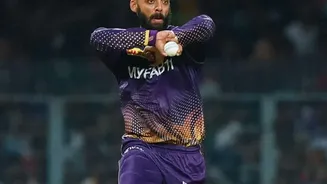
Compounding the all-rounder issue is a worrying trend of injuries to specialist bowlers, stretching the team's resources perilously thin. Spinner Varun Chakravarthy, who had just returned from a hamstring injury, was ruled out of the Afghanistan series with a fresh side strain after an impressive performance in the first match. His absence is a significant blow, removing an economical and wicket-taking option. This incident is part of a larger, more concerning pattern of players breaking down shortly after being cleared, raising questions about injury management protocols. With key pacers like Jasprit Bumrah also having recently returned from their own injury layoffs, the bowling unit feels fragile. This spate of injuries means there is no cushion. The team cannot afford to 'hide' a part-timer when even the specialists are walking a fitness tightrope.
The Path Forward: Groom or Gamble?
The Indian team management finds itself at a crossroads with two potential paths. The first is to gamble on the current strategy, hoping that one of the existing all-rounders like Dube or Reddy develops the required consistency with the ball under pressure. This could involve tactical adjustments, as suggested by former cricketer Mohammad Kaif, such as using them in different phases of the game. The alternative is a more conservative structural change. This would mean either including a specialist bowler like Ravi Bishnoi or Yash Thakur at the cost of some batting depth, or bringing in a more reliable bowling all-rounder like Washington Sundar. In the long term, the only sustainable solution is to groom multi-skilled players right from the domestic level, creating a larger pool of genuine all-rounders. Until then, selectors face a tough choice before every series: patch the holes and hope for the best, or make a definitive call that could redefine the team's balance.