







The Challenge of Eating in Space
Eating in a zero-gravity environment is far more complicated than just floating around and enjoying a meal. In microgravity, the human body undergoes significant changes. Bodily fluids shift upwards, leading to stuffy sinuses and a dulled sense of taste
and smell, much like having a cold. This makes food seem bland, a phenomenon that can lead to 'menu fatigue' and reduced appetite. Furthermore, without gravity, crumbs from foods like bread don't fall; they float, posing a serious risk to sensitive electronic equipment and the astronauts themselves. Liquids also behave differently, forming globules that can float away if not properly contained. These challenges mean that space food isn't just about sustenance; it's a highly engineered solution to keep the crew healthy, safe, and happy.
A Taste of Home, Hundreds of Kilometres Up
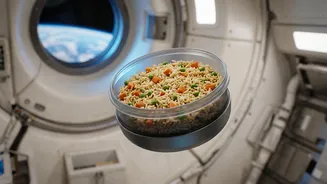
For the Gaganyaan crew, a taste of familiar Indian cuisine will be a key comfort. The Defence Food Research Laboratory (DFRL) in Mysuru, part of the DRDO, has been tasked with creating a menu that is both nutritious and appealing to the Indian palate. After extensive research and development, a menu of over 30 items has been prepared. The list includes favourites like idli sambar, upma, vegetable pulav, egg rolls, chapatis, and chicken biryani. For dessert, astronauts can look forward to moong dal halwa or suji halwa. To account for the dulled sense of taste, the meals are designed to be mildly spiced, with optional spice sachets available for those who prefer an extra kick. This focus on familiar flavours is crucial for morale on a mission far from home.
The Science of a Space-Ready Meal
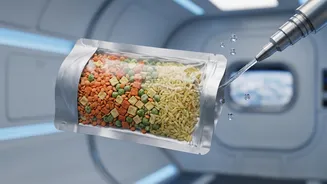
Getting food ready for space is a meticulous process. To ensure longevity and safety, most foods are processed to be shelf-stable for long periods without refrigeration. This involves techniques like thermostabilization (heat-treating to kill microbes), irradiation, and freeze-drying. Freeze-dried foods, which are lightweight and compact, can be rehydrated with water inside the spacecraft. Food heaters will be provided to allow the crew to enjoy warm meals. The packaging is just as important as the food itself. It must be lightweight, easy to handle in zero gravity, and prevent any food particles from escaping. For liquids like water and juices, special containers and straws have been designed that pull back any stray droplets after a sip, preventing them from floating around the cabin.
Nutrition: The Fuel for a Successful Mission
An astronaut's diet is a critical component of their health and performance. In space, the body experiences bone density and muscle mass loss, with some studies showing a loss of up to 1% of bone mass per month. To counteract this, the diet must be rich in calcium and vitamin D. Nutritionists carefully plan meals to provide a balanced supply of vitamins, minerals, proteins, and carbohydrates, with daily calorie needs ranging from 1,900 to 3,200 depending on the individual. Protein intake is carefully managed, as too much can potentially increase calcium loss, while sufficient levels are needed to slow muscle deterioration. The Gaganyaan food system is being designed to meet these exacting nutritional requirements, ensuring the crew remains in peak physical condition throughout their three-day mission and safe return.