

What Exactly Did Webb Discover?
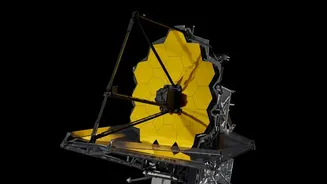
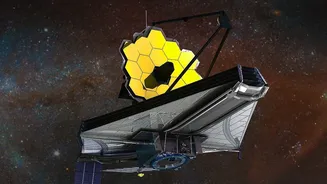
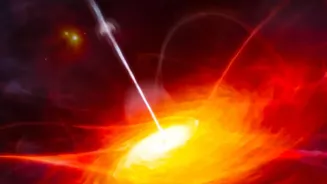
In a survey of the early universe, astronomers using the James Webb Space Telescope (JWST) spotted something unusual: a faint companion next to a known quasar. A quasar, short for 'quasi-stellar object', is the intensely bright core of a galaxy where
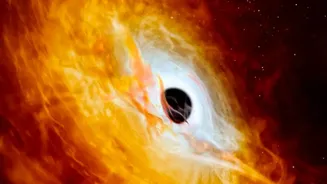
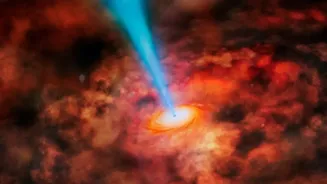
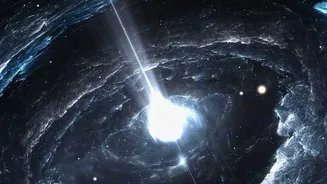
a supermassive black hole is actively feeding on enormous amounts of gas and dust. Follow-up observations with the Gemini North telescope in Hawai'i confirmed that this wasn't just one object, but two distinct quasars, seen as they existed only 900 million years after the Big Bang. This system, nicknamed Nāpōwawāʻenakaulua, features two supermassive black holes separated by about 18,100 light-years—a relatively small distance in cosmic terms. It is the most compact and oldest quasar pair ever found.
The Puzzle of Impossible Giants
Finding one supermassive black hole this early in the universe is already a major puzzle for astrophysicists. Finding a pair makes it even more confounding. The two black holes in this system are colossal, with masses estimated at 1.5 billion and 400 million times that of our sun. According to current models of cosmic evolution, there simply shouldn't have been enough time for black holes to grow this large. The universe was less than a billion years old, a period known as 'cosmic dawn', when the first stars and galaxies were just beginning to form. For a single black hole to reach such a size so quickly is difficult to explain; for two to be found in close proximity suggests that our theories about how these giants are born and raised need a serious update.
A Glimpse into Cosmic Mergers
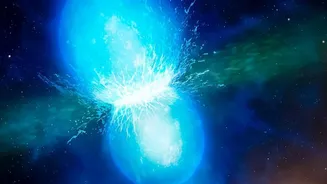
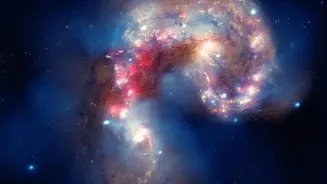
The leading theory to explain this discovery is that we are witnessing the core of a massive cosmic event: a merger between two galaxies. Most large galaxies, including our own Milky Way, are thought to have grown by colliding and merging with other galaxies over billions of years. When galaxies merge, their central supermassive black holes are drawn together. The Nāpōwawāʻenakaulua system is likely a snapshot of this process. Researchers propose that this pair formed in an unusually dense region of the early universe, where the constant interaction and collision of galaxies provided a rich feast of gas, fueling the rapid growth of both the black holes and their host galaxies simultaneously. This makes the system an invaluable natural laboratory for understanding how the universe's first massive structures were assembled.
The Power of Webb and Gemini
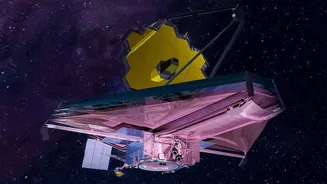
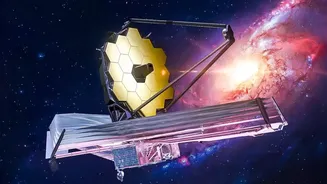
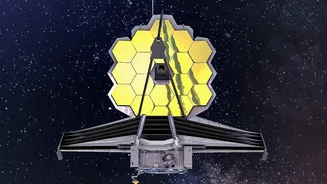
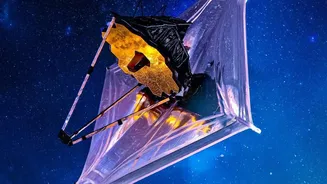
This discovery would have been impossible without the specific capabilities of the JWST and the ground-based Gemini North observatory. The initial finding was made in data from Webb's 'Aether' survey, which uses the telescope's powerful near-infrared spectrograph to create a census of the earliest objects in the universe. Webb's unparalleled sensitivity first detected the faint companion quasar. However, because the two objects were so close together, it took the sharp vision of the Gemini North telescope, aided by perfect weather conditions, to resolve them as two separate points of light and confirm their properties. This collaboration highlights how space-based and ground-based telescopes work together to push the boundaries of what we can see and understand about the cosmos.