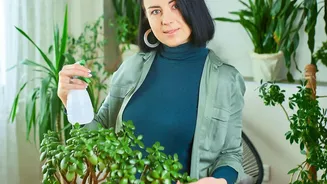


The Problem with a 'Watering Day'
Setting a recurring 'Watering Wednesday' might feel responsible, but it ignores the many factors that influence a plant's thirst. Overwatering is one of the most common reasons houseplants fail. A rigid schedule doesn't account for the current conditions
in your home. Factors like the amount of sunlight, indoor temperature, humidity levels, pot size, and soil type all determine how quickly soil dries out. A plant in a sunny window during a summer heatwave will use water much faster than a plant in a dim corner during winter. Sticking to a schedule when the soil is already damp can lead to root rot, a condition where roots are starved of oxygen and begin to decay in soggy soil.
How to Check Soil Moisture
Instead of guessing, let the soil tell you when it's time to water. The most reliable method is the finger test. Simply insert your index finger about one to two inches into the soil. If the soil feels dry at that depth, it’s time to water. If it feels moist, wait a few more days and check again. Another easy technique, especially for smaller pots, is to gauge the weight. A pot with dry soil will feel noticeably lighter than one that is well-watered. For those who want more precision, a simple soil moisture meter can take the guesswork out of the process by providing a clear reading from deep within the root zone.
Reading the Signs: Thirsty vs. Drowning
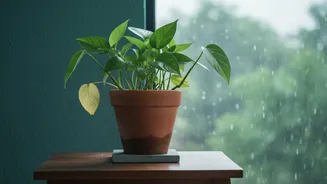
Plants often give visual cues, but they can be confusing. Wilting or drooping leaves, for instance, can be a sign of both underwatering and overwatering. An overwatered plant wilts because its rotting roots can no longer absorb water, while an underwatered plant wilts from dehydration. The key difference is often in the leaves and soil. The leaves of an underwatered plant tend to feel dry and crispy. In contrast, an overwatered plant's leaves, especially the lower ones, may turn yellow, feel soft and limp, and the soil will be soggy. Bad smells, mould on the soil surface, or a swarm of tiny fungus gnats are also classic signs of too much water.
Adjusting for Seasons and Growth
A plant’s water needs are not static; they change dramatically with the seasons. Spring and summer are active growth periods when longer days and more intense light fuel photosynthesis, increasing a plant’s thirst. You may need to water more frequently during these months. Conversely, fall and winter are typically dormant periods. With shorter days and less light, plant growth slows significantly, and so does water consumption. Many indoor plants need about half as much water in winter compared to summer. Continuing a summer watering schedule through the winter is a common mistake that quickly leads to overwatering.
Develop a 'Checking' Routine
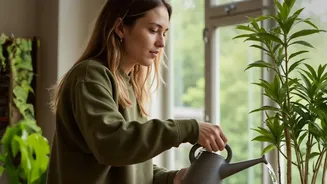
The secret to happy houseplants isn't a watering schedule, but a checking schedule. Make it a habit to check your plants' soil every few days. This allows you to respond to their actual needs in real-time. When you do water, do it thoroughly. Pour water slowly until it runs freely from the drainage holes at the bottom of the pot. This ensures the entire root system gets a deep drink. After a few minutes, be sure to empty any excess water from the saucer to prevent the plant from sitting in a puddle. This method encourages roots to grow deep and strong, creating a more resilient and healthier plant in the long run.