






1. Satellite Data Analyst
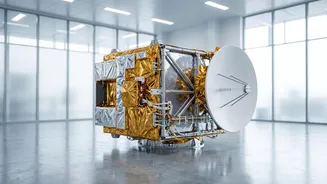
Every satellite orbiting Earth is a powerful data-gathering machine. They capture immense volumes of imagery and signals used for everything from weather forecasting and urban planning to agriculture and disaster management. A Satellite Data Analyst is the professional
who makes sense of this information. They process, interpret, and transform raw satellite data into actionable insights. This role is perfect for those with a background in data science, computer science, or geoinformatics. Strong skills in remote sensing, Geographic Information Systems (GIS), and programming languages like Python are highly valued. As India’s downstream space application sector grows, companies like SatSure and MapmyIndia are actively hiring for these roles, making it one of the most accessible entry points into the space industry for non-engineers.
2. Space Law and Policy Expert
As space becomes more crowded with government and private missions, the need for rules and regulations is critical. Who is liable if a satellite collides with another? How are contracts for launch services structured? Who owns resources mined from the moon or asteroids? A Space Law and Policy Expert tackles these complex questions. They work on international treaties, national policies, regulatory compliance, and commercial contracts. With the establishment of IN-SPACe to regulate India’s private space sector, the demand for legal minds who understand technology and policy is surging. This career path is ideal for law graduates interested in technology and international relations. Opportunities exist within government bodies like ISRO and IN-SPACe, law firms, and as in-house counsel for startups like Skyroot Aerospace and Agnikul Cosmos.
3. Aerospace Software Engineer
Modern spacecraft are as much about software as they are about hardware. Aerospace Software Engineers are the architects behind the code that runs our rockets and satellites. They develop the flight software that guides a launch vehicle, the ground control systems that manage missions, and the complex algorithms for autonomous navigation and docking. This role is at the intersection of computer science and aerospace engineering, requiring strong programming skills in languages like C++ and Python, along with knowledge of embedded systems and real-time operating systems. With private companies like Pixxel building sophisticated satellite constellations, the demand for software talent is extremely high, making it a lucrative and fast-growing career track.
4. Mission Operations Specialist
A Mission Operations Specialist is the lifeline for a satellite or spacecraft once it's in orbit. Working from a ground station, they are responsible for the day-to-day health, safety, and operation of the mission. Their job involves sending commands, monitoring telemetry (health data), troubleshooting anomalies, and ensuring the spacecraft is functioning as intended. This role requires a cool head under pressure, sharp problem-solving skills, and a solid understanding of spacecraft subsystems. A background in electrical, mechanical, or aerospace engineering is common, but diplomas in relevant technical fields can also be a pathway. Both ISRO and private satellite operators like Dhruva Space employ teams of operations specialists to manage their growing fleets in space.
5. Technical Assistant / Technician
The glamour of space missions is built on the foundation of meticulous, hands-on work by skilled technicians and technical assistants. These are the professionals who assemble, integrate, and test the components that make up a rocket or satellite. Their roles can range from working on propulsion systems and electronics to fabricating structures and operating specialised machinery. ISRO regularly recruits for positions like Technician 'B' and Technical Assistant, which are open to candidates with ITI certificates or Diplomas in specific engineering disciplines. As private manufacturing grows, these practical skills are becoming increasingly valuable across the entire ecosystem, offering a direct and impactful way to contribute to India's space ambitions without a postgraduate degree.