


A New Window on Distant Worlds
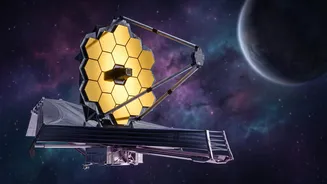
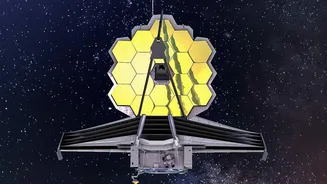
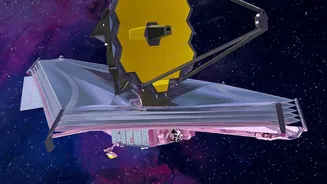
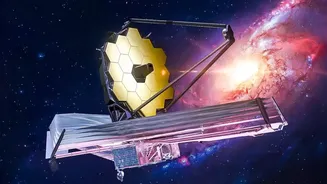
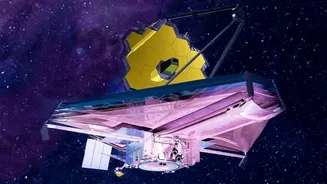
Before the James Webb Space Telescope, our ability to study the atmospheres of smaller, rocky planets was limited. While observatories like the Hubble Space Telescope could detect hints of water, JWST represents a giant leap forward. Its powerful infrared
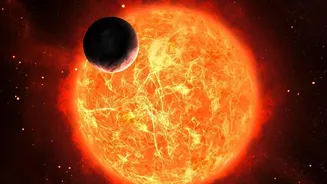
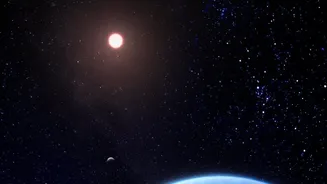
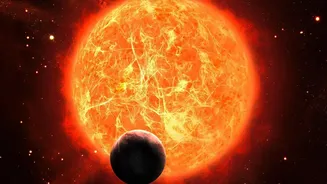
instruments allow it to capture the chemical fingerprints of atmospheres hundreds or even thousands of light-years away with stunning precision. This capability is crucial because it allows astronomers to analyse the composition of these worlds, providing clues about their formation, climate, and potential for hosting life. One of the primary techniques used is transit spectroscopy. When an exoplanet passes in front of its host star, starlight filters through its atmosphere. By analysing this light, scientists can see which wavelengths have been absorbed by different molecules, revealing what the atmosphere is made of.
Decoding the Chemical Fingerprints
JWST’s data has provided a much clearer picture than ever before. For example, observations of the gas giant WASP-96 b, located 1,150 light-years away, revealed a distinct and unambiguous signature of water vapour. More recently, and perhaps more excitingly, JWST detected water vapour in the inner disk of a young star system called PDS 70, just 370 light-years away. This is the region where rocky, Earth-like planets are thought to form. It’s the first time water has been detected so close to a star in a system where planets are actively assembling, suggesting that the raw materials for water-rich rocky worlds could be present from the very beginning. This was a measurement that was simply not possible before the Webb telescope.
More Than Just Water
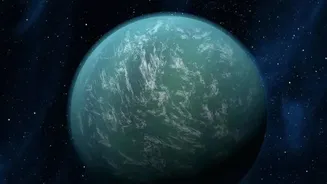
Detecting water vapour is a monumental achievement, but what scientists have learned goes much deeper. The data from JWST is a full menu of atmospheric ingredients. On the exoplanet K2-18 b, a potential 'Hycean' world with a hydrogen-rich atmosphere and a possible ocean, Webb confirmed water vapour and also detected carbon-bearing molecules like methane. The absence of other molecules, like ammonia, helps scientists refine their models of what these worlds are like. On another planet, WASP-39 b, the telescope made the first-ever detection of sulfur dioxide in an exoplanet's atmosphere. This molecule is a product of photochemistry—chemical reactions triggered by the star's light—much like how Earth's ozone layer is formed. Scientists have even detected 'semi-heavy water' on WASP-39 b, an isotope that provides clues about how the planet may have formed and migrated over time.
The Cautious Hunt for Habitability
While finding water vapour is incredibly exciting, scientists are quick to caution that it doesn't automatically mean a planet has liquid oceans or life. For example, the planet GJ 9827d has an atmosphere that might be composed almost entirely of hot steam, creating a 'steam world' that is not hospitable to life as we know it. In other cases, a water signal could even be coming from cool spots on the host star itself, rather than the planet's atmosphere. However, these detailed findings are critical. They help astronomers distinguish between planets that are merely interesting and those that are truly promising candidates in the search for life. By understanding the full chemical context, scientists can better identify planets that have the right conditions for liquid water to exist on their surface—a key ingredient for habitability. The data from JWST is shifting the search for life from a distant theory to an active investigation of specific worlds.