








Why Rain Disrupts Your Flight
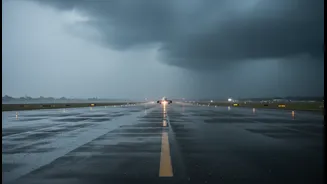
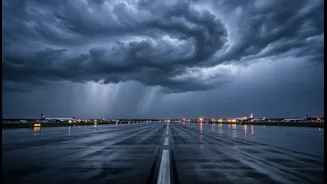
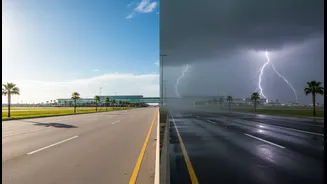
It’s not just the rain itself but a combination of factors that creates travel chaos. Extremely heavy rainfall can lead to waterlogged runways, making takeoffs and landings unsafe. The biggest culprits, however, are low visibility and strong, unpredictable
crosswinds associated with thunderstorms. These conditions often force pilots to circle, divert to a nearby airport, or lead to outright cancellations. Airports in Mumbai and Kolkata are particularly susceptible to these disruptions during the peak monsoon months of July and August. Flights are rarely cancelled for rain alone, but the associated weather hazards are what ground air traffic and cause cascading delays across the network.
Smarter Skies: The Tech Upgrade
Thankfully, technology is helping to mitigate some of this weather-related uncertainty. Major airports are equipped with Instrument Landing Systems (ILS), with CAT III being the most advanced. This system uses radio signals to guide aircraft during landing in very low visibility conditions, whether due to rain or fog. For a CAT III landing to be successful, the aircraft, the pilot, and the airport runway must all be certified. More recently, Delhi's IGI Airport has deployed India's first 'SkyCast' system. This platform integrates real-time data on wind, turbulence, and fog to provide pilots and air traffic controllers with more accurate, short-term weather forecasts, helping them make safer decisions and reduce disruptions.
Strategy 1: Book Like a Pro
Your best defence against monsoon delays starts before you even book. The single most effective strategy is to book a morning flight, preferably one departing before 10 AM. Thunderstorms and heavy showers typically build up in the afternoon and evening, so early departures face clearer skies. Furthermore, morning flights don't suffer from the cascading effect of delays accumulated throughout the day. When booking, also consider choosing a fare that offers some flexibility. It might cost a little more, but the ability to change your flight without a hefty penalty can be a lifesaver. Finally, if you're travelling for a can't-miss event like a wedding or an important business meeting, build a buffer day into your itinerary.
Strategy 2: The Day-Of Game Plan
On the day of your flight, being proactive is key. The first step is to download your airline's app and keep a close eye on your flight status. Airlines are required to notify you of delays, but the app is often the fastest way to get information. Check in online to save time at the airport. Perhaps most importantly, pack your carry-on bag strategically. Assume your checked luggage might be delayed. Your cabin bag should contain any essential medications, a phone charger and power bank, a change of clothes, and some snacks. A compact umbrella and a waterproof bag or cover for your electronics are also wise additions for when you land.
When Delays Happen: Know Your Rights
Even with the best planning, delays are inevitable. If you find yourself stranded, it's crucial to know your rights under the DGCA (Directorate General of Civil Aviation). While airlines are not required to pay monetary compensation for delays or cancellations caused by weather—as it's considered a circumstance beyond their control—they are not off the hook entirely. Airlines still have a 'duty of care'. For domestic flights, this means they must provide you with free meals and refreshments if your flight is delayed by two hours or more. If the delay requires an overnight stay, they are obligated to provide hotel accommodation and transfers between the airport and the hotel. If your flight is cancelled, the airline must offer you the choice of a full refund or a seat on an alternative flight.