


Valley of Flowers, Uttarakhand
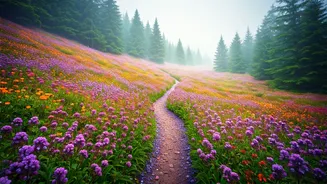
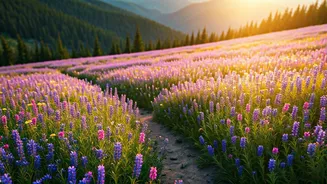
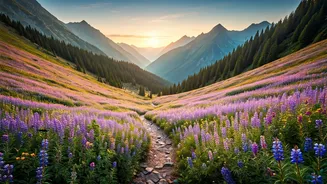
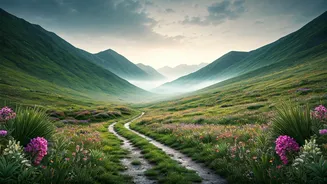
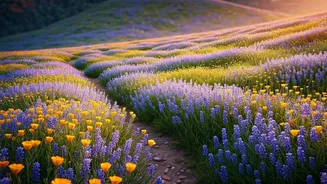
The original, and for many, the ultimate floral destination in India. Nestled in the high-altitude Himalayas, the Valley of Flowers National Park is a UNESCO World Heritage Site that transforms into a kaleidoscopic meadow from July to September. The trek
to the valley, starting from Govindghat, is moderately challenging but rewards every step with breathtaking vistas. Once inside, you're greeted by a carpet of over 500 species of wildflowers, including the elusive blue poppy, cobra lily, and an array of orchids and primulas. This isn't just a walk; it's an immersion into a living painting, with the snow-capped peaks providing a dramatic backdrop. It's a pilgrimage for botanists, photographers, and anyone seeking solace in nature's grand design. Plan ahead, as access is regulated to preserve its fragile ecosystem.
Kaas Plateau, Maharashtra
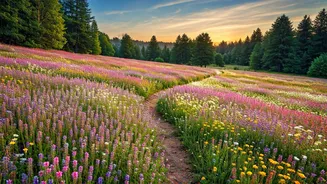
Known as 'Kaas Pathar', this volcanic plateau in the Western Ghats is another UNESCO World Natural Heritage site that puts on a dazzling show post-monsoon. From late August to early October, this seemingly barren landscape erupts in a riot of colour. Over 850 different species of flowering plants, many of which are endemic to the region, bloom in succession. The ground is covered in sheets of pink (Balsam), yellow (Smithia), and blue (Utricularia), creating a patchwork quilt of unbelievable vibrancy. To protect the delicate ecosystem, the number of daily visitors is restricted, and pathways are clearly demarcated. It's a short, accessible trip from Mumbai or Pune, making it a perfect weekend escape into a world of miniature floral wonders.
Tulip Garden, Srinagar
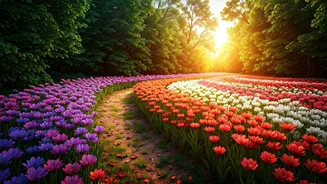
For those who prefer their floral displays a bit more manicured but no less spectacular, the Indira Gandhi Memorial Tulip Garden in Srinagar is a must-visit. Spread over 30 hectares, it's the largest tulip garden in Asia. For a few short weeks every spring (typically late March to early April), the garden explodes with millions of tulips in every imaginable colour and variety. Set against the stunning backdrop of the Zabarwan Range with Dal Lake shimmering nearby, it's a scene straight out of a postcard. The annual Tulip Festival adds a cultural layer to the experience, with local handicrafts, food stalls, and music celebrating the arrival of spring in Kashmir. It’s a powerful symbol of beauty and renewal, offering a different kind of floral pilgrimage.
Yumthang Valley, Sikkim
In the remote reaches of North Sikkim lies Yumthang Valley, often called the 'Valley of Flowers' of the East. During spring, from late February to mid-June, the valley floor and surrounding slopes are blanketed with a stunning array of rhododendrons. The Shingba Rhododendron Sanctuary, which is part of the valley, is home to over 24 species of this vibrant flower, painting the landscape in shades of red, pink, purple, and yellow. The journey to Yumthang itself is an adventure, taking you through winding mountain roads and picturesque landscapes. The experience is wilder and more rugged than other trails, offering a glimpse into the raw, untamed beauty of the Eastern Himalayas, with yaks grazing peacefully amidst the blooms.
The Rare Neelakurinji Bloom, Munnar
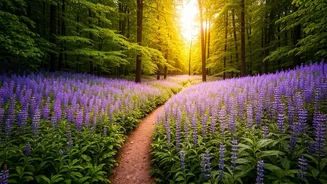
This is less of an annual trail and more of a once-in-a-generation spectacle. The hills of Munnar in Kerala are home to the Neelakurinji flower, which has a unique blooming cycle of 12 years. When it does bloom, it covers entire hillsides in a surreal blanket of purplish-blue, transforming the landscape into a dreamscape. The last mass blooming occurred in 2018, making the next one a highly anticipated event around 2030. While you might find sporadic blooms in other years, the full spectacle is a rare gift from nature. For travellers who plan their lives around epic natural events, witnessing the Neelakurinji bloom is the ultimate bucket-list item, a testament to the patient and powerful rhythms of the natural world.