

Strong thighs are the foundation of a powerful lower body, crucial for everything from daily movement to athletic performance. Squats and lunges are two of the best exercises to build that strength, but only when performed with proper, safe technique.
Understanding Your Thigh Muscles
Your thighs contain some of the largest and most powerful muscles in your body. For effective training, it's helpful to know the main groups. The anterior thigh contains the quadriceps (or quads), a group of four muscles on the front responsible for extending the knee. The posterior compartment houses the hamstrings, three muscles on the back that flex the knee and extend the hip. Finally, the medial compartment on the inside of your thigh contains the adductor muscles, which pull your legs together. Different exercise variations will emphasize each of these groups differently.
The Classic Squat: Your Foundation
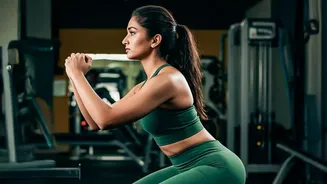
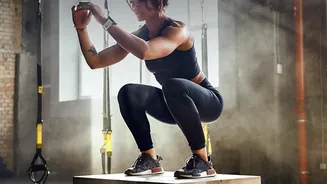
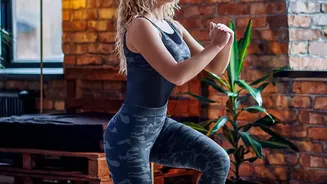
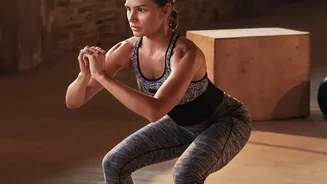
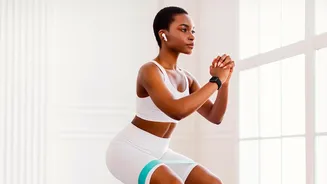
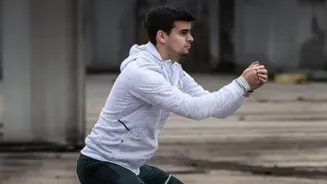
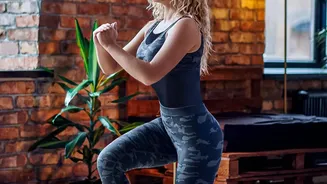
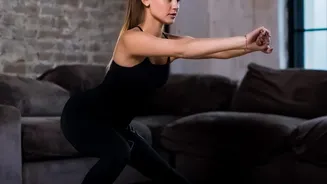
The squat is a fundamental movement that engages your quads, hamstrings, and glutes. Mastering the basic bodyweight squat is the first step. Stand with your feet shoulder-width apart, with your toes pointing slightly outward. Initiate the movement by pushing your hips back as if sitting in a chair, keeping your chest up and back straight. Lower yourself until your thighs are at least parallel to the floor, ensuring your knees track in line with your toes and do not collapse inward. Drive through your heels to return to the starting position. Your core should remain engaged throughout the entire movement to maintain a stable spine.
Squat Variations for Targeted Strength
Once you're comfortable with the classic squat, you can introduce variations to target specific thigh muscles. For more focus on the quadriceps, a narrow stance squat is effective. Bringing your feet closer together shifts the emphasis to the front of the thighs. To target the inner thighs (adductors) and glutes, try a sumo squat. This involves a much wider stance with your toes pointed further out. Another excellent variation is the Bulgarian split squat, where your back foot is elevated on a bench. This unilateral exercise challenges your balance and intensely works the quad and glute of the front leg.
Mastering the Lunge for Unilateral Power
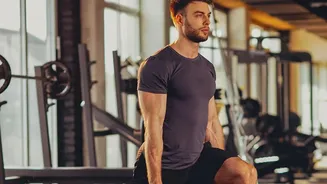
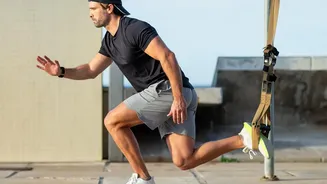
Lunges are excellent for building single-leg strength, improving balance, and correcting muscle imbalances. For a standard forward lunge, stand with your feet hip-width apart. Step forward with one leg, lowering your hips until both knees are bent at approximately a 90-degree angle. Crucially, your front knee should stay above your ankle, not drift past your toes, and your torso should remain upright. Push off the front foot to return to the starting position and repeat on the other side.
Lunge Variations to Challenge Your Muscles
Like squats, lunges have many variations. The reverse lunge, where you step backward instead of forward, is often recommended as it can be easier to control and may place less stress on the knee. This variation tends to place more emphasis on the glutes and hamstrings. For targeting the inner and outer thighs (adductors and abductors), the lateral lunge is a fantastic choice. From a standing position, you step directly out to one side, bending that knee while keeping the other leg straight. Curtsy lunges, where you step one leg behind and across the other, also engage the hip adductors and stabilizing muscles around the glutes.
Safety First: Avoiding Common Mistakes
Proper form is critical to prevent injury. In squats, the most common errors are allowing the knees to cave inward, lifting the heels off the ground, and letting the chest fall forward. To fix caving knees, consciously push them outward so they track over your toes. If your heels lift, it may signal tight ankles; try stretching your calves before you start. For lunges, a frequent mistake is taking too narrow of a stance, as if walking on a tightrope, which compromises balance. Always maintain a hip-width distance between your feet. Also, avoid leaning too far forward or back; keep your core engaged to hold your torso steady and upright.