
Meet Shukrayaan: India's Venus Orbiter
Following the monumental success of its missions to the Moon (Chandrayaan) and Mars (Mangalyaan), the Indian Space Research Organisation (ISRO) is setting its sights on our other planetary neighbour. Shukrayaan, which translates to "Venus Craft," is India's
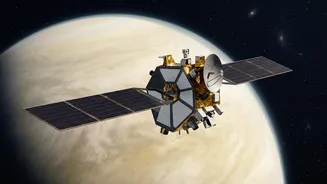
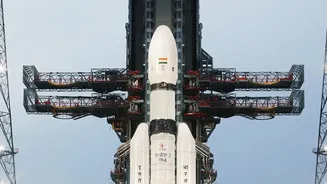
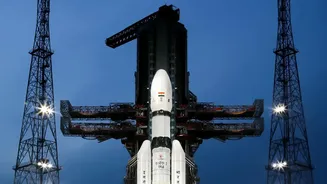
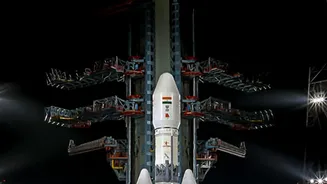
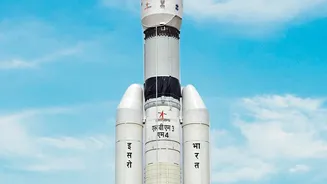
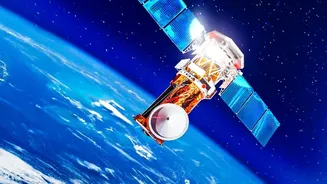
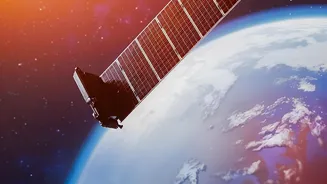
first dedicated mission to the second planet from the Sun. Formally approved by the Union Cabinet in September 2024, the Venus Orbiter Mission is scheduled for launch on March 29, 2028, aboard the powerful LVM-3 rocket. After a 112-day journey, the spacecraft will enter a large elliptical orbit around Venus, beginning a multi-year study of a world that may have once been similar to Earth but evolved into a planetary inferno. With a suite of 19 scientific instruments, Shukrayaan aims to create a comprehensive portrait of Venus, from its surface geology to its atmospheric dynamics.
Why Venus is So Hard to Study
Exploring Venus presents enormous challenges that have thwarted many past missions. The planet's atmosphere is over 96% carbon dioxide, creating an extreme greenhouse effect that pushes surface temperatures to a staggering 475°C—hot enough to melt lead. The atmospheric pressure at the surface is more than 90 times that of Earth's. Compounding these issues is a thick, unbroken layer of clouds made primarily of sulfuric acid. These corrosive clouds are not only toxic but also completely opaque, making it impossible to see the surface with conventional cameras. Furthermore, the upper atmosphere whips around the planet in a super-rotation, with winds far faster than any storm on Earth. These hostile conditions mean any spacecraft must be incredibly robust, and any analysis of the world below the cloud tops requires highly specialized instruments.
The Custom Sensors for Chemical Analysis
The headline feature of Shukrayaan is its ability to perform sub-cloud chemical analysis. To do this, ISRO and its international partners have developed a set of sophisticated sensors designed to peer through the atmospheric haze. One of the key instruments is the Venus Infrared Atmospheric Gases Linker (VIRAL), a collaboration with Russia and France. VIRAL is designed to study the composition of the atmosphere by analyzing infrared light. Other instruments, including spectrometers operating at various wavelengths, will identify the chemical fingerprints of different gases, mapping their distribution and concentration. This toolkit will measure key compounds like carbon dioxide, sulfur dioxide, and sulfuric acid to understand the planet's runaway greenhouse effect. These sensors are crucial for understanding the processes that dominate the Venusian atmosphere.
Searching for Clues to Life and Climate
One of the most tantalizing scientific goals of Shukrayaan's chemical analysis is the search for clues related to past habitability and even potential biosignatures. In 2020, a contested detection of phosphine gas in Venus's clouds sparked global excitement, as on Earth, this gas is primarily produced by anaerobic life. Shukrayaan's VIRAL instrument has the capability to search for phosphine, which could help confirm or refute its presence. Beyond the search for life, studying Venus's atmosphere provides a natural laboratory for understanding climate change. Scientists believe Venus may have once had liquid water oceans before a runaway greenhouse effect boiled them away. By analyzing the chemical processes that led to this catastrophic transformation, Shukrayaan can provide invaluable data for modeling Earth's own climate future and understanding how planetary environments evolve.
Piercing the Veil with Radar
While atmospheric sensors analyze the gases, another set of instruments will tackle the challenge of seeing the surface. Shukrayaan will carry a high-resolution Synthetic Aperture Radar (SAR), which uses radar waves to penetrate the thick clouds and map the terrain below in great detail. This will allow scientists to study volcanic activity, lava flows, and impact craters, providing a glimpse of the planet's geology. Even more ambitious is the inclusion of a ground-penetrating radar, a world-first for a Venus mission. This instrument is designed to investigate the shallow sub-surface, offering a look at the geological layers just beneath the ground. Together, these radar systems will provide a three-dimensional view of Venus's surface and near-surface geology, answering long-standing questions about whether the planet is still geologically active.