



The Monsoon Conundrum
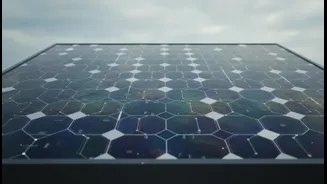
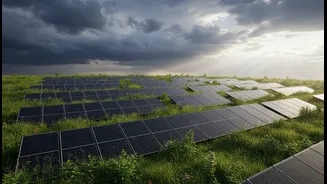
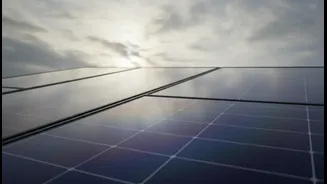
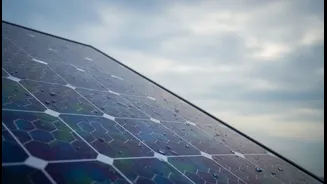
Solar power is a cornerstone of India's renewable energy strategy, but its effectiveness takes a significant hit during the prolonged monsoon season. From June to September, heavy cloud cover can drastically reduce the amount of sunlight reaching photovoltaic
panels, causing generation to drop. On heavily overcast days, a panel's output can fall to just 10-25% of its rated capacity. This intermittency is a major hurdle for grid stability and meeting energy demands, forcing a reliance on other power sources just when the country needs consistent energy. The high humidity and moisture also pose risks of equipment degradation and electrical faults, adding to the seasonal challenge.
A Hybrid Solution Emerges
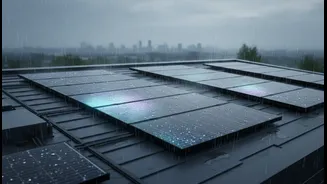
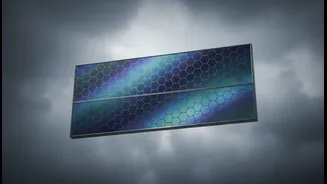
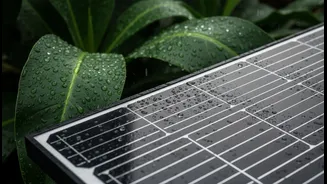
Researchers are now developing a new class of hybrid solar cells designed to work in all weather conditions. These innovative devices combine standard photovoltaic technology, which converts sunlight into electricity, with a novel component: a triboelectric nanogenerator (TENG). A TENG is a device that can generate an electrical charge from the friction created by two materials coming into contact—in this case, the mechanical impact of raindrops hitting the panel's surface. By integrating these two technologies, a single panel gains the ability to harvest energy from the sun on clear days and from rainfall during a downpour.
How It Generates Power from Rain
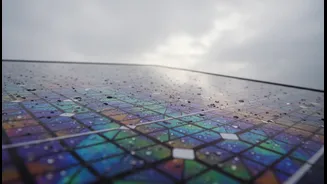
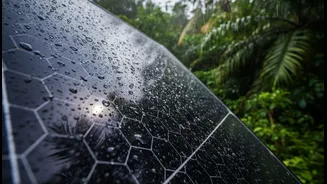
The magic lies in a specially designed, transparent film layered on top of the solar cell. This film serves as the active surface for the TENG. When a raindrop falls and rolls across the surface, it creates friction and a static electricity charge, similar to the spark you feel after walking on a carpet. The TENG captures this minute electrical charge. Recent breakthroughs by researchers, including a team at the Institute of Materials Science of Seville, have shown that a single raindrop's impact can generate a surprisingly high voltage, in some cases over 100 volts, which is enough to power small electronic devices.
Perovskites: The Other Key Ingredient
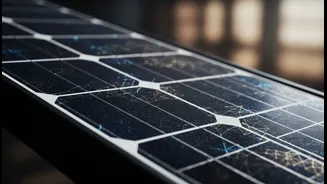
Many of these next-generation hybrid cells are built using perovskite solar cells (PSCs) instead of traditional silicon. Perovskites are crystalline materials that are highly efficient at absorbing sunlight and are cheaper to produce. Crucially, they also perform better than silicon in low-light and cloudy conditions, making them inherently more suitable for monsoon-prone regions. The protective film used for the TENG also doubles as a durable, weather-resistant coating, helping to solve one of the major drawbacks of perovskite cells: their tendency to degrade when exposed to moisture.
The Path to Commercial Viability
While the technology is incredibly promising, it is still in the developmental stage. The amount of power generated from raindrops is currently small and best suited for low-power applications like environmental sensors for the Internet of Things (IoT). The primary challenge for researchers is to improve the efficiency and scale up the output to make these hybrid panels commercially viable for residential and utility-scale use. Scientists are experimenting with different materials and surface textures to maximize the energy harvested from each drop. The long-term durability of the triboelectric layer under years of harsh weather is another key area of focus before these panels can be widely deployed.
A Brighter Future for Indian Renewables
Despite the hurdles, monsoon-friendly solar technology represents a significant potential leap forward for India's energy security. By providing a more consistent and reliable stream of renewable energy year-round, these all-weather panels could reduce the country's dependence on fossil fuels, accelerate its progress towards climate goals, and strengthen the resilience of its power grid. As research continues to advance, the prospect of solar panels that welcome the rain instead of being hindered by it offers a powerful vision for a truly sustainable energy future in India.