





A New Variant on the Radar
First identified in Canada in May 2026, the COVID-19 variant PJ.2.1 has since been detected in several countries, including the United States, Australia, and across Europe and Asia. Its emergence has prompted scientists to investigate its characteristics
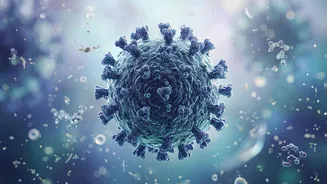
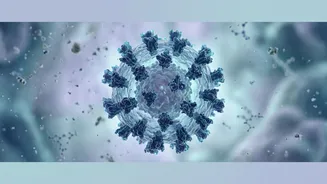
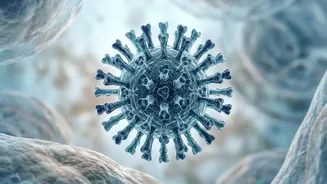
to understand its potential impact on public health. Like other variants, PJ.2.1 is being monitored by global health organisations to track its spread and evolution. It possesses a significant number of mutations—over 25—in its spike protein, the part of the virus responsible for latching onto and infecting our cells. This high number of changes is what initially drew the attention of researchers, as mutations in this region can alter a virus's behaviour.
The Science of Cell Binding
To understand the new research, it helps to revisit the basics of how SARS-CoV-2 infects the body. The virus uses its spike protein to attach to a receptor on the surface of human cells called ACE2. This interaction is often compared to a key fitting into a lock; the spike protein is the 'key', and the ACE2 receptor is the 'lock'. Once this connection is made, the virus can enter the cell and begin to replicate. The strength of this connection, known as 'binding affinity', is a crucial factor. A mutation that allows the spike protein to bind more tightly or efficiently to the ACE2 receptor could potentially make the virus more transmissible.
What Laboratory Studies Revealed
Recent laboratory findings published in the 'Journal of Infection' have shed some light on PJ.2.1's behaviour. The research suggests that the variant's growth may be linked to an increased ability to bind to the ACE2 receptor. In experiments, scientists observed that PJ.2.1's spike protein binds more strongly to ACE2 compared to several other circulating variants. One test involved using an antibody designed to block the ACE2 receptor; PJ.2.1 was less affected by this blocker, indicating a more effective binding mechanism. This stronger bond might mean the virus has a greater chance of successfully entering a cell after making contact.
Immune Evasion vs. Cell Entry
A key question with any new variant is whether it can evade the protection offered by previous infections or vaccines. Interestingly, the same laboratory study found that PJ.2.1 does not appear to be a master of immune escape. Antibodies from individuals who had received an updated, LP.8.1-adapted vaccine were able to effectively neutralise PJ.2.1. Its resistance to these antibodies was significantly lower than that of other variants currently in circulation. This suggests that the primary advantage for PJ.2.1 might not be its ability to hide from the immune system, but rather its enhanced efficiency at entering cells in the first place.
From the Lab to Real Life
It is critical to remember that these are preliminary laboratory findings. Increased binding affinity in a petri dish does not automatically mean a variant will be more transmissible between people or cause more severe disease. Real-world data is needed to confirm the clinical implications. Currently, there is no evidence to suggest that PJ.2.1 causes more severe illness, hospitalisations, or deaths than other variants. These early studies are a vital first step, providing a roadmap for what to monitor as the variant circulates in the population. Scientific bodies in India, such as the Indian SARS-CoV-2 Genomics Consortium (INSACOG), continue to monitor the genomic landscape of the virus across the country, sequencing samples to detect new and emerging variants and inform public health responses.