





As winter arrives, we seal our homes to stay warm, creating a cozy sanctuary from the cold. But in doing so, we might be trapping more than just heat. Everyday activities like cooking a meal or cleaning the house can generate indoor smog.
What Exactly Is 'Indoor Smog'?
The term 'smog'
might bring to mind hazy, polluted city skylines, but a similar phenomenon can occur inside our homes. Indoor smog isn't a visible fog, but rather a complex cocktail of airborne pollutants that become trapped and concentrated. We spend about 90% of our time indoors, where pollutant levels can be up to ten times higher than outdoors. The main culprits are fine particulate matter (often called PM2.5) and volatile organic compounds (VOCs). PM2.5 refers to microscopic particles so small they can penetrate deep into our lungs and even enter the bloodstream, posing health risks. VOCs are chemicals that turn into gas at room temperature, released from many common household products. When these pollutants build up, they degrade the air we breathe, creating this invisible 'smog'.
The Sizzling Dangers of a Home-Cooked Meal
Cooking, especially at high temperatures, is a major source of indoor air pollution. Frying, grilling, and even roasting can release significant amounts of particulate matter into the air. The sizzle of oil in a pan or the char on a grilled vegetable, while delicious, is evidence of these particles becoming airborne. Gas stoves are another significant contributor, releasing pollutants like nitrogen dioxide and carbon monoxide, a tasteless and odorless gas that can be harmful in high concentrations. Studies have shown that simply boiling water on a gas stove can produce notable levels of nitrogen dioxide. The type of food also matters; cooking meat tends to generate more particulate emissions than cooking vegetables.
The Hidden Cost of a Sparkling Clean Home
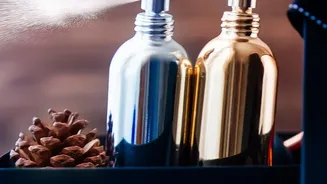
That fresh, clean scent from your favorite household cleaner might come at a cost to your air quality. Many cleaning products, including aerosol sprays, disinfectants, polishes, and even air fresheners, contain and release VOCs. These chemicals are used to dissolve grease, create pleasant fragrances, or kill germs. However, once sprayed or wiped onto a surface, they vaporize and mix with the air. Hundreds of different VOCs can be found in common cleaning supplies, and many are classified as health hazards. Even products marketed as 'green' or 'natural' can release these compounds, though often at lower levels. The notion that 'clean' has a strong scent is a myth; true cleanliness is simply the absence of dirt, not the presence of a chemical fragrance.
Why Winter Makes Everything Worse
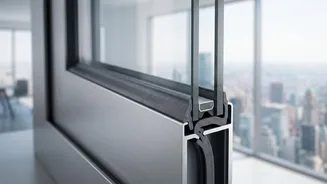
The core of the problem in winter is ventilation—or the lack thereof. To conserve heat and save on energy bills, we keep our windows and doors tightly shut. This turns our homes into sealed boxes where pollutants have nowhere to go. While a bit of draftiness in an older home might have helped air circulation, modern, energy-efficient homes are often so airtight that pollutants can become highly concentrated. During warmer months, open windows would naturally disperse cooking fumes and chemicals from cleaning. In winter, these same pollutants linger for much longer, building up with every meal cooked and every surface cleaned. This stagnant air allows concentrations of PM2.5 and VOCs to rise to levels that can affect our health.
Simple Steps to Clear the Air
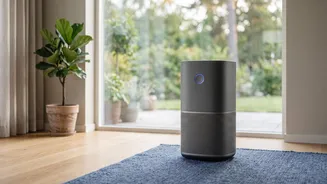
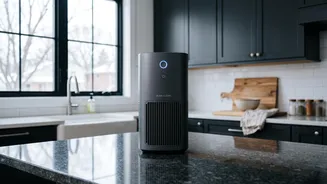
The good news is that you don't have to stop cooking or cleaning to maintain healthy air. The key is to manage the pollutants at their source and improve ventilation. Always use your kitchen's range hood or exhaust fan when you cook, and let it run for a few minutes after you're done. Cooking on the back burners can improve fume capture as they are often better ventilated by the hood. When cleaning, try to open a window, even just a crack, to allow fresh air in. Consider switching to low-VOC or fragrance-free cleaning products. An air purifier with a HEPA filter can also be highly effective at capturing airborne particles, while models with activated carbon filters can help reduce odors and some VOCs.