








The Final Frontier for Earthly Problems
For decades, space exploration was the domain of national prestige and cosmic curiosity. Today, a new generation of entrepreneurs and engineers sees it differently. They view the vantage point of orbit not as an escape from Earth’s problems, but as the best
place to solve them. This mindset shift is fuelling a boom in India’s private space sector, where the mission is often twofold: push the boundaries of technology while creating tangible benefits for our planet’s ecosystem. It’s a compelling vision that marries high-tech ambition with a deep sense of purpose, attracting talent that wants to build a better future, not just a profitable company.
Satellites as Planetary Sentinels
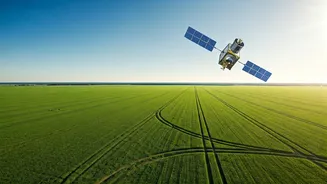
The most powerful link between space and sustainability lies in data. Earth-observation satellites are becoming our planet's watchdogs. In India, this is hardly a new concept; ISRO has a long and celebrated history of using satellites for weather forecasting, resource mapping, and disaster management. What’s new is the accessibility and scale. Startups like Bengaluru-based Pixxel are launching constellations of hyperspectral imaging satellites. These can “see” things traditional satellites can't, like the chemical signature of a gas leak, the specific nutrient deficiency in a patch of farmland, or the extent of an oil spill. This hyper-detailed data allows for unprecedented precision in monitoring deforestation, tracking carbon emissions, managing water resources, and enabling climate-resilient agriculture. For an innovator, this isn't just data; it's a toolkit for planetary management.
A New Generation's Dual Mission
Today’s top graduates and young professionals are increasingly driven by purpose, not just pay. They grew up with the reality of climate change and a desire to be part of the solution. The space-sustainability nexus offers a unique and powerful career path. It allows a software engineer, a materials scientist, or a data analyst to work on cutting-edge technology—rockets, satellites, AI algorithms—while directly contributing to a sustainable cause. This is a powerful recruitment tool. Companies that can articulate a mission to, for example, use rocket technology to deploy satellites that monitor glacial melt are attracting bright minds who might have otherwise gone into conventional software or finance. They are selling not just a job, but a role in a grand, meaningful challenge.
The Indian Startup Scene Heats Up
With the government opening up the space sector to private players, India has become a hotbed for this trend. Companies like Skyroot Aerospace and AgniKul Cosmos, while primarily focused on building cost-effective launch vehicles, understand their role in this new ecosystem. Their success makes it cheaper and easier for sustainability-focused satellite companies to get their hardware into orbit. The entire value chain is being built out by young, ambitious teams who see India as a future global leader in space applications. This isn't a Silicon Valley phenomenon being copied; it’s a homegrown movement, building on the strong foundation of Indian engineering talent and the legacy of ISRO, but with the agility and disruptive mindset of the startup world.
More Than Tech: A Systems-Thinking Mindset
Ultimately, the love for space and sustainability stems from a shared perspective: systems thinking. Space travel forces a recognition of Earth as a closed system—a fragile, beautiful 'pale blue dot' with finite resources. This is the famed “overview effect” that astronauts describe. Young innovators are capturing this spirit without leaving the planet. They understand that solving climate change requires understanding interconnected systems—oceans, atmospheres, forests, and human activity. Space technology provides the macroscopic view necessary to see these connections. By combining the vast perspective of space with the urgent needs of sustainability, they are crafting a narrative for the 21st century: one where our greatest technological ambitions are harnessed to ensure our home planet not only survives, but thrives.