





The Shoulders of a Giant
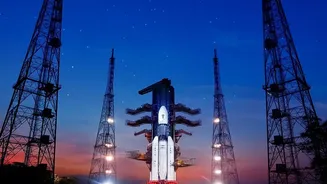
For over fifty years, the Indian Space Research Organisation (ISRO) has been the sole custodian of India's celestial dreams. From launching its first satellite, Aryabhata, to the historic missions to the Moon and Mars, ISRO has built a world-class space
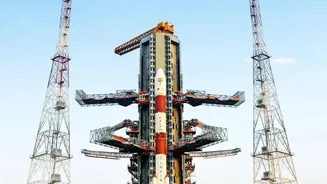
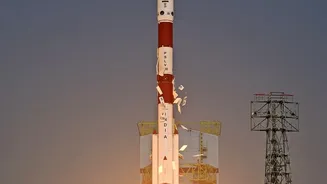
program on a famously frugal budget. It has not only made India a formidable space power but also created a vast reservoir of talent and infrastructure. This foundation is crucial, as ISRO is now transitioning from being the sole player to becoming an anchor and enabler for a new generation. Rather than competing, ISRO is actively mentoring and supporting private companies, sharing its invaluable expertise and state-of-the-art facilities.
A Policy Big Bang
The catalyst for this transformation was a series of bold policy reforms. In 2020, the government officially opened the space sector to private enterprise. This was followed by the landmark Indian Space Policy in 2023, which provided a clear roadmap for non-governmental entities (NGEs). A key creation was the Indian National Space Promotion and Authorisation Centre (IN-SPACe), a single-window agency designed to promote, authorise, and supervise private space activities. This move provided regulatory certainty, created a level playing field, and sent a clear signal to investors that India's private space industry was open for business. The goal is to grow India's share of the global space economy from its current 2-3% to a projected 8-10% by 2033, expanding its value from around $8.4 billion to $44 billion.
Meet the New Trailblazers
The policy shift has unleashed a wave of innovation, with over 450 startups now registered in the Indian space ecosystem. Leading the charge is Skyroot Aerospace, which made history on July 18, 2026, by successfully launching Vikram-1, India’s first privately developed orbital rocket. This achievement placed India alongside the US and China as countries with private orbital launch capabilities. Another prominent player is Agnikul Cosmos, which is pioneering 3D-printed rocket engines and has ambitious plans for reusable launch vehicles. The company is preparing for its 'Mission-02', which will attempt India's first recovery of an orbital-class rocket booster, a crucial step toward lowering launch costs.
More Than Just Rockets
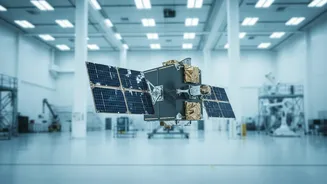
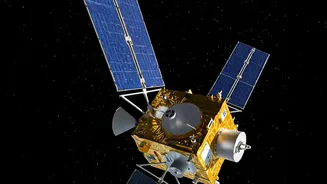
The startup boom extends far beyond just building rockets. Bengaluru-based Pixxel is deploying a constellation of the world's highest-resolution hyperspectral satellites. These 'Firefly' satellites, six of which were launched in 2025, can see the Earth in hundreds of colours invisible to the human eye, providing valuable data for agriculture, climate monitoring, and pollution detection. The company is also developing its next-generation 'Honeybee' constellation, planned for a 2026 launch. Other companies like Dhruva Space focus on satellite manufacturing, while a host of others are innovating in areas like ground station services, data analytics, and in-orbit propulsion systems, creating a rich and diverse industry.
The Talent Gravitational Pull
This burgeoning private sector has also created a new career trajectory for India's brightest minds. While ISRO faces the challenge of losing some experienced scientists to these nimble startups, it’s not a traditional 'brain drain'. Instead, it’s a 'brain circulation', where decades of public-sector expertise are being transferred to the commercial ecosystem, accelerating innovation and commercial scalability. This migration of talent is helping private companies mature faster, while the allure of creating cutting-edge technology from the ground up is retaining talent that might have otherwise moved abroad. The industry now employs over 45,000 skilled professionals, a number set to grow exponentially.