






Sarson (Mustard Greens)
No Indian winter is complete without the robust, slightly pungent flavour of mustard greens. The star of the classic Punjabi dish 'Sarson ka Saag', these leaves are a nutritional powerhouse, traditionally consumed to provide warmth. They are packed with vitamins
A, C, and K, along with essential minerals like iron and calcium. Rich in dietary fibre and antioxidants, sarson supports digestion, helps combat inflammation, and contributes to better heart and bone health. Its low-calorie profile makes it an excellent choice for a hearty yet healthy meal.
Palak (Spinach)
While available year-round, winter spinach is particularly tender and flavourful. This versatile leafy green is loaded with nutrients that are especially beneficial during the colder months. It's an excellent source of iron, which is vital for maintaining energy levels, as well as magnesium and vitamin C. From boosting immunity to strengthening bones and improving heart health, spinach is a low-calorie vegetable that can be easily added to dals, curries, parathas, or simply sautéed for a quick, nourishing side dish.
Methi (Fenugreek Leaves)
Fenugreek leaves, or methi, are another winter staple known for their distinct aroma and slightly bitter taste. These leaves are celebrated for their medicinal properties, particularly in helping to regulate blood sugar levels, making them beneficial for individuals managing diabetes. They are a good source of iron, magnesium, and dietary fibre, which aids in digestion and can promote a feeling of fullness, assisting in weight management. Methi leaves are also known to generate warmth in the body, making them a perfect addition to winter meals like theplas, parathas, and vegetable curries.
Gajar (Carrots)
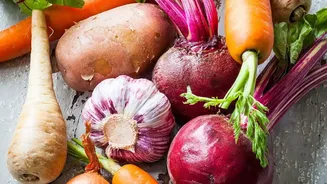
Winter brings the arrival of 'desi' red carrots, which are sweeter and juicier than their orange counterparts. These carrots are a quintessential part of the season, most famously used to prepare the beloved dessert 'gajar ka halwa'. Carrots are packed with beta-carotene, which the body converts into vitamin A, a crucial nutrient for supporting vision, skin health, and a strong immune system. They also contain antioxidants like lycopene and are a good source of fibre, aiding in digestion and overall vitality.
Mooli (Radish)
The crisp, peppery flavour of mooli, or white radish, is a refreshing addition to the winter diet. This root vegetable is incredibly high in fibre and water content, making it excellent for digestive health and preventing constipation. It's a rich source of vitamin C, which boosts immunity, and contains compounds that may support liver function and detoxification. Mooli is enjoyed raw in salads, pickled, or stuffed into the popular 'mooli parathas', offering a pungent kick and a host of health benefits.
Chukandar (Beetroot)
With its deep, vibrant colour, beetroot is an earthy and nutritious winter root vegetable. It is particularly noted for being rich in dietary nitrates, which the body converts to nitric oxide. This compound helps relax blood vessels, which can improve blood flow and support healthy blood pressure levels. Beets are also loaded with antioxidants, folate, and fibre, which aid in reducing inflammation, supporting gut health, and boosting stamina. They can be enjoyed in salads, juices, or cooked into a flavourful sabzi.
Shakarkandi (Sweet Potato)
A healthier, more nutrient-dense alternative to regular potatoes, sweet potato is a comforting winter staple. It is famously sold roasted by street vendors during this season. Shakarkandi is an excellent source of beta-carotene, which converts to vitamin A, vital for eye health and immunity. It's also packed with dietary fibre, which aids digestion and helps provide sustained energy. With a lower glycemic index than white potatoes, sweet potatoes can be a great option for managing blood sugar levels while enjoying a naturally sweet and satisfying food.