






The Annual Monsoon Problem
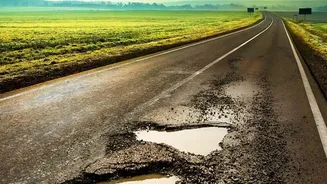
Every year, as the monsoon rains sweep across the country, they leave a trail of destruction on our roads. Water seeps into small cracks in the asphalt, and under the constant pressure of traffic, these cracks grow into larger potholes. This cycle of damage
and repair costs municipal corporations crores annually, leads to traffic congestion, damages vehicles, and tragically, contributes to a significant number of road accidents. According to recent data, India has seen a rise in pothole-related accidents, highlighting the urgent need for more durable and resilient road infrastructure that can withstand our country's unique and often extreme weather patterns.
A Road That Heals Itself
Imagine a road that can automatically repair its own minor damages before they become major problems. This is the core concept behind self-healing asphalt. It’s a proactive approach to road maintenance, designed to extend the lifespan of pavements and reduce the need for constant, disruptive repair work. Instead of waiting for a pothole to form and then sending out a crew to patch it, this technology works from within the material itself. The National Highways Authority of India (NHAI) is actively exploring these innovative methods to improve road durability and safety across the country.
The Science of Bio-Binders and Steel Fibres
So how does it work? There are a few different methods being developed. One promising approach, pioneered by researchers in the Netherlands and now being explored in India, involves mixing tiny steel fibres into the asphalt. When micro-cracks appear, a special induction heating machine is passed over the surface. This creates a magnetic field that heats the steel fibres, which in turn melts the surrounding bitumen binder, allowing it to flow and reseal the crack. Another innovative method involves using bio-engineered binders. These are plant-based materials, derived from sources like agricultural waste or vegetable oils, that partially or fully replace traditional petroleum-based bitumen. Some advanced versions embed these bio-oils in tiny microcapsules. When a crack forms, the capsules rupture, releasing the rejuvenating oil to 'heal' the damage.
More Than Just Fewer Potholes
The benefits of this technology go far beyond a smoother ride. While the initial installation cost can be higher than conventional asphalt, the long-term savings are significant. Studies suggest self-healing asphalt can double the lifespan of a road, drastically cutting down on maintenance costs and the associated traffic disruptions. Furthermore, using bio-binders offers a major environmental advantage. By replacing fossil-fuel-based bitumen with renewable, plant-based materials, this technology can effectively lock away carbon, turning our roads into carbon sinks. This aligns with broader goals of creating more sustainable infrastructure and reducing the carbon footprint of construction.
The Road Ahead for India
While countries like the Netherlands and China have already started deploying self-healing roads, India is in the experimental phase. Research bodies like the Central Road Research Institute (CRRI) and IIT-Madras are actively testing variants specifically designed for India's heavy traffic loads and tropical climate. The NHAI is considering pilot projects and conducting cost-benefit analyses to ensure the technology is feasible for large-scale implementation. The initial investment is a hurdle, as the specialized materials and equipment can increase upfront costs. However, given the immense annual expenditure on road repairs and the economic impact of poor infrastructure, investing in smarter, longer-lasting roads may be the most cost-effective solution in the long run.