




What is the Gaganyaan Mission?
First announced in 2018, the Gaganyaan programme is the Indian Space Research Organisation's (ISRO) ambitious endeavor to send humans into space. The primary objective is to launch a crew of three astronauts into a low-Earth orbit of 400 kilometres for
a mission lasting three days, and then bring them safely back to Earth. If successful, India will join the elite club of nations—after the USA, Russia, and China—capable of independent human spaceflight. The mission is not just a technological challenge but a significant statement of India's growing capabilities and aspirations in space exploration, building on the success of missions like Chandrayaan and Aditya-L1.
The Crucial Uncrewed Dress Rehearsal
Before putting astronauts on board, ISRO has meticulously planned a series of uncrewed test flights. These missions are not optional; they are the backbone of the entire programme, designed to validate every single system in real-world conditions. The mantra is safety first. With human lives at stake, there is no room for error, which is why ISRO is conducting a sequence of at least three uncrewed missions. Recent statements from ISRO's chairman indicate that while efforts are on for a launch by the end of 2026, the schedule could extend into 2027 to ensure all safety and technical checks are uncompromisingly met. This deliberate, safety-focused approach is why this uncrewed push is considered such a pivotal step.
Technology on Trial
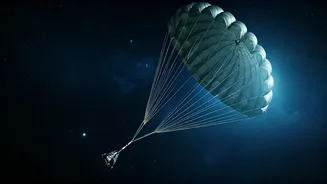
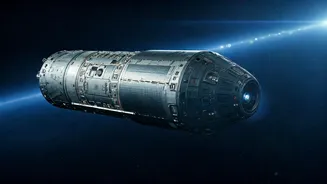
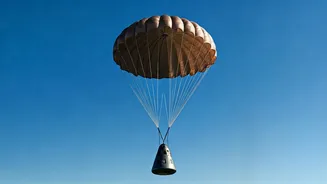
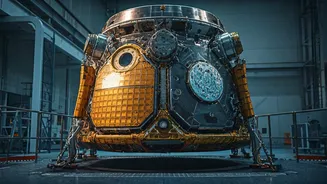
The uncrewed flights will test a host of critical technologies. The launch vehicle itself is a human-rated version of the powerful LVM3 rocket, modified for crewed spaceflight. Key systems under scrutiny include the Crew Module, where the astronauts will live, and the Service Module, which contains propulsion and power systems. One of the most critical tests is for the Crew Escape System, which is designed to pull the astronauts safely away from the rocket in case of a launch failure. Other vital tests involve the complex parachute system for a safe splashdown, life support systems, and re-entry performance, all of which have been undergoing thousands of ground tests.
Meet Vyommitra, the Humanoid Stand-In
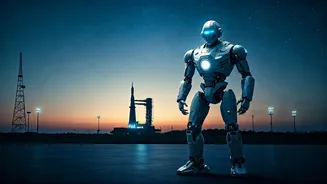
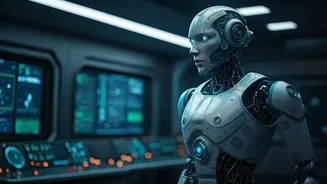
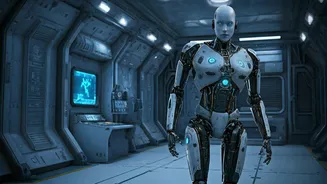
A key player in the uncrewed missions is Vyommitra, a humanoid robot developed by ISRO. Meaning "space friend" in Sanskrit, Vyommitra is designed to simulate human functions inside the crew module during flight. It will monitor module parameters, perform switch panel operations, and test the effectiveness of the Environmental Control and Life Support System (ECLSS). By using Vyommitra, ISRO can gather crucial data on how the spacecraft performs and responds to commands without risking human life, making the robot an invaluable test subject before the Gaganyatris take their seats.
Beyond Gaganyaan: A Gateway to the Future
The Gaganyaan mission is not an end in itself but a foundational step for India's long-term space ambitions. The experience and technology gained from developing a human-rated spacecraft are essential for future, more complex missions. ISRO's roadmap includes establishing the Bharatiya Antariksh Station (BAS), India's own space station, by 2035, with the first module planned for launch by 2028. Beyond that, the ultimate goals include crewed lunar landings by 2040. Successfully completing the Gaganyaan programme will unlock the door to these future endeavors, cementing India's status as a major player in space exploration and science.