
The Renter's Decorating Dilemma
For renters in India's bustling metros, making a house feel like a home comes with a unique set of challenges. Landlord restrictions, limited space, and the temporary nature of the living arrangement can make personalization difficult. The desire to create
a cozy, stylish sanctuary often clashes with the reality of 'no nails in the wall' policies and tight budgets. This is where the magic of DIY fabric upcycling comes in. It’s a creative, sustainable, and, most importantly, non-permanent way to transform a generic space. By repurposing textiles like old sarees, dupattas, or even bedsheets, you can add colour, texture, and a piece of your own story to your living room, creating a space that is truly yours.
Create a No-Sew Wall Tapestry
Bare walls are a renter's biggest enemy. Instead of paint or wallpaper, which are often forbidden, use a beautiful old saree or a large piece of printed fabric to create a stunning wall hanging. A vibrant Banarasi or a soft cotton saree with an intricate 'pallu' can become an instant focal point behind your sofa. The best part? It's completely damage-free. Simply fold the top edge of the fabric over a lightweight wooden dowel or curtain rod and secure it with fabric glue or safety pins. You can then hang the rod on removable, adhesive wall hooks that can support the weight. This method adds a grand, artistic statement without a single nail, and you can easily take it with you when you move.
Craft Custom Cushion Covers
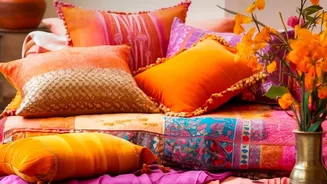
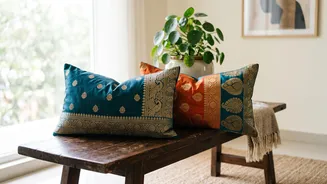
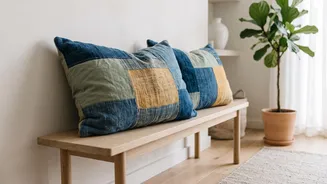
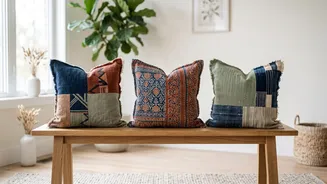
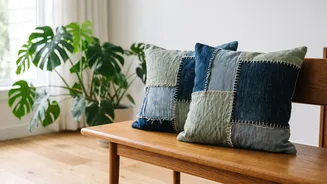
Throw pillows are one of the easiest ways to refresh a living room. Instead of buying new covers, make your own from fabrics that hold meaning for you. An old silk saree with a beautiful border, a colourful cotton dupatta, or even a favourite worn-out shirt can be transformed into unique cushion covers that tell a story. If you don't have a sewing machine, no-sew methods using fabric glue or iron-on fusible interfacing are fantastic alternatives. You can create simple envelope-style covers that require no zippers or buttons. Mixing and matching different patterns and textures from various upcycled fabrics can add a rich, layered, and bohemian look to your seating area.
Design Framed Fabric Art
If you have smaller scraps of fabric that are too beautiful to discard, turn them into framed art. This could be a piece of intricate embroidery, a block-printed pattern, or a colourful weave. All you need is a simple photo frame. Remove the glass and backing, stretch your chosen fabric tightly over the backboard, and secure it with tape or a staple gun. You can also simply place the fabric inside the frame as you would a photograph. Create a gallery wall by grouping several frames with coordinating fabrics of different sizes. This is a sophisticated way to add personality and is easily achieved using removable adhesive strips instead of nails, keeping your walls pristine.
Fashion a Bohemian Rug or Dhurrie
Give your floor a touch of handmade charm by weaving a small rug or dhurrie. This is an excellent project for using up old, sturdy cotton sarees, dupattas, or bedsheets. Cut the fabric into long, even strips. You can then braid these strips together, coiling and stitching the braid into a circular or oval rug. For a more traditional dhurrie, you can build a simple DIY loom or even use a large piece of sturdy cardboard to weave the fabric strips. While it’s a more involved project, the result is a one-of-a-kind piece that adds warmth and texture to your floor, covering up standard-issue rental tiles with something far more personal.
Drape Your Furniture and Spaces
Sometimes the simplest hack is the most effective. Use a flowy georgette or chiffon saree to create dreamy, sheer curtains that let in natural light while providing privacy. Or, drape a colourful fabric over a plain bookshelf to hide clutter and add a pop of colour. You can even use a beautiful textile as a makeshift table runner for your coffee table or side console, instantly elevating its look. An old saree can also be used to create a cosy reading nook by draping it over a corner to create a soft canopy effect. These simple drapes require no permanent fixtures and can be changed with your mood or the season, offering endless versatility.