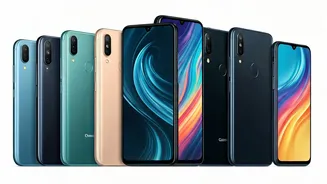









From Specs to Smarts: The New Arms Race
Remember when buying a new phone meant comparing hardware specifications? The war was won with faster processors, bigger batteries, and higher megapixel counts. But as hardware innovation has hit a plateau, the battleground has shifted from raw power
to software intelligence. Artificial Intelligence (AI) has become the new frontier, a marketing term that promises a device that doesn't just follow commands but anticipates your needs. This transition marks a significant change in how companies like Samsung, Google, and Apple compete. A recent report from Flipkart and Counterpoint Research revealed that AI features now influence a staggering 89% of smartphone buyers in India, signalling a market that is maturing beyond specs and toward experience-driven decisions. [3, 6, 17] It's no longer just about what the phone has, but what it can do for you.
So, What Is 'Phone AI' Anyway?
The term "AI" can feel vague, but in modern smartphones, it generally falls into a few key categories. The most visible is generative AI, which creates or modifies content. Think of Samsung's Generative Edit, which can move or remove objects in photos, or Apple's Image Playground, which can generate images from text prompts. [8, 10, 25] Another crucial area is proactive assistance. This is where your phone's digital assistant evolves from a simple command-taker to a context-aware partner, capable of summarizing long messages or even screening your calls. [1, 2, 10] Many of these advanced features are powered by on-device processing, using dedicated Neural Processing Units (NPUs). [1, 26] This means tasks can be performed quickly and privately, without sending your data to the cloud, making features like real-time translation during a phone call possible even without an internet connection. [1, 2]
The Big Players and Their AI Playbooks
The major smartphone makers have each forged distinct AI strategies. Google, a long-time leader in software-driven features, leverages its powerful Gemini models to offer advanced tools on its Pixel phones, such as superior call screening and voice transcription in its Recorder app. [8, 20] Samsung has aggressively marketed "Galaxy AI," focusing on practical and accessible tools like Circle to Search and Live Translate, which have proven popular. [8, 10] Apple, while historically more cautious, has now fully entered the fray with "Apple Intelligence." True to form, its strategy is built around privacy and seamless integration into its existing ecosystem, with features that work across the iPhone, iPad, and Mac. [4, 28] While some features are exclusive, a degree of collaboration exists; for example, Google's Gemini models are set to support some of Apple's new AI capabilities, and features like Circle to Search have crossed from Samsung to other Android devices. [11, 27]
Hype vs. Genuine Help: Is It Worth It?
With every new technology comes the inevitable question: Is it truly useful or just a gimmick? The answer for smartphone AI is mixed. [7, 12] Features like real-time language translation, intelligent notification summaries, and AI-powered security that detects scams are undeniably valuable. [1, 2] Similarly, computational photography has been quietly using AI for years to improve the photos you take without you even noticing. [9] However, some generative features can feel like novelties that are used once and then forgotten. [12, 20] A survey from late 2024 even suggested a majority of users felt the current AI features added little value to their daily lives, indicating that the technology is still in its early stages. [15] The most effective AI often works invisibly in the background, optimizing battery life or subtly improving camera performance, rather than demanding your constant attention. [7, 9]
The Future in Your Pocket
The integration of AI into smartphones is set to deepen significantly. Experts predict that GenAI-capable smartphones will account for 45% of global shipments in 2026 and become the majority by 2027. [27] We are moving toward a future where our interaction with phones may shift from touch to conversational voice commands, with AI acting as a true digital concierge that manages tasks without needing to open multiple apps. [22] This evolution also has economic implications, as the advanced chips and increased memory required for on-device AI could drive up costs and potentially widen the gap between high-end and budget devices. [14, 27] Ultimately, as AI becomes a standard feature, the focus will likely shift again—from simply having AI to how well each brand orchestrates these features to create a genuinely helpful and intuitive user experience. [21, 27]