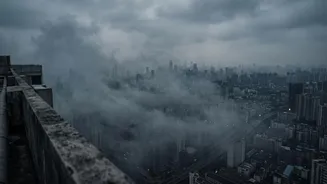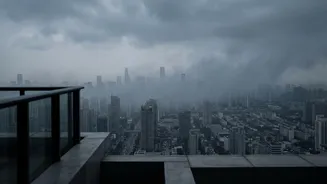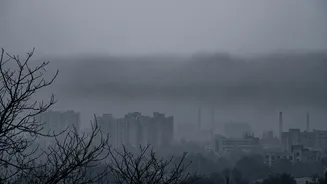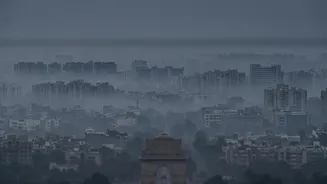







Delhi's Annual Air Problem
Every year, as temperatures drop, Delhi's air quality deteriorates significantly, often reaching 'Poor' to 'Severe' levels. This is caused by a toxic mix of pollutants, including fine particulate matter (PM2.5 and PM10), nitrogen dioxide (NO2), sulphur
dioxide (SO2), and carbon monoxide (CO). These particles, originating from vehicle emissions, industrial output, construction dust, and seasonal crop burning, create a dense smog that hangs over the city, affecting millions.
How Pollutants Attack Your Eyes
The eyes are uniquely vulnerable because they are directly exposed to the environment. While eyelids and tears offer some protection, they are often no match for the microscopic onslaught of modern air pollution. These tiny particles and gases disrupt the tear film, a thin, crucial layer that lubricates and protects the eye's surface. When this film is compromised, tears evaporate faster, leaving the eye's surface exposed to irritants. This leads directly to inflammation, dryness, and a host of uncomfortable symptoms.
Warning Signs Your Eyes Are Struggling
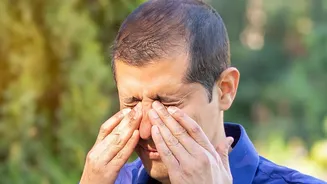
The body's response to these airborne irritants is immediate and hard to ignore. Common symptoms of pollution-related eye stress include persistent redness, a constant burning or stinging sensation, and excessive watering as the eyes try to flush out the foreign particles. Many people also report a gritty feeling, as if sand is stuck in their eye. In some cases, vision may become temporarily blurred, or you might find yourself more sensitive to light. These are all signals that your eyes are under attack from the polluted air.
Beyond Irritation: Long-Term Risks
While often dismissed as temporary discomfort, prolonged exposure to high pollution levels can lead to more chronic conditions. It significantly increases the risk of developing or worsening Dry Eye Syndrome, a condition where the eyes don't produce enough quality tears. It can also trigger allergic or chemical conjunctivitis, an inflammation of the eye's outer membrane that causes significant redness and swelling. Emerging research even suggests a potential link between long-term exposure to air pollution and an increased risk for more serious conditions like macular degeneration later in life.
Simple Steps for Immediate Relief
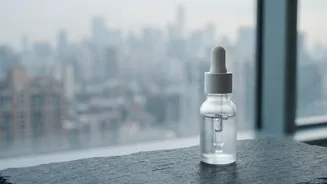
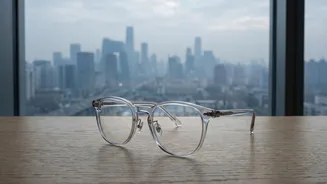
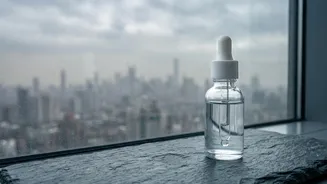
When your eyes are feeling the strain, the most important rule is to avoid rubbing them, as this can transfer more pollutants from your hands and worsen irritation. Gently washing your eyes with clean, cool water can help flush out particles. Using preservative-free lubricating eye drops, often called artificial tears, can restore moisture and provide immediate relief from dryness and that gritty feeling. If you wear contact lenses, consider switching to glasses on days with particularly poor air quality, as lenses can trap pollutants against the eye's surface.
How to Protect Your Eyes This Season
Prevention is key to navigating the pollution season. When you must go outside, wear wraparound sunglasses to create a physical barrier against dust and airborne particles. At home, consider using an air purifier with a HEPA filter to create a clean-air zone where your body can recover. Staying well-hydrated by drinking plenty of water helps your body maintain adequate tear production. Finally, try to limit your time outdoors when the Air Quality Index (AQI) is at its highest, and reduce screen time, which can exacerbate dryness.