





Why a Scooter is a Bali Game-Changer
For young travellers, renting a scooter in Bali is about more than just saving money; it’s about freedom. While ride-hailing apps like Gojek and Grab are cheap for short trips, and private drivers are great for long-haul sightseeing, a scooter offers
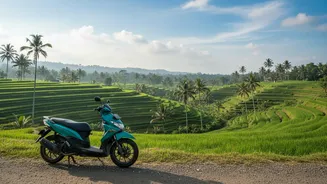
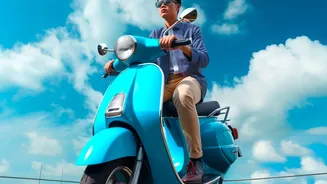
unparalleled flexibility. It allows you to explore winding rice paddy roads, discover hidden beaches that cars can't reach, and travel entirely on your own schedule. This freedom from waiting for drivers or sticking to main roads is often what makes a Bali trip feel like a true adventure. You can weave through the notorious traffic jams in areas like Canggu and Seminyak faster than a car, turning travel time into exploration time. The ability to stop anywhere for a photo, a coffee, or a swim makes the journey itself the destination.
Breaking Down the Actual Costs
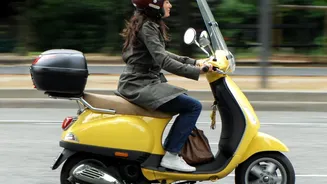
Renting a scooter is one of the most affordable ways to get around Bali. Daily rental for a standard automatic scooter, like a Honda Scoopy or Vario, typically costs between IDR 60,000 and IDR 100,000. If you're staying for a week or more, negotiating a better rate is standard practice. Weekly rentals can drop the daily cost significantly, often totalling around IDR 400,000 to IDR 600,000. For long-term travellers or digital nomads, a monthly rental is the best deal, with prices ranging from IDR 1,200,000 to IDR 1,800,000 for a standard model. Fuel is also incredibly cheap, with a full tank costing less than IDR 30,000. When you compare this to a private driver for a day (IDR 500,000–700,000) or multiple daily ride-hailing trips, the savings add up quickly, leaving more of your budget for experiences.
The Non-Negotiable Pre-Ride Checklist
Before you even think about starting the engine, there are crucial steps to take. First and foremost is the legal requirement: you must have an International Driving Permit (IDP) with a motorcycle endorsement, alongside your valid home country's motorcycle license. Many rental shops won't ask for it, but the police at regular checkpoints will, and more importantly, your travel insurance will be void in an accident without the correct documents. Second, never leave your original passport as a deposit; a cash deposit or a photocopy should suffice. Third, thoroughly inspect the scooter before you agree to rent it. Take a timestamped video or photos of any existing scratches, dents, and check the brakes, lights, horn, and tyre pressure. This simple act can save you from the common "scratch scam," where owners blame you for pre-existing damage upon return.
Staying Safe on Bali's Chaotic Roads
Bali's traffic can be intimidating for the uninitiated. The most important rule is to always wear a helmet—it's legally required and the single most important piece of safety gear. Local driving culture is different; honking is often used as a friendly "I'm here" signal, not an aggressive gesture, so use your horn on blind corners. Be constantly aware of your surroundings. Potholes are common, especially on smaller roads, and stray dogs can dart out unexpectedly. Roads become extremely slippery in the rain, so it's best to pull over and wait out heavy downpours. Finally, the legal alcohol limit for driving is effectively zero; do not drink and drive under any circumstances. The risks, which include severe accidents and legal trouble, are far too high.
Is a Scooter Right for You?
While the benefits are clear, riding a scooter in Bali isn't for everyone. If you have never ridden a scooter before, the chaotic traffic of South Bali is not the place to learn. Your safety is paramount. If you are not a confident and licensed rider, there are excellent alternatives. Ride-hailing apps like Gojek and Grab are perfect and incredibly cheap for short, point-to-point trips within a town like Ubud or Seminyak. For full-day excursions to see temples or waterfalls, hiring a private car with a driver for 8-10 hours is often more relaxing and cost-effective, especially if you can split the cost with other travellers. It eliminates the stress of navigation, parking, and the risks associated with long-distance riding on unfamiliar roads.