



The Tyranny of the Rocket Equation
Establishing a long-term human presence on the Moon, a cornerstone of NASA's Artemis program, isn't just a technical challenge; it's a monumental logistical and economic one. Every kilogram of supplies—be it water, food, or breathable air—must be blasted
from Earth, a process that costs thousands of dollars per pound. For a sustainable lunar outpost, where astronauts would live for months at a time, relying solely on resupply missions from Earth is simply not viable. This is where the concept of 'in-situ resource utilization' (ISRU), a fancy term for living off the land, becomes not just a clever idea, but an absolute necessity. If astronauts can source what they need from the Moon itself, it dramatically cuts down on mass that needs to be launched, reducing costs and mission complexity.
A Resource Hiding in Plain Sight
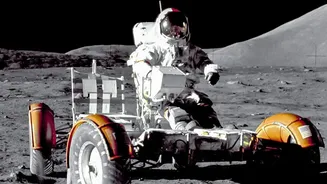
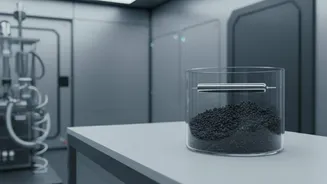
The Moon’s surface is covered in a fine, abrasive powder called regolith, commonly known as moon dust. For decades, this dust was seen primarily as a nuisance—a sharp, clingy material that could damage equipment and spacesuits. However, scientists have long known that regolith is a treasure trove of valuable elements. Chemically, lunar regolith is about 45% oxygen by weight. This oxygen isn't free-floating gas; it's chemically bonded with metals and silicon to form oxides, the very minerals that make up the dust. The challenge, then, is to break these strong chemical bonds to release the oxygen, effectively turning rock into a breathable atmosphere and a key component of rocket fuel.
The Recipe for Lunar Air
Several methods for extracting oxygen are being developed, but two of the most promising are carbothermal reduction and molten oxide electrolysis. The carbothermal reduction process, being developed by companies like Sierra Space for NASA, involves heating the regolith to very high temperatures (over 1600°C) in a reactor with a carbon source, like methane. This reaction strips the oxygen from the metal oxides, creating carbon monoxide (CO) and carbon dioxide (CO2). These gases can then be processed further to isolate the pure oxygen. Recent tests have successfully demonstrated this process using simulated solar energy to heat the reactor, proving that the sun's own power could fuel oxygen production on the Moon. Another leading technique is molten oxide electrolysis. This process involves melting the regolith and then passing an electric current through the molten material. The current separates the oxygen from the metals, causing the oxygen gas to bubble up and collect at an anode, ready for capture. Prototypes have successfully produced significant quantities of oxygen from lunar soil simulants in vacuum environments, moving the technology closer to a real-world demonstration.
Bonus Materials: From Dust to Structures
The incredible part of these processes is that oxygen is only half the story. The material left behind after the oxygen has been extracted is a mixture of molten metals. This metallic alloy, rich in iron, aluminum, and silicon, is an incredibly valuable byproduct. Instead of being waste, this metal could become the feedstock for 3D printers on the lunar surface. Astronauts could theoretically print tools, spare parts, or even interlocking bricks to build habitats and landing pads. This creates a virtuous cycle: mining regolith for oxygen also provides the raw materials for construction, further reducing the need to send heavy building supplies from Earth and enabling a truly self-sufficient outpost.
Unlocking the Lunar Economy
The ability to generate oxygen on the Moon is a true game-changer for the Artemis program and the future of space exploration. It makes long-duration missions more sustainable and affordable. With a local source of oxygen for life support and, critically, for manufacturing liquid oxygen (LOX) for rocket propellant, the Moon can transform from a destination into a staging point. A lunar base could become a refueling station for missions venturing deeper into the solar system, such as to Mars. Mastering the technology to live off the land on the Moon is the critical first step in learning how to sustain humanity anywhere beyond our home planet, paving the way for a permanent and expanding presence in the cosmos.