



A New Policy Frontier
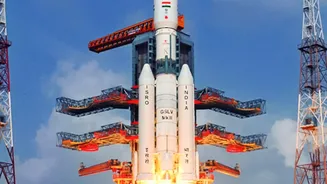
For decades, India's celebrated space program was the exclusive domain of the Indian Space Research Organisation (ISRO). That has fundamentally changed. The introduction of the Indian Space Policy in 2023, along with significant reforms that began in 2020,
has thrown the doors open to private enterprise. A key element of this shift was the creation of the Indian National Space Promotion and Authorisation Centre (IN-SPACe), which acts as a single-window agency to promote and authorise private space activities. Furthermore, the government has liberalised Foreign Direct Investment (FDI) rules, in some cases allowing up to 100% FDI for manufacturing components and systems for satellites. This policy firepower is designed to attract global capital and technology, transforming the domestic landscape and integrating Indian firms into the global space economy.
The Manufacturing Multiplier Effect
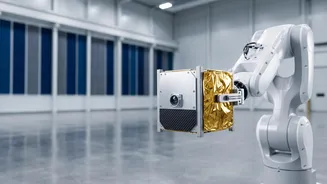
A thriving space programme requires a vast and sophisticated industrial backbone. Launch vehicles, satellites, and ground control stations are not built in a single factory; they are complex assemblies of thousands of high-precision components. This is where the job creation engine truly ignites. The push for domestic manufacturing of these parts—from propulsion systems and space-grade electronics to advanced materials and avionics—will create a ripple effect across the manufacturing sector. Specialised hubs like the Kerala Space Park are already providing the infrastructure for this new wave of production. The goal is to build a self-reliant ecosystem under the 'Make in India' initiative, where Indian companies can manufacture everything from tiny circuits to entire satellite buses, generating thousands of high-skilled roles for engineers, technicians, and supply chain managers.
Fuelling the Startup Ecosystem
The clearest sign of this new era is the explosion of space-tech startups. From just a handful a few years ago, India is now home to over 400 startups in the space sector. These agile companies are innovating across the entire value chain. Some, like Skyroot Aerospace and AgniKul Cosmos, are developing their own launch vehicles to carry small satellites into orbit. Others, such as Pixxel and Dhruva Space, are focused on building satellite constellations for Earth observation and providing satellite-based services. This entrepreneurial boom has attracted significant private investment, which surged from around $100 million in 2021-22 to over $600 million by March 2026. This influx of capital is not just funding rocket science; it's creating jobs for designers, software developers, and business development professionals.
Beyond Rockets and Satellites
The impact of the space economy extends far beyond the launchpad. The 'downstream' applications of space technology are where a significant portion of future growth and employment is expected to lie. Companies are increasingly using satellite data for a huge range of services. In agriculture, satellite imagery helps monitor crop health and optimise water usage. In logistics, it enables precise route planning and fleet management. Financial services use this data for risk assessment, while telecommunication firms are exploring satellite connectivity to bring internet to remote areas. This creates demand for data scientists, geospatial analysts, software developers, and experts in fields like AI and machine learning who can turn raw satellite data into actionable business intelligence. These roles represent a new frontier of high-value, knowledge-based employment for India's workforce.