








Treat AI as Your Assistant, Not Your Replacement
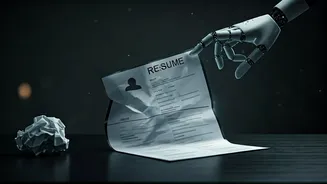
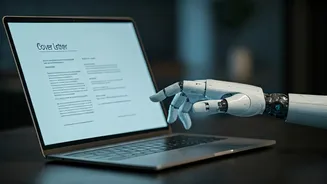
The most common mistake job seekers make is handing over complete control to AI. While tools like ChatGPT can generate a resume draft in seconds, the output is often filled with generic buzzwords and clichés that recruiters can easily spot. Think of AI as an intelligent
assistant. Your role is to be the strategist, guiding the tool with specific information and prompts to enhance your unique story, not replace it. The goal is to amplify your experience, not to create a robotic, impersonal document that blends in with countless others. Your authenticity and personal achievements are what ultimately land you the job.
Start by Analyzing the Job Description
Before you even start writing, use AI to deconstruct the job posting. Paste the description into your AI tool and ask it to identify the key skills, qualifications, and keywords the employer is looking for. This creates a roadmap for tailoring your resume. Many companies use Applicant Tracking Systems (ATS) to screen applications, and these systems are designed to filter candidates based on how well their resume matches the job description. By identifying these exact terms, you can ensure your resume includes the language needed to pass this initial automated screening.
Brainstorm and Refine Your Accomplishments
AI is an excellent partner for brainstorming and improving your bullet points. Instead of just listing your duties, focus on measurable achievements. Provide the AI with the context of your role, the actions you took, and the results you achieved, then ask it to help you phrase these accomplishments with strong, impactful verbs. For example, instead of saying you were "responsible for managing projects," AI can help you rephrase it to something like, "Led a cross-functional team to deliver a key project three weeks ahead of schedule, resulting in a 10% cost saving." Always provide specific numbers and details to get the best results.
Tailor Every Application, Every Time
One of the most powerful uses of AI is for customization. Once you have a strong master resume, use AI to help you tailor it for each specific role you apply for. You can upload both your resume and the new job description and ask the AI to suggest changes that emphasize your most relevant skills and experiences. This ensures that every application you submit is highly targeted. However, the human edit is crucial. Review the AI's suggestions and rewrite them in your own voice. Ask yourself: "Does this sound like something I would say in an interview?" If not, revise it until it does.
Avoid the Common Pitfalls
Using AI without caution can do more harm than good. A major red flag is factual inaccuracy; AI can "hallucinate" or invent details about your experience. Always fact-check every date, title, and achievement. Another mistake is creating a resume with overly complex formatting, such as tables, graphics, or columns, which can confuse ATS scanners. Stick to a simple, clean layout with standard headings like "Work Experience" and "Skills." Finally, never copy and paste AI-generated text directly into your resume without personalizing it. Recruiters are becoming adept at spotting the impersonal and repetitive patterns of AI-written content.