






Embrace a Quick-Dry Fabric Philosophy
The single most important decision for monsoon packing is your choice of fabric. Heavy materials like denim and pure cotton act like sponges in humid, rainy weather; they absorb moisture, take days to dry, and quickly develop a musty smell. Instead, build
your travel wardrobe around lightweight, quick-drying synthetics and blends. Polyester, nylon, and poly-cotton blends are your best friends, as they repel water and can dry in a few hours even in a damp hotel room. For natural options, consider light linen or bamboo blends, which are breathable and resist odour. Pack three to four quick-dry T-shirts, one pair of synthetic trousers or track pants, and a pair of shorts. This core set will cover most of your needs, and you can easily wash and re-wear them throughout the week.
Master the Art of Rolling and Cubes
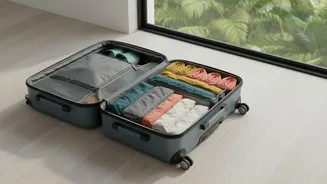
How you pack is just as crucial as what you pack. Tightly rolling your clothes instead of folding them is a well-known space-saving technique that can free up significant room in your bag. To take it a step further, invest in a set of packing cubes. These zip-up pouches not only help you organize your items—separating tops, bottoms, and undergarments—but also compress them, squeezing out excess air. This compartmentalization prevents your bag from becoming a chaotic mess and makes it easy to find what you need without unpacking everything. You can also designate one cube for dirty or damp laundry, keeping it separate from your clean clothes.
Choose Multi-Purpose Heroes
Every item in your 7kg bag must earn its place, and the best way to ensure this is by choosing versatile pieces. A lightweight, waterproof windcheater or poncho can serve as both a rain jacket and an extra layer on a chilly flight. A quick-dry microfibre towel is another essential; it's far more absorbent and dries much faster than a conventional cotton towel, and it can double as a beach mat or a wrap. Instead of packing multiple bulky shoes, stick to a two-pair rule: one pair of waterproof, comfortable walking shoes or sandals on your feet, and one pair of lightweight flip-flops in your bag for the hotel.
Wear Your Weight, Don't Pack It
Airlines weigh your bag, not you. This simple fact is your secret weapon against excess baggage fees. Always wear your bulkiest and heaviest items on the plane. This includes your sturdiest pair of shoes, your rain jacket, and any sweaters or trousers that take up significant space. Layering a T-shirt under a light jacket is a smart move. This strategy alone can free up one to two kilograms of weight from your cabin bag, which is a massive saving when you're working with a 7kg limit. Once you're on the plane, you can always remove the jacket and use it as a pillow or blanket.
Rethink Your Toiletries and Electronics
Liquids and electronics are surprisingly heavy. Instead of full-sized bottles, opt for solid toiletries: shampoo bars, conditioner bars, and soap bars. These are not only lighter and spill-proof but also exempt from the 100ml liquid restriction for carry-on luggage. For anything you can't find in solid form, decant it into travel-sized reusable bottles. Similarly, audit your electronics. A single, powerful GaN charger can replace multiple power bricks for your phone, laptop, and other gadgets, saving both space and weight. A power bank is a monsoon essential, but choose a slim, lightweight model.
The Personal Item is Your Overflow Bag
Most domestic Indian airlines, including Air India and Air India Express, allow one piece of cabin baggage (up to 7kg) plus a smaller personal item like a laptop bag or handbag. This personal item is valuable extra space. Use it strategically for items you need to access easily, like your documents, electronics, a book, and a portable charger. It's also the perfect place to store your umbrella, a waterproof pouch for your phone and wallet, and any snacks. By keeping these items separate, you ensure your main bag contains only clothes and toiletries, making it easier to stay under the weight limit.