









The Countdown to 'Aagaman'
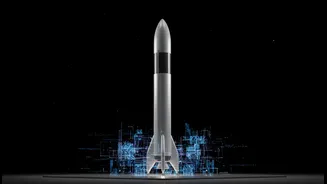
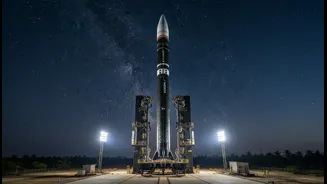
Scheduled for lift-off from the Satish Dhawan Space Centre, the mission, aptly named 'Aagaman' or 'Arrival,' signifies the dawn of a new age for India’s commercial space industry. Developed by Hyderabad-based startup Skyroot Aerospace, the Vikram-1 is the first
orbital-class rocket fully designed and developed by a private company to launch from Indian soil. This test flight is the culmination of years of intense work by a team of around 1,000 people and over 400 suppliers. If successful, it will place India in an elite club of nations where private enterprise has independently achieved orbital spaceflight, a feat currently dominated by American and Chinese firms.
More Than Just a Rocket
So, what makes the Vikram-1 special? The seven-storey-tall vehicle is a marvel of indigenous engineering, built with a lightweight all-carbon composite structure. It is powered by propulsion systems developed entirely in-house, including innovative 3D-printed engines and high-thrust solid-fuel boosters. The rocket is designed to be a cost-effective and reliable option for the booming global small satellite market, capable of placing payloads of up to 350 kilograms into low-Earth orbit. This maiden flight will aim for an orbit of 450 kilometres, carrying several small technology demonstration satellites. For the nation's brightest engineers, the chance to work on such cutting-edge, vertically integrated technology—from design to launch—is an unparalleled draw.
From Government Monopoly to Startup Boom
For decades, a career in India's space sector meant one thing: joining the prestigious Indian Space Research Organisation (ISRO). However, landmark policy reforms in 2020, which led to the creation of the Indian National Space Promotion and Authorisation Centre (IN-SPACe), fundamentally altered the landscape. The government opened the doors for private companies to not only build components but to design, own, and operate their own space missions, granting them access to ISRO’s world-class facilities. This policy shift unleashed a wave of entrepreneurial energy, with the number of Indian space-tech startups soaring to over 400. These companies are now building everything from launch vehicles to satellite constellations, creating a vibrant, commercially driven ecosystem.
The Ultimate 'Cool Job' for Techies
Against this backdrop, companies like Skyroot have become the ultimate destination for young, ambitious tech professionals. The allure lies in the mission's historic nature; it offers a chance to be part of a foundational moment in India’s technological journey, much like the early days of SpaceX. It represents a tangible opportunity to reverse the 'brain drain' by providing challenging, high-impact roles right here in India that were previously only available abroad. For software engineers, materials scientists, and robotics experts, it's a departure from conventional IT roles, offering a chance to solve complex, real-world problems in rocketry and avionics. The co-founders themselves are former ISRO scientists, embodying the transition from public service to private innovation that inspires a new generation.
Building a New Talent Pipeline
The rise of Skyroot and its peers is not just creating jobs; it’s building a new talent pipeline. While India’s private space sector still faces shortages of highly specialised skills, these startups are becoming crucibles of talent development. They are attracting top-tier engineers from adjacent industries like automotive, aerospace, and data analytics, and providing them with the hands-on experience needed to build space-grade systems. This cross-pollination of skills is creating a more resilient and adaptable workforce. As Skyroot co-founder Pawan Kumar Chandana has noted, the goal is not just to launch a rocket but to establish a regular, high-frequency launch cadence for global customers—an ambition that requires a deep and growing pool of world-class talent.